


AptaDB: a comprehensive database integrating aptamer–target interactions
- Long Chen1,
- Zhuohang Yu1,
- Zengrui Wu,
- Moran Zhou,
- Yimeng Wang,
- Xinxin Yu,
- Weihua Li,
- Guixia Liu and
- Yun Tang
- Shanghai Frontiers Science Center of Optogenetic Techniques for Cell Metabolism, Shanghai Key Laboratory of New Drug Design, School of Pharmacy, East China University of Science and Technology, Shanghai 200237, China
- Corresponding author: ytang234{at}ecust.edu.cn
-
↵1 These authors contributed equally to this work.
-
Handling editor: Adrian Ferre-D'Amare
Abstract
Aptamers have emerged as research hotspots of the next generation due to excellent performance benefits and application potentials in pharmacology, medicine, and analytical chemistry. Despite the numerous aptamer investigations, the lack of comprehensive data integration has hindered the development of computational methods for aptamers and the reuse of aptamers. A public access database named AptaDB, derived from experimentally validated data manually collected from the literature, was hence developed, integrating comprehensive aptamer-related data, which include six key components: (i) experimentally validated aptamer–target interaction information, (ii) aptamer property information, (iii) structure information of aptamer, (iv) target information, (v) experimental activity information, and (vi) algorithmically calculated similar aptamers. AptaDB currently contains 1350 experimentally validated aptamer–target interactions, 1230 binding affinity constants, 1293 aptamer sequences, and more. Compared to other aptamer databases, it contains twice the number of entries found in available databases. The collection and integration of the above information categories is unique among available aptamer databases and provides a user-friendly interface. AptaDB will also be continuously updated as aptamer research evolves. We expect that AptaDB will become a powerful source for aptamer rational design and a valuable tool for aptamer screening in the future. For access to AptaDB, please visit http://lmmd.ecust.edu.cn/aptadb/.
Keywords
INTRODUCTION
Nucleic acid aptamers are single-strand oligonucleotides and can interact with a variety of targets, including proteins, small molecules, cells, and metal ions, through molecular recognition and binding. Compared with other single-stranded oligonucleotides, aptamers are able to fold into various secondary structures such as stems, loops, G-quadruplexes, and hairpins (Mayer 2009) and form specific 3D structures by binding with specific targets. Due to their small size, ease of in vitro synthesis, and high stability, aptamers have been widely used in the field of biomedical research (Stoltenburg et al. 2007), including medical treatments (Ni et al. 2021), diagnostics (Zhou et al. 2014), and biosensors (Song et al. 2008). In the field of medical treatment, aptamers that activate the EpCAM proteins on the surface of human cancer cells may contribute to the development of novel targeted cancer therapies (Song et al. 2013). In terms of diagnostics, fluorescence-activated aptamers (e.g., Pepper [Chen et al. 2019] and Spinach [Huang et al. 2014]) have emerged as practical methods for real-time imaging of cellular RNA and tracking of the protein–RNA utility. Furthermore, aptamers have been proven to be a class of biopharmaceuticals. For example, Macugen (pegaptanib) was approved by the FDA for the treatment of diabetic retinopathy in 2004. More than 10 aptamers (Zhou and Rossi 2017), such as ARC-1905 (Biesecker et al. 1999) (inhibiting C5 protein hydrolysis activation) and the anticancer aptamer AS1411 (Mongelard and Bouvet 2010), have undergone clinical testing and generated significant interest, demonstrating the potential efficacy of aptamers as therapeutic agents (Drolet et al. 2016). Therefore, the identification of potential aptamers is significant for biosensors, medical treatments, and diagnostics.
In 1990, an in vitro selection technique, named systematic evolution of ligands by exponential enrichment (SELEX), was proposed for the evolution of nucleic acid aptamers (Tuerk and Gold 1990). This powerful and versatile tool has led to a scalable approach that has aided hundreds of studies focusing on aptamer selection and functional application, as well as screening a range of aptamers for different targets (Ahmad et al. 2021). With the rapid development of the SELEX technique and bioinformatics, the high-throughput characterization of aptamers was further accelerated, and a large amount of the experimental data about aptamer–target interactions was accumulated. It was shown that the accumulation of experimental data not only provided prior knowledge for experimental aptamer design, but also established a solid data foundation for the construction of artificial intelligence (AI)-based computational models, such as AptaNet, developed by Emami and Ferdousi for the prediction of aptamer–protein interactions (Emami and Ferdousi 2021), the E3-equivariant network-based aptamer–ligand prediction model developed by Deng et al. (2022), identification and selection models for aptamer motifs (Song et al. 2020), and prediction of aptamer tertiary structures (Townshend et al. 2021). However, these data exist in literature and on the internet in different forms, and there is redundancy among them. It is challenging to obtain powerful prediction models by AI methods and to perform aptamer rational design (Manigrasso et al. 2021; Chen et al. 2023). Therefore, the collection and integration of multidimensional data about aptamers are essential for computational model construction and aptamer design.
For data integration of aptamers and targets, there are some available databases such as Apta-Index (https://www.aptagen.com/apta-index/) and Aptabase (https://www.iitg.ac.in/proj/aptabase/). Several studies have utilized these data. For instance, Selvam et al. collected aptamer sequence data from Apta-Index and performed manual modeling and docking to select antibacterial aptamers against the BamA protein (Selvam et al. 2023). Heredia et al. combined data from Apta-Index and the NDB (http://ndbserver.rutgers.edu/) (Coimbatore Narayanan et al. 2014) and used machine learning methods to construct a classification model for aptamer identification (Heredia et al. 2021). However, both Apta-Index and Aptabase are small aptamer libraries and have limitations in practical application. Sufficient quantities and quality of data on aptamers, targets, and experiments are still lacking, as well as problems with inadequate search and visualization capabilities.
In order to better integrate the structures and functions of aptamers, targets, and experimental data, a novel aptamer database, named AptaDB, was developed here with a user-friendly online interface. Figure 1 illustrates the various component modules of AptaDB with a brief description of the functions. To our knowledge, this is the first online database to collect information on aptamers and targets, including structural visualization, functional information, basic properties, and specific experimental affinities with relevant experimental details. It can be used as a valuable data source for rational design and model development of aptamers. In AptaDB, information on aptamer–target interactions is divided into six parts, which is convenient for users to navigate and analyze. External links to other databases are also provided in the Supplemental Information. We believe that AptaDB will be a powerful tool to help the scientific community that studies aptamers.
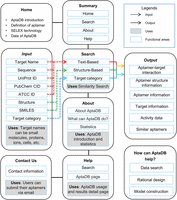
An overview of the different modules and features provided by AptaDB. Its main input and output data are shown in different colors.
RESULTS AND DISCUSSION
Overview of the database
AptaDB is a comprehensive database that integrates 1350 experimentally validated aptamer–target interactions, connecting 1293 aptamers with 436 targets; 1253 (97%) aptamers only interact with one target and a few aptamers can interact with multiple targets, which indicates that the binding of aptamer with target has strong specificity (Chen et al. 2021). In addition, 1230 (91.1%) of aptamer–target interactions were annotated with binding affinities. As shown in Figure 2B, 1022 (75.7%) aptamers have strong interactions with targets (i.e., the binding affinity ≤1 μM). There are even 765 (56.7%) aptamer–target interactions that meet the requirements when the affinity threshold is increased to 100 nM, which means that AptaDB curated aptamer–target interactions with high binding affinity. Meanwhile, 720 (53.3%) experimental visualizations were provided to facilitate researchers’ better understanding of aptamer–target interactions. Those results showed that aptamer–target interactions with high binding affinity and specificity could let researchers conduct various disease-related and detection-related target screening based on different intentions (Childs-Disney et al. 2022).
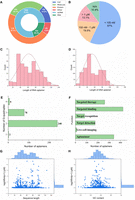
Statistics of AptaDB. (A) Percentage of RNA and ssDNA (inner circles) and percentage of different aptamer–target interactions (outer circles). (B) Distribution of affinity between aptamer and targets in AptaDB. (C) Distribution of RNA aptamer length. (D) Distribution of DNA aptamer length. (E) Distribution of aptamers with different numbers of G-quadruplex (prediction by QGRS mapper). (F) Distribution of the number of different aptamer functions. (G) Relationship between aptamer length and affinity. The affinity values have been logarithmically transformed using the formula log(affinity + 1) for smoother representation. (H) Relationship between GC content and affinity. The affinity values have been logarithmically transformed using the formula log(affinity + 1) for smoother representation.
Data analysis
To gain insight into the relations between specific patterns, structures, and functions of the aptamers, we analyzed the data curated in AptaDB. Aptamers were divided into two classes with different chemical properties, that is, ssDNA and RNA. Among them, about 80% are ssDNA aptamers (Fig. 2A). The reason might be that RNA aptamers could be easily degraded by nucleases in biological systems (Lakhin et al. 2013), while DNA's stability over a wide temperature range and pH range allows it to be stored and used under experimental conditions (Feng et al. 2020). According to Figure 2C,D, the length of RNA aptamers ranges mostly from 30 to 110 nt, while DNA aptamers are typically 20–100 nt in length. This observation may be attributed to the common template length used for constructing sequence libraries in aptamer research.
Statistically, 666 aptamers (51.5%) in AptaDB were <50 nt in length, and the analysis of affinity versus length (Fig. 2G) showed that the affinity of aptamers shorter than 60 nt was relatively more concentrated. This is because in most cases, the sequences are further truncated and optimized to improve affinity for the target. Shorter sequences also reduce the interference of spatial effects and the synthesis costs (Zhang et al. 2020). It is also worth noting that the distribution of GC content was observed in the range of 0.4–0.8, and the aptamers with GC content in this range were not only more numerous, but also showed a better binding affinity (Fig. 2H). In conjunction with the above analysis, the control of sequence length and GC content could serve as references for subsequent aptamer design. Structural analysis of the aptamers revealed that only about 25% of these aptamers were predicted to form G-quadruplexes, and the number was mainly concentrated in 2 and 3 (Fig. 2E; Supplemental Fig. S1).
It is estimated that around 26.4% of the discovered aptamers are suitable for sensors, including environmental monitoring, and that about 20.1% can be used in targeted therapies and other medical applications (Fig. 2F). This trend is generally consistent with the direction of aptamer research and development (Zhou and Rossi 2017). In addition to this, the fluorescent RNAs (Chen et al. 2019; Huang et al. 2021), emerging in recent years in the field of live-cell imaging with greater application potential, have been integrated with relevant data in AptaDB. It illustrates the breadth and depth of aptamer data in AptaDB.
Analysis of targets in the database
Four main categories of targets were involved in AptaDB. As shown in Figure 2A, 639 (47.3%), 393 (29.1%), 189 (14.0%), and 129 (9.6%) aptamers interacted with proteins, small molecules, cells, and others, respectively. Among them, proteins are the major targets of aptamers, which is also related to current research hotspots, with a large number of studies focusing on aptamer screening for disease-related proteins (Zhou and Rossi 2017). A number of aptamers have entered into clinical trials, including oncology, inflammation, macular degeneration, and coagulopathies, in which aptamers can be used as antagonists.
In the analysis of small molecules binding with aptamers, we found that the recognition of ligands by aptamers was driven by intermolecular forces, such as electrostatic, π–π stacking, and van der Waals interactions (Yu et al. 2021). Therefore, the numbers of hydrogen bond acceptors and donors, and the partition coefficient (log P) of small molecules are critical properties for ligand recognition with aptamers. Aptamers selectively recognize small molecules through specific hydrogen-bonding interactions. These hydrogen-bonding interactions stabilize the binding of aptamers with small molecules and affect their binding affinity and specificity.
The cell types involved in the aptamer–cell interactions were also classified. We observed that the cell types involved in AptaDB are very diverse, covering a wide range of tissue and bacterial types. These include 27 types of tumor cells and a variety of common cocci and bacilli. Some aptamers have been developed as tools for cell-targeted therapies to achieve precise therapeutic effects by selectively identifying and targeting disease-associated cell surface markers. It is worth mentioning that research on aptamer–cell interactions is still in a continuous exploration phase. With a better understanding of cell surface receptors and signaling pathways, we could further understand the mechanisms of aptamer–cell interactions.
In addition, researchers preferred certain targets, such as the surface protein of human immunodeficiency virus and recombinant human VEGF165, small molecules like ochratoxin A (OTA) and tobramycin, and cell screening targets such as A549 and MDA-MB-231 cells. This is related to the direction of the aptamer application, which is usually as a targeted therapy or as a biosensor for the target. Therefore, it typically focuses on specific functional targets. Given that the ranking of the number of targets is also critical to understand the aptamer–target interaction, we present the top targets in terms of the number of interactions in Supplemental Figure S2.
Database querying and browsing
AptaDB provides an effective and user-friendly web interface to facilitate data querying, accessible at http://lmmd.ecust.edu.cn/aptadb/. The home page displays basic information related to aptamers (Fig. 3A,B), whereas the “Search” function allows users to query aptamer–target interactions by inputting related content. The “About” function is designed to provide in-depth annotations and detailed data statistics for AptaDB, as well as to support the functionality of data downloading (Supplemental Fig. S3A). Detailed tutorials are provided in the “Help” module (Supplemental Fig. S3B).
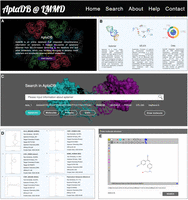
Homepage, search and browse pages of AptaDB. (A) The main interface includes a description of the database and “Search” access. (B) Introduction of aptamer and SELEX and statistical information of AptaDB. (C) The search interface provides text and structure-based input to query for aptamer–target interaction. (D) Data browsing. (E) Structure-based similarity search by drawing structures.
Data retrieval
AptaDB provides a quick query of aptamer–target interaction information, including text-based and structure-based searches. For text-based searches, it accepts exhaustive information when the user selects a search type (aptamer, molecule, protein, or cell) and inputs terms (primary name, synonym, and ID) (Fig. 3C). If the inputted terms match multiple aptamer–target interactions, appropriate suggestions with hyperlinks to the corresponding result pages are provided in table form according to the text similarity (Fig. 3D).
For structure-based searches, users can select the “aptamer” search type and input a nucleic acid sequence in the text box. The back end automatically calculates the similarity of the input sequence to all sequences in AptaDB. In addition, users can enter SMILES or draw the structure manually by clicking on “Draw molecule” near the search bar (Fig. 3E). The similarities between small molecules are calculated by Open Babel (version 2.21) (O'Boyle et al. 2011) according to MACCS, FP2, FP3, and FP4 fingerprints. Finally, suitable aptamer–target interactions are displayed in the list of search results according to structural similarity.
Result visualization
Each aptamer–target interaction is divided into six parts on the results page. The first part is the aptamer–target interaction information, which mainly contains brief target information, binding affinity, binding buffer conditions, and literature information (Fig. 4A). To facilitate the understanding of the structural information and properties, we provide visualization information of the aptamer. The minimum free energy structure and the centroid structure predicted by ViennaRNA are included (Fig. 4B). Besides the basic aptamer information summarized in the literature, such as pure sequences, chemistry, and descriptions, AptaDB also summarizes the GC content, molecular weight, and other properties calculated by Molbiotools. Moreover, the database provides detailed information on the number and G-score of G-quadruplexes, as well as the functions and applications of aptamers (Fig. 4C).
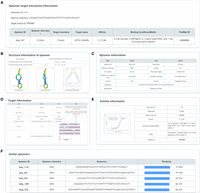
Six components of AptaDB. (A) Aptamer–target interaction information. (B) Structure information of aptamer. (C) Aptamer information. (D) Target information. (E) Activity data. (F) Similar aptamers.
For different types of targets (proteins, small molecules, cells, and others), the relevant information is accessible in the “Target information” section, including annotated information on proteins including protein and gene names, as well as involvement in diseases and other related information. Moreover, the basic properties and structural information of molecules, such as SMILES, synonyms, InChIKey, and IUPAC names, along with the numbers of hydrogen bond donors and acceptors and partition coefficients (log P) calculated by RDKit, can be found. Cell information encompasses category, organism, cell type, morphology, tissue, disease, and antigen expression. Notably, visualization of the three main targets is generated using PSIPRED Workbench to visualize the secondary structure of proteins, while JSME facilitates an interactive presentation of small molecular structures. Relevant images of control cell groups are manually extracted from the literature (Fig. 4D; Supplemental Fig. S4).
Additionally, experimental information is gathered from the literature to supplement the interaction data, including binding affinity, relevant experimental visualization, screening conditions, and specific targets (Fig. 4E). The top 20 aptamers with sequence similarity under this item are shown in the “Similar aptamers” part, which helps users to locate sequences that are similar to the target (Fig. 4F). These comprehensive data can aid researchers in gaining a more comprehensive understanding of the properties and characteristics of the aptamer–target and contribute to its application in various fields.
Comparison with other web-based databases
Currently, there are some web-based aptamer databases available, such as Apta-Index and Aptabase. Here, we compared these two databases with our AptaDB. The details of the comparison are summarized in Table 1. Both Apta-Index and Aptabase were designed to enable researchers to obtain aptamer–target interactions and experimental information, which is critical for experimental screening and AI prediction. Apta-Index also contains literature-validated data, but lacks experimental data and aptamer structure visualization. Compared with other databases, Aptabase offers only limited information and possesses the smallest data set with 605 aptamers.
Comparison of AptaDB main data with other aptamer databases
AptaDB, on the other hand, presents significant advantages in terms of the quantity and dimensionality of data. It encompasses a comprehensive repository of 1350 aptamer–target interactions, in contrast to the 770 aptamers documented in Apta-Index. In addition, AptaDB contains critical elements of aptamer–target interactions, including basic properties, predicted structural properties, relevant information about their targets, binding affinity, experimental assay details, visualization of abundant secondary structures, and other similar aptamers. Our AptaDB is unique in the integration of aptamer–target interaction data. Overall, AptaDB provides a comprehensive, efficient, and user-friendly online database for researchers.
Conclusions
With excellent performance benefits, application potential, and advantages over traditional antibodies, aptamers have emerged as research hotspots of the next generation in pharmacology, medicine, and analytical chemistry. In this study, we created an efficient and user-friendly online database named AptaDB, which contains 1350 aptamer data points, divided into six functional parts to describe the aptamer–target interactions in detail. Users could easily retrieve information from the database. We expect that AptaDB will become a powerful source for the rational design of aptamers and a valuable tool for aptamer screening in the future.
MATERIALS AND METHODS
Data collection and preparation
The basic data collection and classification of AptaDB are shown in Figure 5. The information about aptamer–target interactions in the AptaDB was primarily retrieved from PubMed using the keywords “aptamer OR RNA aptamer OR ssDNA aptamer.” Subsequently, the structural and biological data of aptamer–target interactions were manually extracted from the literature. Only aptamer–target interactions observed by SELEX technology were retained. The biological activities here contained aptamer sequences, target primary names, and binding affinities. The detailed information of data collection and preparation is described below.
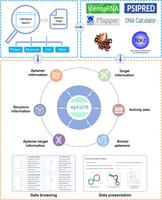
The basic data collection, processing phases, data classification, and data presentation of AptaDB.
Standardization of aptamer–target interactions
To improve data quality, Aptamer IDs and Target IDs were selected as the unique identifiers for aptamers and targets, respectively. Specifically, target chemistry was introduced to represent different types of targets. Then, PubChem CIDs, UniProt IDs, and ATCC IDs were separately mapped according to the primary names of small molecules, proteins, and cells, which were collectively referred to as Target IDs. The Target IDs for rest targets were named as Other-X (X is the list number of rest targets). Considering that sequences of several aptamers are too long, Aptamer ID was set to correspond with the aptamer sequence one by one and represent the aptamer. According to Aptamer IDs and Target IDs, redundant aptamer–target interactions were removed.
Supplement of aptamer–target interaction information
Experimental data of the aptamer–target interactions were extracted from the literature, including binding affinity, experimental visualization, and buffer conditions for selection. Note that the experimental visualization includes experimental data for determining the affinity between aptamer and target, as well as the applications of aptamer–target interactions.
Supplement of aptamer information
Based on the collected aptamer–target interactions, the information about aptamers was collected and supplemented for users to understand the functions and applications of aptamers. First, basic information of aptamers was obtained from literature, including pure sequence, chemistry, and description. Second, the visualization of aptamers was predicted by ViennaRNA (Lorenz et al. 2011), according to its sequence information. Third, the DNA Calculator of the molbiotools platform was applied to calculate the physical and chemical properties of aptamers, such as GC content, molecular weight, and molarity of 1 μg/μL solution. Fourth, the QGRS mapper (Kikin et al. 2006) was used to predict the potential number of G-quadruplexes, which play a role in various diseases and become promising targets for drug development (Teng et al. 2021). Finally, their functions and applications in various fields, such as targeted therapies, sensors, and live-cell imaging, were summarized from the literature.
Supplement of target information
According to target chemistry obtained from the literature, the targets were categorized into four groups: small molecules, proteins, cells, and others. In terms of small molecules, the basic and structural information was supplemented from PubChem (Kim et al. 2021), including the simplified molecular input line entry system (SMILES), synonyms, InChIKey, and IUPAC names. Additionally, we utilized RDKit (http://www.rdkit.org) (Landrum 2013), an open-source software package, to calculate various physicochemical properties of small molecules that are relevant to their interactions with aptamers. These properties included the number of hydrogen bond donors, hydrogen bond acceptors, partition coefficient (log P), and topological polar surface area (TPSA). To present and interactively edit small-molecule structures, we utilized JSME (Bienfait and Ertl 2013), a molecular editor. Regarding proteins, the annotation and information were supplemented from UniProt (Wang et al. 2021). This encompassed protein and gene names, as well as involvement in diseases and other related information. In order to intuitively display the protein sequence, secondary structure visualization of proteins was obtained using PSIPRED Workbench (Buchan and Jones 2019) according to sequence information. For cells, the basic information of cells was supplemented from ATCC (Clark and Geary 1974), including category, organism, cell type, morphology, tissue, disease, and antigen expression. In addition, the visual representation of cells was obtained by manually intercepting the control cell group from the literature. All of the above-mentioned information of AptaDB is stored in MariaDB (version 5.5.56), and the architecture of the database is summarized in Supplemental Figure S4.
Alternative aptamers
In order to observe reasonable aptamers conveniently, alternative aptamers were provided based on sequence similarity, which is a widely accepted scheme in aptamer design. Based on the assumption that similar aptamers tend to interact with similar targets, similar aptamers were obtained using the Levenshtein distance algorithm (Yujian and Bo 2007) to guide aptamer design. Taking Apta_1137 and Apta_1131 (Supplemental Table S1) as examples, their edit distance is just 4, and both are used to treat poisoning caused by OTA. However, the binding affinity difference is approximately fivefold. Because alternative aptamers offer an array of valuable applications, we have displayed the top 20 aptamer sequences for each sequence in terms of similarity according to the Levenshtein distance algorithm.
Development of AptaDB
AptaDB was developed using Apache (version 2.4.6), MariaDB (version 5.5.56), PHP (version 5.4.16), Bootstrap (version 3.3.7), and jQuery (version 3.0.0). The interactive data visualizations, including data distribution and the target's top distribution, were supported by ECharts (Li et al. 2018). AptaDB has been optimized to meet the requirements of multiple operating systems and web browsers, including Microsoft Edge, Google Chrome, Firefox, and Safari.
SUPPLEMENTAL MATERIAL
Supplemental material is available for this article.
ACKNOWLEDGMENTS
This study was supported by the National Key Research and Development Program of China (Grant 2019YFA0904800), the National Natural Science Foundation of China (Grant 82173746), the Shanghai Frontiers Science Center of Optogenetic Techniques for Cell Metabolism (Shanghai Municipal Education Commission), and the 111 Project (Grant BP0719034).
Footnotes
-
Article is online at http://www.rnajournal.org/cgi/doi/10.1261/rna.079784.123.
- Received August 8, 2023.
- Accepted December 12, 2023.
This article is distributed exclusively by Cold Spring Harbor Laboratory Press for the first six months after the full-issue publication date (see http://genome.cshlp.org/site/misc/terms.xhtml). After six months, it is available under a Creative Commons License (Attribution-NonCommercial 4.0 International), as described at http://creativecommons.org/licenses/by-nc/4.0/.




