


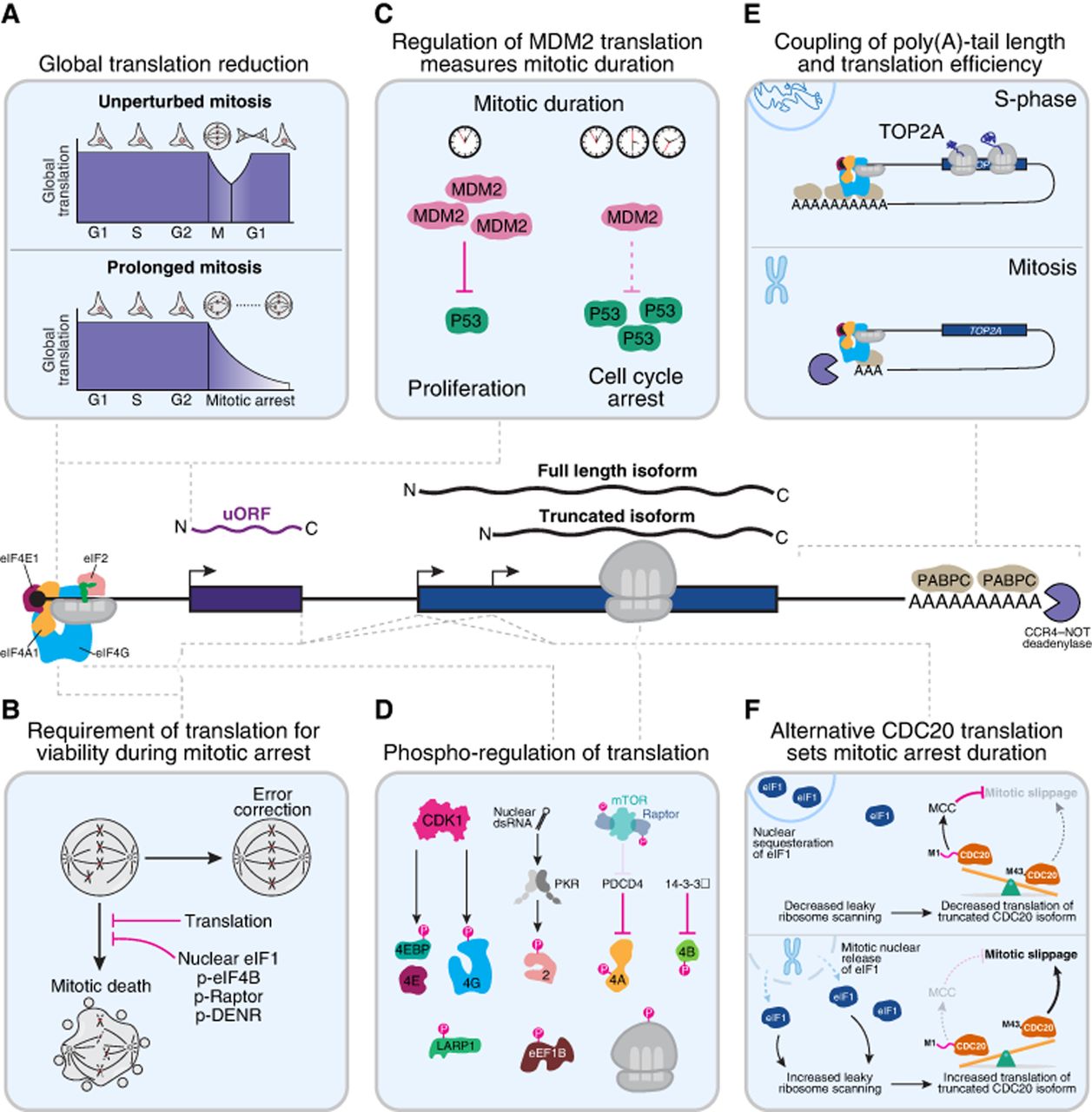
Translational control in mitotic cell physiology and viability. (A) Global mRNA translation is strongly repressed during mitosis, with repression increasing over time. (B) Mitosis-specific translational pathways are essential for survival, error correction, and G1 reentry after prolonged mitosis. (C) MDM2 levels decline with mitotic duration due to global repression and uORF-mediated inhibition; postmitotic cells entering G1 show elevated p53 and cell cycle arrest. (D) Multiple translation factors are phosphorylated, reprogramming the translational machinery. (E) Poly(A) tail length correlates with translational efficiency in mitosis, especially for short-tailed mRNAs, further attenuating translation. (F) Nuclear release of eIF1 globally enhances leaky ribosome scanning, producing truncated CDC20 isoforms that promote mitotic slippage.




