


mRNA COVID-19 vaccines: science versus misinformation
- Jeff Coller1,2,
- Andrew Geall1,3,
- Roberta Duncan1,
- Clay Alspach1,
- Sean Ryder4,
- Melissa J. Moore4 and
- Fátima Gebauer5,6
- 1The Alliance for mRNA Medicines, Washington, DC 20001, USA
- 2RNA Innovation Center, Johns Hopkins University, Baltimore, Maryland 21218, USA
- 3Replicate Bioscience, San Diego, California 92121, USA
- 4Biochemistry and Molecular Biotechnology, University of Massachusetts Chan Medical School, Worcester, Massachusetts 01655, USA
- 5Centre for Genomic Regulation (CRG), The Barcelona Institute for Science and Technology, Barcelona 08003, Spain
- 6Universitat Pompeu Fabra (UPF), Barcelona 08003, Spain
- Corresponding author: jmcoller{at}jhmi.edu
Abstract
The rapid development of COVID-19 vaccines as a result of Operation Warp Speed represented an extraordinary triumph of scientific innovation, with multiple vaccine platforms demonstrating remarkable efficacy in preventing severe disease, hospitalization, and death—ultimately saving millions of lives. The U.S. government, pharmaceutical companies, research institutions, and health agencies collaborated at an unprecedented scale to develop, test, and distribute vaccines, showcasing what coordinated medical innovation can accomplish. Vaccination programs successfully prevented catastrophic outcomes and enabled people to return to normal life during the crisis. COVID-19 vaccines continue to provide critical protection for vulnerable populations today, and the mRNA platforms developed have opened new possibilities for treating cancers and other diseases. Yet despite rigorous regulatory oversight and extensive clinical trial data, these vaccines have faced substantial misinformation campaigns that spread false claims about their safety and design. To address these misrepresentations and resultant public concerns, this document draws on rigorous scientific evidence to comprehensively examine the misconceptions surrounding mRNA technology, explaining how these vaccines work, their proven safety record, and their demonstrated benefits.
Keywords
PREFACE
This document is a statement from the Alliance for mRNA Medicines and several independent RNA scientists. The Alliance for mRNA Medicines is a global nonprofit organization whose members include pharmaceutical companies, biotech firms, academic institutions, and research organizations advancing mRNA therapeutics. To be fully transparent, several authors have financial interests in RNA technology companies, as disclosed in our Competing Interest Statement. These relationships reflect our expertise—collectively representing over 200 years of research in RNA biology. But expertise is not a substitute for evidence: This document relies on peer-reviewed science and verifiable data that any reader can examine.
INTRODUCTION
The race to develop COVID-19 vaccines produced one of the most remarkable scientific achievements in modern history. When the SARS-CoV-2 viral genome sequence became available in January 2020 (Lu et al. 2020; Wu et al. 2020; Zhou et al. 2020; Zhu et al. 2020), scientists across the globe immediately began work on multiple vaccine approaches. These included traditional methods using weakened or inactivated viruses (Plotkin and Plotkin 2011), as well as newer technologies like mRNA vaccines and viral vector platforms. The mRNA approach—which was underpinned by decades of preclinical and clinical data prior to regulatory approval—proved particularly promising because it could be designed quickly and provided strong protection (Polack et al. 2020; Baden et al. 2021; Schoenmaker et al. 2021; Gote et al. 2023). Moderna (mRNA-1273) and Pfizer-BioNTech (BNT162b2) started their Phase I safety trials in March and April 2020, respectively (Polack et al. 2020; Baden et al. 2021; Schoenmaker et al. 2021; Gote et al. 2023). To accelerate development, trial phases were designed to overlap: Phase 1 assessed safety, immunogenicity, and dose selection; once the optimal dose was identified, the trial seamlessly transitioned to Phase 2/3, which evaluated safety and efficacy in a large population (Polack et al. 2020; Baden et al. 2021). By late July 2020, both companies had begun their large-scale efficacy trials: Pfizer's Phase 2/3 trial (which would eventually enroll approximately 44,000 people) and Moderna's Phase 3 COVE trial (which would enroll approximately 30,000 people) (Polack et al. 2020; Baden et al. 2021; Gote et al. 2023). For comparison, typical vaccine trials often enroll 3000–10,000 participants, making these among the largest vaccine trials ever conducted. These trials focused on answering several key questions: Could the vaccines prevent symptomatic COVID-19? Could they prevent severe disease, as measured by hospitalizations, ICU admissions, and deaths? And were they safe? By running trial phases in overlapping combinations rather than strict sequence, and by manufacturing vaccine doses before knowing if they would work, companies compressed what normally takes years into months. This approach maintained scientific rigor while also bringing remarkable innovation to bear—including novel assay development and manufacturing processes while eliminating bureaucratic delays. In December 2020, the FDA granted Emergency Use Authorization for both vaccines after the trials showed that they were more than 94% effective at preventing symptomatic COVID-19 (Polack et al. 2020; Baden et al. 2021; Fortner and Schumacher 2021; Gote et al. 2023). The EMA gave BNT162b2 emergency use status on December 21, 2020, and mRNA-1273 emergency use status on January 6, 2021 (Fortner and Schumacher 2021).
How do mRNA vaccines work?
Both vaccines use synthetic messenger RNA that contains instructions for making the SARS-CoV-2 spike protein—the structure the virus uses to enter human cells (Polack et al. 2020; Wrapp et al. 2020; Baden et al. 2021). To protect this fragile mRNA molecule and help it enter cells, the mRNA is wrapped in tiny fat bubbles called lipid nanoparticles. These are made of special fats (ionizable lipids, phospholipids, cholesterol) and stabilizing molecules (PEG-lipids) (Schoenmaker et al. 2021). After someone receives an injection, cells at the injection site—including muscle cells, dendritic cells, and other antigen-presenting cells—take up these nanoparticles and release the mRNA inside. The cell's protein-making machinery reads the mRNA instructions and produces the spike protein. This protein and fragments thereof are presented to the immune system by both professional antigen-presenting cells (such as dendritic cells) and nonprofessional antigen-presenting cells. The body recognizes this foreign protein and mounts a defense, creating both antibodies that can neutralize the virus and T cells that can destroy any infected cells (Chaplin 2010). The antibody response is particularly robust, with high titers of neutralizing antibodies, while T-cell responses—though also induced—appear to play their most critical role in long-term protection against severe disease (Goel et al. 2021). Importantly, both the mRNA and the spike protein it encodes rapidly disappear from the body through natural degradation processes—but the immune system retains memory of the spike protein, enabling it to combat future infections (Doria-Rose et al. 2021; Widge et al. 2021).
Two key differences distinguished the vaccines: Pfizer's required ultra-cold storage around −70°C, while Moderna's formulation remained stable at standard freezer temperatures around −20°C (Polack et al. 2020; Baden et al. 2021). Pfizer's dosing schedule was two 30 µg shots 21 days apart; Moderna's was two 100 µg shots 28 days apart (Polack et al. 2020; Baden et al. 2021). Both schedules produced antibody levels equal to or higher than those seen in people who had recovered from COVID-19 (Chu et al. 2021; Israel et al. 2022). The spike protein itself was carefully designed based on years of previous structural biology research with two amino acid changes (labeled K986P and V987P) that locked it into its prefusion conformation, which is optimal for generating neutralizing antibodies (Hsieh et al. 2020; Amanat et al. 2021).
A long history of vaccine mis- and disinformation
Misinformation refers to false information spread without malicious intent, while disinformation is deliberately misleading content; both differ from vaccine hesitancy, which can lead to eventual vaccination with proper education and support. Vaccine hesitancy has existed since the invention of vaccination and is influenced by factors such as lack of scientific knowledge, psychological factors including fear of needles, distrust of public authorities, and concerns about convenience, safety, and access (Schwartz 2012). Scientists must also acknowledge that we have sometimes been poor communicators, failing to effectively convey both the importance and the limitations of our work.
Indeed, misinformation campaigns that undermine public health efforts are not new. In the late 1700s, it had become common practice to inoculate (variolate) susceptible persons with a lancet dipped in fluid from a smallpox pustule of another infected human (Riedel 2005). Those who received the treatment, if they survived, became immune to the feared smallpox virus. Noted English physician Edward Jenner observed that inoculation of susceptible persons with fluid from cowpox, a related virus (from a cow rather than human), conferred protection from smallpox without the associated risks of variolation (Barquet and Domingo 1997). He termed his procedure Variolae Vaccinae—vacca being Latin for “cow.” His work was met with widespread criticism, with skeptics describing it as an “abominable practice” that caused “strange mutations” including “children sprouting cow hair” and developing features “to resemble that of an Ox” (Rowley and Royal College of Surgeons of England 1805).
Opposition to vaccination was particularly active during periods when vaccine-preventable diseases became less visible, making the benefits of vaccines more difficult to perceive while alleged risks became comparatively more visible (Wolfe and Sharp 2002). Such antivaccine sentiment limited widespread adoption of smallpox vaccination for decades. Religious opposition appeared early, with figures like Reverend Edmund Massey in England calling vaccines “diabolical operations” in a 1772 sermon. Similar objections arose in America with accusations that vaccines were “the devil's work” (Hussain et al. 2018). Resistance intensified significantly with the implementation of vaccine mandates in the mid-nineteenth century, prompting the formation of organized antivaccination groups like the Anti-Vaccination Society of America in 1879 (Kestenbaum and Feemster 2015). This pattern of skepticism and opposition has persisted for over two centuries, demonstrating that public doubt about vaccines is not a modern invention but rather a recurring feature of public health efforts and perhaps an innate feature of the human experience. Despite centuries of hesitation and resistance—and the misinformation campaigns that fueled them—vaccination efforts ultimately succeeded in eradicating smallpox by 1980, making it the first and only infectious human disease to have been completely eliminated by medical science (Barquet and Domingo 1997). Since 1974, global immunization efforts have saved an estimated 154 million lives—equivalent to six lives every minute of every year. This represents one of the greatest achievements in public health history (Shattock et al. 2024). Yet the path to these successes has not been without setbacks. The 1960s RSV vaccine trials, which caused enhanced disease in children, taught the field important lessons about the limitations of animal models and informed the rigorous safety approaches used today (Kim et al. 1969). Acknowledging these failures openly is not a concession to antivaccine rhetoric—it is a demonstration of the self-correcting nature of science and a foundation for public trust.
The mRNA vaccine controversy
Despite overwhelming scientific evidence supporting mRNA vaccines, their rapid development and novel technology sparked intense public skepticism and widespread misinformation. Some concerns were understandable: There were no previous long-term safety data yet. Questions about safety were natural given the novel platform. The development speed was unprecedented, which understandably raised questions that scientists addressed through subsequent research. Initial studies did not fully address whether vaccines prevented transmission or how well they worked against new virus variants. However, these evidence-based concerns became mixed up with unfounded claims spreading across social media and alternative media platforms. Common false narratives included (Islam et al. 2021; Muric et al. 2021) the following: mRNA vaccines could alter human DNA, the lipid nanoparticles contained microchips for surveillance, the spike protein would cause infertility by attacking placental proteins, the vaccines contained fetal tissue or live virus, and the technology was actually “experimental gene therapy.” Public concern was amplified by misunderstanding of safety reporting systems. The Vaccine Adverse Event Reporting System (VAERS) allows anyone to report health events after vaccination, but these reports do not prove causation—they just indicate temporal association; interpretation of VAERS data requires careful epidemiological analysis to distinguish true signals from background rates (Shimabukuro et al. 2015). Without accounting for background rates of health problems that occur naturally, people misinterpreted VAERS reports as evidence of vaccine harm. Public health agencies responded with evidence-based communications, but combating misinformation proved difficult given how social media algorithms amplify sensational content and how declining trust in institutions made people skeptical. The continued spread of these misconceptions across multiple platforms demands systematic, point-by-point responses based on scientific evidence and biological mechanisms.
EFFICACY, SAFETY, AND VIRAL EVOLUTION
Before examining specific misconceptions about mRNA vaccine mechanisms, we must first address three fundamental misinformation narratives that have significantly influenced public perception and altered public policy (https://www.hhs.gov/press-room/hhs-winds-down-mrna-development-under-barda.html): That the vaccines were ineffective, that they posed unacceptable safety risks, and that vaccination programs accelerated viral evolution and prolonged the pandemic. These claims are not supported by rigorous science and in most cases were made based on faulty analysis and incomplete understanding of extensive empirical evidence.
Efficacy
Efficacy measures protection under controlled trial conditions, while effectiveness measures real-world performance. Clinical trials and real-world studies have thoroughly documented how well mRNA COVID-19 vaccines work. The initial Phase III trials were rigorous, randomized, placebo-controlled studies—the gold standard for testing medical interventions. Pfizer's trial showed 95% vaccine efficacy (with statistical confidence between 90.3% and 97.6%) (Polack et al. 2020), and Moderna's showed 94.1% efficacy (Baden et al. 2021). It is important to note that these remarkable efficacy figures were measured during the weeks immediately following the second dose. These numbers mean that vaccinated people were about 95% less likely to develop symptomatic COVID-19 compared to unvaccinated people during the trial period. Independent data monitoring committees reviewed the results without knowing which participants received vaccine versus placebo, ensuring unbiased evaluation. After the vaccines rolled out to the public, researchers tracked their effectiveness in real-world conditions, accounting for factors like waning immunity and new virus variants. During the Delta variant wave (B.1.617.2) in mid-2021 to early 2022, studies found that unvaccinated people faced about 14 times higher risk of infection and up to 53 times higher risk of death compared to fully vaccinated people, depending on age group (Fig. 1; Johnson et al. 2022). For comparison, seasonal influenza vaccines typically achieve 40%–60% effectiveness depending on the year (Trombetta et al. 2022). When the Omicron BA.4/BA.5 variants dominated in mid-to-late 2022, people who received updated booster shots had 14 times lower death rates than unvaccinated individuals (Johnson 2023). While vaccinated people increasingly got “breakthrough” infections as new variants emerged—showing that the vaccines were not perfect at preventing mild illness—the most impressive and durable finding was that protection against severe disease, hospitalization, and death remained strong (Chemaitelly et al. 2021; Johnson et al. 2022; Johnson 2023) across all variants. This pattern makes biological sense: Antibody levels decline over time and variants can partially evade them, but T cells (another arm of the immune system) provide more durable protection against severe outcomes (Chemaitelly et al. 2021; Hertoghs et al. 2025). From any perspective, vaccines that dramatically reduce hospitalization and death qualify as highly effective tools, even if they do not completely prevent all infections.
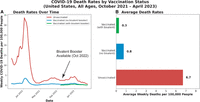
COVID-19 weekly death rates by vaccination status in the United States, October 2021 to April 2023. (A) Weekly COVID-19 death rates per 100,000 people from October 2021 through April 2023, stratified by vaccination status: unvaccinated (red), vaccinated without bivalent booster (blue), and vaccinated with bivalent booster (green; available from October 2022). (B) Average weekly death rates per 100,000 people across the study period. Unvaccinated individuals had approximately fivefold higher death rates than vaccinated individuals without bivalent boosters, and approximately ninefold higher death rates than those with bivalent boosters. Data source: Centers for Disease Control and Prevention, processed by Our World in Data: https://ourworldindata.org/grapher/united-states-rates-of-covid-19-deaths-by-vaccination-status.
Safety
Large-scale safety monitoring from multiple surveillance systems has established the side effect profile of mRNA vaccines. Like all medical interventions—from common pain relievers like Tylenol (which carries liver toxicity risk) to aspirin (which can cause stomach bleeding)—mRNA vaccines carry some documented risks that must be weighed against benefits. The most extensively studied serious side effects are myocarditis and pericarditis (inflammation of the heart muscle and surrounding lining). These conditions showed clear patterns—they occurred most frequently in adolescent and young adult males, typically after the second dose, within a few days of vaccination (Gargano et al. 2021; Oster et al. 2022). Among males aged 12–17, the highest-risk group, rates ranged from 70.3 to 105.9 cases per million second doses (Oster et al. 2022). This translates to absolute risk of 0.007%–0.011%—roughly seven to 11 cases per 100,000 vaccinated young men. To put this in perspective: The lifetime risk of being struck by lightning is about 1 in 15,300 (0.0065%), with approximately 10% of strikes being fatal (https://www.weather.gov/safety/lightning-odds). The lifetime odds of dying in a motor vehicle crash are about 1 in 95 (https://injuryfacts.nsc.org/all-injuries/preventable-death-overview/odds-of-dying/). The vaccine-related myocarditis risk falls below these commonly accepted everyday hazards.
More importantly, COVID-19 infection itself causes myocarditis at substantially higher rates (Boehmer et al. 2021; Diaz et al. 2021), with multiple studies demonstrating elevated risk compared to vaccination (Patone et al. 2022). The precise mechanisms underlying both infection- and vaccine-associated myocarditis remain under investigation, though the virus's interaction with ACE2 receptors and subsequent inflammatory responses likely play important roles (Shu et al. 2023). The vaccine exposes the body only to the spike protein without the replicating virus, causing inflammation in a small fraction of recipients but at much lower rates than infection (Boehmer et al. 2021; Diaz et al. 2021; Oster et al. 2022). Most vaccine-related myocarditis cases were mild: 96% of affected people were hospitalized for observation, but 87% had their symptoms resolved by discharge, and typical treatment was just anti-inflammatory drugs like ibuprofen (Oster et al. 2022). Safety monitoring (continued surveillance after vaccines were approved) through systems like VAERS, the Vaccine Safety Datalink, and international registries has tracked billions of doses administered globally (Kouhpayeh and Ansari 2022; Oster et al. 2022). Mathematical models estimate that U.S. vaccination programs prevented an estimated 235,000 COVID-19 deaths from December 2020 through September 2021 (Steele et al. 2022), with millions more deaths prevented in subsequent years (Ioannidis et al. 2025).
Viral evolution
Claims that vaccination accelerated viral evolution and prolonged the pandemic require examination of virology fundamentals and genetic evidence. SARS-CoV-2 is a single-stranded RNA virus with a nonsegmented genome. Such viruses evolve through “antigenic drift”—the gradual accumulation of small mutations in immune system targets. This is distinct from “antigenic shift,” which occurs when segmented viruses like influenza exchange large genome sections, creating dramatically different strains; influenza can evolve through both drift and shift, while coronaviruses evolve only through drift (Nelson and Holmes 2007). When scientists analyzed the Omicron (B.1.1.529) variant using molecular clock methods (which estimate when mutations occurred), they found it diverged from early 2020 virus strains. While the molecular clock can suggest when Omicron diverged from other lineages, one leading hypothesis—that it evolved during prolonged infection in an immunocompromised individual—is supported by other evidence but remains uncertain (Mallapaty 2022; Markov et al. 2023). Omicron's extensive mutations across multiple viral proteins, not just spike, are inconsistent with the hypothesis that spike-targeting vaccines drove its evolution (Hossain et al. 2022; Kumar et al. 2022). Population-level analyses indicate that vaccination reduces overall virus transmission and replication, thereby decreasing opportunities for new variants to emerge (Abulsoud et al. 2023; Markov et al. 2023). The spike protein presents more than 200 different predicted targets (epitopes) that antibodies and T cells may recognize (Grifoni et al. 2020). For a virus to completely escape immunity, it would need simultaneous mutations across multiple epitopes—a statistically unlikely scenario. Thus the data contradict the hypothesis that vaccines were the primary driver of viral evolution.
The scientific evidence demonstrates that mRNA vaccines are effective and in all age groups studied, safer than infection with SARS-CoV-2. We now turn to systematic examination of specific false claims about mRNA COVID-19 vaccines. Drawing on peer-reviewed research, regulatory agency data, molecular biology principles, and population-level studies, we will address claims about genetic modification, infertility, safety, and vaccine classification. While acknowledging legitimate areas of ongoing research and inherent limitations during an evolving pandemic, this analysis aims to provide healthcare providers, policymakers, and the public with evidence-based information to counter misinformation and support informed decision-making.
DISPELLING COMMON MISCONCEPTIONS ABOUT mRNA VACCINES
Widespread misinformation about mRNA vaccines requires evidence-based clarification. The following sections address the most common unfounded claims using molecular biology, clinical data, and scientific principles.
Misconception 1: mRNA vaccines alter your DNA
The claim that mRNA vaccines modify human genetic material reflects misunderstanding of basic cell biology and the difference between RNA and DNA. After uptake by cells in the muscle, vaccine mRNA stays in the cytoplasm (the main body of the cell) and does not enter the nucleus (where DNA is stored behind a protective membrane) (Smits et al. 2021; Yan et al. 2021; Zhang et al. 2023). While some cytoplasmic RNA viruses can transport genetic material to the nucleus under certain conditions, this is not a feature of mRNA vaccine biology. For the vaccine mRNA to become part of human DNA would require a complex process called reverse transcription, where an enzyme converts RNA into DNA. Human cells have limited ability to do this—mainly through ancient viral remnants called LINE-1 retrotransposons that are typically shut off in normal adult cells (Goodier 2016; Pizarro and Cristofari 2016). While retrotransposon-mediated reverse transcription can rarely occur, the probability is vanishingly small and has not been demonstrated to occur with mRNA vaccines in humans. Vaccine mRNA integration into the genome would require an impossibly complex sequence of events: The mRNA would need to cross the nuclear membrane, reverse transcriptase enzymes would need to be present and active, these enzymes would need to copy the mRNA into DNA, enzymes not normally active in human cells would need to cut open chromosomes and insert it, and this would all need to happen without triggering cell death pathways that eliminate abnormal cells. The bottom line is that while one cannot say “never” in biology, this misconception is a nonissue in practical terms.
While one in vitro study detected integration of vaccine mRNA sequences in a liver cancer cell line (Aldén et al. 2022), this occurred under highly artificial conditions with continuous LINE-1 expression. Subsequently, the original finding has been challenged on methodological grounds (Yan et al. 2021; Merchant 2022). Importantly, no published studies have detected vaccine mRNA integration in vaccine recipients, now more than five years after the first doses were administered. Additionally, vaccine mRNA is eventually degraded through normal cellular processes (Dowdle and Lykke-Andersen 2025), though recent studies have detected vaccine mRNA in lymph node germinal centers for several weeks following vaccination (Fertig et al. 2022; Krauson et al. 2023).
Misconception 2: the vaccines were “rushed” and inadequately tested
The compressed time line has been mischaracterized as evidence of compromised safety standards. In reality, both vaccines completed all required clinical trial phases, with some phases combined to accelerate the time line with sample sizes and scientific rigor meeting or exceeding FDA requirements (Polack et al. 2020; Baden et al. 2021). Phase I tested safety and immune response in small groups. Phase II optimized dosing and expanded safety testing. Phase III—the large efficacy trials—tested whether vaccines actually prevented disease and detected rare side effects. Critically, the trials used innovative designs to accelerate development: Pfizer employed a continuous Phase 1/2/3 design that allowed seamless progression between phases, while Moderna ran phases in parallel. The accelerated time line resulted from several factors that eliminated delays without cutting corners: (1) unprecedented funding that removed financial barriers, (2) rolling submission to the FDA where reviewers evaluated data in real-time rather than waiting for one complete package, (3) at-risk manufacturing where companies produced millions of doses during trials (risking financial loss if trials failed), (4) cell-free manufacturing that allowed rapid production of clinical-grade material, and (5) high COVID-19 transmission rates that allowed quick accumulation of infection cases to assess vaccine effectiveness (Polack et al. 2020; Baden et al. 2021).
Critically, no safety evaluation steps were eliminated—only bureaucratic and financial barriers were removed. Some hesitancy arose from the initial Emergency Use Authorization status rather than full FDA approval, though full approval was subsequently granted in August 2021 (Pfizer) and January 2022 (Moderna). Moreover, mRNA vaccine technology platforms had undergone extensive laboratory and early human testing for over a decade before COVID-19 (Sahin et al. 2014; Pardi et al. 2018). First-in-human mRNA vaccine trials began in the early 2010s, establishing foundational safety data (Sahin et al. 2014; Pardi et al. 2018). By 2019, approximately 50 clinical trials testing mRNA technology in humans—including at least 15 for infectious disease prevention—had been initiated (Pardi et al. 2018). The COVID-19 vaccines simply applied this established technology to a new target (SARS-CoV-2 spike protein) rather than representing a completely novel therapy. Post-authorization monitoring (safety tracking that continues after vaccines are approved) through multiple systems has now accumulated safety data from billions of doses administered globally (Kouhpayeh and Ansari 2022; Oster et al. 2022; Xu et al. 2023)—representing more extensive real-world surveillance than almost any other licensed medication.
Misconception 3: mRNA vaccines contain fetal tissue
Claims that mRNA vaccines contain fetal tissue or aborted fetal cells are patently false (Zimmerman 2021; Durant et al. 2024). The publicly disclosed ingredients of both vaccines consist only of (1) nucleoside-modified mRNA encoding spike protein, (2) lipid nanoparticle components (ionizable lipids, phospholipids, cholesterol, and PEG-lipid), (3) buffering salts, (4) sucrose (table sugar) for stability, and (5) sterile water (Polack et al. 2020; Baden et al. 2021). No human cells of any kind exist in the final vaccine product.
The confusion stems from laboratory research methods. During early development, scientists used HEK-293 cells—a cell line originally created from elective abortion tissue in 1973—for some proof-of-concept studies and quality testing (Graham et al. 1977). These laboratory cells have been grown continuously in culture for over 50 years; they are essentially immortalized and bear little resemblance to the original cells. Importantly, HEK-293 cells were not used in manufacturing the vaccines (Polack et al. 2020). Pfizer used them for some confirmatory testing but did not require them for production. Moderna similarly used them for some characterization studies (Baden et al. 2021). The actual vaccine manufacturing uses cell-free chemical synthesis—purified enzymes make the mRNA through a test-tube process, and lipid nanoparticles are assembled from synthetic fats (Polack et al. 2020; Baden et al. 2021). No cellular material from any development-phase research enters the final product. Extensive purification and quality testing ensure that the final product is completely free of any extraneous biological material (Polack et al. 2020; Baden et al. 2021).
Misconception 4: mRNA vaccines cause infertility
The claim that COVID-19 vaccination impairs fertility through immune attack on placental proteins lacks any scientific basis (Braun et al. 2022). This hypothesis originated from a non-peer-reviewed petition by Wodarg and Yeadon suggesting that antibodies against the spike protein might cross-react with syncytin-1, a protein essential for placenta formation (https://dokumen.pub/wodarg-yeadon-covid-19-vaccine-petition.html). The proposed mechanism: If spike antibodies also attacked syncytin-1, pregnancy would fail. However, genetic sequence analysis reveals minimal similarity between spike protein and syncytin-1. The alleged matching region is only 4–5 amino acids long. While B-cell epitopes can be as short as 4 amino acids (Buus et al. 2012), short matches of this length occur randomly throughout thousands of human proteins without causing immune cross-reactivity.
Multiple studies have definitively refuted this hypothesis. Studies of vaccinated individuals show no impairment in conception rates, pregnancy rates, or live birth rates (Orvieto et al. 2021; Shimabukuro et al. 2021). One study of 2126 pregnant women found identical miscarriage rates between vaccinated and unvaccinated groups (Shimabukuro et al. 2021). Couples trying to conceive showed no delay in achieving pregnancy if vaccinated (Orvieto et al. 2021). Furthermore, if this mechanism were real, natural COVID-19 infection would similarly impair fertility—but population data do not support this, and successful pregnancies have occurred in both vaccinated people and COVID-19 survivors (Orvieto et al. 2021; Shimabukuro et al. 2021). Laboratory tests confirm that antibodies generated against spike protein do not react with syncytin-1, directly disproving clinically significant cross-reactivity (Prasad et al. 2021). While some studies have documented temporary menstrual cycle changes following vaccination (Edelman et al. 2022), these were generally mild and self-resolving.
Misconception 5: natural infection always provides better immunity than vaccination
SARS-CoV-2 infection induces broad immune responses targeting multiple viral proteins, and studies have demonstrated that infection-induced immunity provides substantial protection against reinfection, in some analyses comparable to or exceeding the durability of vaccine-induced immunity alone (Shenai et al. 2021). This is not in dispute. The combination of prior infection and vaccination—“hybrid immunity”—has been shown in large systematic analyses to provide the highest magnitude and most durable protection, particularly against severe disease (Bobrovitz et al. 2023), though the incremental benefit has been characterized as marginal in some analyses (Shenai et al. 2021).
The critical issue, however, is risk
Acquiring natural immunity requires getting infected, which carries substantial dangers: high hospitalization rates depending on age and health conditions (Deng et al. 2025), long-term complications (long COVID affecting 10%–35% of infected people) (Huerne et al. 2023), and death (ranging from under 0.1% in young healthy people to nearly 5% in elderly populations) (Rickards and Kilpatrick 2023). The question is not whether natural immunity “works”—it clearly does—but whether forgoing vaccination in favor of infection-acquired immunity represents a sound risk-benefit calculation when a safer option exists. This calculus is especially consequential for the elderly and immunocompromised, where the consequences of infection are most severe.
Misconception 6: mRNA vaccines contain microchips or tracking devices
Claims that COVID-19 vaccines contain microchips, electronic surveillance devices, or tracking technology are technologically impossible. Complete ingredient lists are publicly available and contain only biological and chemical components—no electronics (Polack et al. 2020; Baden et al. 2021). The vaccine dose volume is 0.3 mL (Pfizer) or 0.5 mL (Moderna) (about six to seven drops). Consider what electronic tracking would require: (1) a power source (batteries or energy harvesting systems far larger than the entire vaccine dose), (2) transmitters to send signals (requiring antennae structures), (3) waterproofing for wet biological environments (electronics need moisture protection), and (4) ability to pass through standard needles (typical vaccine needles have inner diameters of 0.33–0.51 mL) (https://www.cdc.gov/vaccines/hcp/admin/downloads/vaccine-administration-needle-length.pdf). No electronic component meeting these requirements currently exists at the submillimeter scale necessary for vaccine injection.
The term “nanoparticle” in scientific literature refers to lipid nanoparticles—tiny spheres 60–100 nm in diameter made of fat molecules (Schoenmaker et al. 2021). These are purely passive delivery vehicles lacking electronic properties, computing capability, or transmission ability. They function only to protect the mRNA and help it enter cells, where they are broken down into component fats (Schoenmaker et al. 2021). Every vaccine vial undergoes rigorous quality testing including checks for sterility, purity, correct strength, and absence of foreign particles—testing that would detect any unexpected material (Polack et al. 2020; Baden et al. 2021). This misconception likely stems from confusing unrelated technologies (like RFID chips requiring centimeter-scale antennae) with vaccine components, or misunderstanding research into vaccine record-keeping systems that are completely separate from vaccine contents.
Misconception 7: vaccinated people “shed” vaccine and affect unvaccinated people
The concept of “vaccine shedding” refers to release of vaccine-strain pathogens from vaccinated people—a phenomenon exclusively seen with live-attenuated viral vaccines (like oral polio vaccine or chickenpox vaccine in rare cases) (Abraham et al. 1993). mRNA vaccines contain no live virus, no weakened virus, no viral particles, nor any infectious agent capable of replication or transmission (Polack et al. 2020; Baden et al. 2021). The vaccine is synthetic mRNA encoding a single viral protein. This mRNA cannot replicate, cannot create infectious particles, and cannot spread between people (Polack et al. 2020; Baden et al. 2021).
After vaccination, a person's cells translate the mRNA to produce spike protein temporarily in the cells’ cytoplasm. This protein either appears on the cell surface for immune recognition or gets broken down through normal protein disposal pathways (Lodish 2004). The spike protein itself—a single structural protein without viral genes, replication machinery, or other viral components—cannot function as an infectious agent. Vaccinated people's breath, skin contact, or bodily fluids contain no vaccine mRNA and no transmissible spike protein. No mechanism exists for transferring cellular mRNA between individuals under normal conditions.
Claims that unvaccinated people experience symptoms after contact with vaccinated individuals lack biological plausibility, as no mechanism exists for transmission of vaccine components between people. No credible evidence supports transmission of vaccine components, immune responses, or biological effects from vaccinated to unvaccinated people.
Misconception 8: mRNA vaccines cause widespread blood clots
Concerns about vaccine-associated blood clots require distinguishing between vaccine types and accurate understanding of incidence. Vaccine-induced immune thrombotic thrombocytopenia (VITT)—characterized by blood clots, low platelet counts, and specific antibodies against platelet factor 4—is a rare but serious condition conclusively linked to adenoviral vector vaccines (AstraZeneca's ChAdOx1 and Johnson & Johnson's Ad26.COV2.S) at rates of approximately 1 per 50,000–100,000 doses (Greinacher et al. 2021).
This distinction between vaccine platforms is critical to highlight. VITT incidence in mRNA vaccine (Pfizer or Moderna) recipients is extremely low (Kanack and Padmanabhan 2022). One study found no increased incidence of deep vein thrombosis after vaccination with any platform (Houghton et al. 2021). A large Nordic population study reported increased rates of thromboembolism following mRNA vaccination (Dag Berild et al. 2022), while corresponding risks following SARS-CoV-2 infection were found substantially higher (Hippisley-Cox et al. 2021). Population studies indicate that cerebral venous sinus thrombosis (brain blood clots) occurs naturally at rates of 2–5 per million people yearly (Devasagayam et al. 2016). The mechanism underlying VITT—specific antiplatelet factor 4 antibody formation triggered by adenoviral vector components (Greinacher et al. 2021;,Kanack and Padmanabhan 2022)—has not been demonstrated with mRNA vaccines. Conversely, COVID-19 infection itself carries substantial clotting risk through multiple mechanisms: blood vessel damage, immune system activation, platelet hyperactivity, and inflammatory cytokine-driven coagulation problems (Kollias et al. 2020; Loo et al. 2021). Critically ill ICU COVID-19 patients develop blood clots at rates of up to 31%, with elevated rates even in less severely ill hospitalized patients (Klok et al. 2020). Thus, while vigilant safety monitoring is warranted for all vaccine platforms, the clotting risks associated with COVID-19 infection far exceed those observed with mRNA vaccination.
Misconception 9: mRNA vaccines suppress your immune system
Claims that mRNA vaccination causes immune deficiency or broad immune suppression lack biological plausibility and contradict monitoring data. This misconception appears to stem from (1) misinterpreting temporary lymphopenia (low white blood cell counts) seen in some people after vaccination—which actually represents immune cells moving to lymph nodes rather than disappearing, (2) confusing local immune regulation mechanisms with system-wide immune suppression, and (3) misunderstanding antibody class switching as immune dysfunction.
Comprehensive immune assessments demonstrate that mRNA vaccines trigger robust immune responses including spike-specific neutralizing antibodies (IgM followed by longer-lasting IgG), helper T-cell activation (TH1-type responses), killer T-cell generation, and memory B-cell formation—all indicators of proper immune system engagement (Arunachalam et al. 2021; Guerrera et al. 2021; Sahin et al. 2021; Barbeau et al. 2022; Orlandi et al. 2025). Available surveillance data have not identified increased rates of opportunistic infections or evidence of generalized immune dysfunction in vaccinated populations. Concerns about IgG4 class switching after repeated boosting—where antispike IgG4 antibodies (IgG4 is one of four subtypes of IgG antibodies, typically associated with reduced inflammatory responses) increase relative to IgG1—have been observed, though the clinical significance remains under investigation (Irrgang et al. 2022). IgG4 antibodies, while having reduced inflammatory functions, retain virus-neutralizing ability and do not indicate disease-causing immune suppression (Irrgang et al. 2022). In fact, a recent study found that cancer patients with advanced lung cancer or melanoma who received a COVID-19 mRNA vaccine within 100 days of starting checkpoint inhibitor immunotherapy had significantly improved survival rates—nearly double for lung cancer patients—suggesting that the vaccine may enhance the immune system's response to cancer treatment (Grippin et al. 2025). The immune profile induced by mRNA vaccination is consistent with effective vaccine-induced immunity, not immunosuppression.
Misconception 10: mRNA vaccines are “gene therapy,” not real vaccines
The classification of mRNA vaccines has been deliberately mischaracterized as “gene therapy” or “genetic modification.” Regulatory definitions clearly distinguish vaccines from gene therapies based on mechanism and purpose. Gene therapy, as defined by FDA and EMA, involves introducing genetic material intended to treat, prevent, or cure disease through modification of cellular genetic content, typically through (1) permanent incorporation into chromosomes (using retroviral or lentiviral vectors), (2) long-term maintenance of foreign DNA (using adeno-associated virus vectors or plasmids), or (3) removing a patient's cells, genetically modifying them, and returning them (like CAR-T therapy) (https://www.fda.gov/vaccines-blood-biologics/cellular-gene-therapy-products/what-gene-therapy). These approaches result in sustained or permanent expression of therapeutic genes.
In contrast, mRNA vaccines deliver temporary genetic information directing short-term protein production without genome integration, without sustained expression, and without altering cellular genetic machinery beyond normal processes (see previous sections). The mRNA is translated by existing cellular ribosomes—the same machinery that reads cellular mRNA to make proteins constantly in all cells—and then degraded over time (Lodish 2004). Regulatory agencies (FDA, EMA, WHO) classify mRNA COVID-19 vaccines as vaccines, not gene therapies, based on these clear mechanistic distinctions.
The confusion may arise from (1) use of “genetic” to describe nucleic acid platforms, (2) historical connections between mRNA technology and early gene therapy research, and (3) deliberate conflation by sources seeking to generate concern. The FDA's Center for Biologics Evaluation and Research (CBER) reviews mRNA vaccines under its Office of Tissues and Advanced Therapies for administrative filing purposes—this is an organizational chart decision, not a biological classification. The FDA's own gene therapy guidance explicitly excludes vaccines for infectious diseases. Its list of approved gene therapies does not include a single mRNA vaccine (https://www.fda.gov/vaccines-blood-biologics/cellular-gene-therapy-products/approved-cellular-and-gene-therapy-products). And the European Union regulates mRNA vaccines as vaccines—not gene therapies.
It should be noted that while the vaccine itself does not constitute gene therapy by regulatory or mechanistic definitions, theoretical concerns exist about potential unintended effects of temporarily expressed proteins, which warrants ongoing safety monitoring as with all novel therapeutic approaches. The distinction between “gene therapy” and “vaccine” remains scientifically and regulatorily appropriate for mRNA vaccine platforms, regardless of their nucleic acid–based mechanism.
SUMMARY
The totality of evidence demonstrates that mRNA COVID-19 vaccines represent a landmark scientific achievement with rigorous clinical validation, extensive safety monitoring, and immense public health benefit. However, they have also revealed profound challenges posed by misinformation in the digital age. The empirical record—from randomized trials enrolling tens of thousands of participants to real-world studies encompassing hundreds of millions of people to safety systems tracking billions of doses globally—establishes that mRNA vaccines are highly effective interventions that have prevented millions of deaths and significantly reduced severe COVID-19 (Polack et al. 2020; Baden et al. 2021; Johnson et al. 2022; Steele et al. 2022; Johnson 2023). The safety profile, while including documented adverse events like rare myocarditis in specific age groups, demonstrates risk-benefit calculations that overwhelmingly favor vaccination when compared to infection risks (Boehmer et al. 2021; Diaz et al. 2021; Patone et al. 2022; Shu et al. 2023; Hertoghs et al. 2025). Systematic examination of common misconceptions reveals that claims about DNA alteration, infertility, microchips, vaccine shedding, blood clots, immune suppression, and gene therapy classification lack biological plausibility, contradict established science, and are refuted by population data.
The success of mRNA vaccine technology—built on decades of foundational research in molecular biology, immunology, and drug delivery—has validated a platform with broad applications beyond COVID-19, including potential uses in cancer treatment (Sethna et al. 2025), rare genetic diseases (Musunuru et al. 2025), and preparedness for future pandemics (Sahin et al. 2014; Pardi et al. 2018). Yet this scientific achievement occurred alongside an unprecedented information crisis. Misinformation spreading through social media and alternative media has undermined vaccine confidence, reduced uptake in certain populations, and contributed to preventable illness and death. The persistence of public concerns about vaccination despite overwhelming evidence highlights critical problems in science communication, public health messaging, institutional trust, and digital information ecosystems.
Moving forward, the scientific and medical communities must recognize that technical excellence in vaccine development, while necessary, is not sufficient for public health success. The pandemic also demonstrated the importance of effective leadership and clear communication; nations with coordinated public health messaging achieved higher vaccination rates and better outcomes. Effective outcomes require equally sophisticated approaches to combating misinformation, rebuilding institutional credibility, addressing legitimate concerns through transparent communication, and acknowledging genuine scientific uncertainty without undermining evidence-based recommendations. The COVID-19 pandemic has demonstrated both modern science's remarkable capacity to rapidly develop safe and effective interventions and the fragility of public trust in an era of information overload and declining confidence in expert institutions.
The mRNA COVID-19 vaccine experience represents a pivotal moment in medical history: a testament to human ingenuity and scientific collaboration that saved millions of lives, yet also a cautionary tale about public health systems’ vulnerability to misinformation and the ongoing challenge of translating scientific evidence into population-level health behaviors. The path forward requires sustained commitment to rigorous research, transparent communication, evidence-based policy, and proactive engagement with public concerns. Public health is achieved not merely through technological innovation, but through cultivating informed trust between scientific institutions and the communities they serve.
COMPETING INTEREST STATEMENT
In accordance with International Committee of Medical Journal Editors (ICMJE) guidelines, all authors disclose the following financial and nonfinancial relationships related to the content of this manuscript within the preceding 36 months. J.C. is a cofounder of Tevard Biosciences, the Alliance for mRNA Medicines, and the Foundation for mRNA Medicines, and the founder of RNA Innovations Consulting, LLC. J.C. serves on the Scientific Advisory Boards of Tevard Biosciences, NTX Bio, bYoRNA, and Cure SynGAP1, on the Boards of Directors of the Society for RNA Therapeutics, the Alliance for mRNA Medicines, and the Foundation for mRNA Medicines, and is an Executive Committee member of the Alliance for mRNA Medicines. A.G. is a cofounder and Chief Development Officer of Replicate Biosciences, the founder and Chief Executive Officer of RNA Consulting, LLC, and a cofounder, Board Chair, and Executive Committee member of the Alliance for mRNA Medicines. R.D. is a cofounder, Executive Board member, and Board Vice Chair of the Alliance for mRNA Medicines and the founder and Principal of Strategic Clinical Research Consulting LLC d/b/a The Modeste Duncan Group. R.D. serves on the Scientific Advisory Boards of Amptiv Biosciences and Intelisci and previously served as Chief Strategy Officer of Arcturus Therapeutics and as Vice President of the mRNA Program at CSL Seqirus. C.A. is Executive Director of the Alliance for mRNA Medicines and Executive Director of the Association of Clinical Research Organizations, and a Principal at Leavitt Partners, which manages the Alliance for mRNA Medicines. C.A. is a cofounder of the Alliance for mRNA Medicines, an Advisory Board Member of the Cancer Policy Institute of Cancer Support Community, a Board Member of MyCare Medical on behalf of Leavitt Equity Partners and holds an equity interest in Health Management Associates. S.R. has consulted for Rectify Pharmaceuticals, Inc. and is the author of Everyday RNA: The Future of RNA Medicine (World Scientific Publishing), from which he receives royalties. M.J.M. previously served as Chief Scientific Officer at Moderna (2016–2021) during the development and authorization of mRNA-1273 and is a cofounder of Kerna Labs, Waterfall Scientific, Via Scientific, and Comanche Biopharma. M.J.M. serves on the Boards of Directors of Tessera Therapeutics, Via Scientific, and nChroma Bio, is Board Chair of Waterfall Scientific, SAB Chair of Arrakis Therapeutics and Tessera Therapeutics, and a member of the Scientific Advisory Boards of Alltrna and Comanche Biopharma. F.G. is a member of the Scientific Advisory Board of Prosperity Partnership.
Footnotes
-
Article is online at http://www.rnajournal.org/cgi/doi/10.1261/rna.080944.126.
-
Freely available online through the RNA Open Access option.
This article, published in RNA, is available under a Creative Commons License (Attribution-NonCommercial 4.0 International), as described at http://creativecommons.org/licenses/by-nc/4.0/.




