


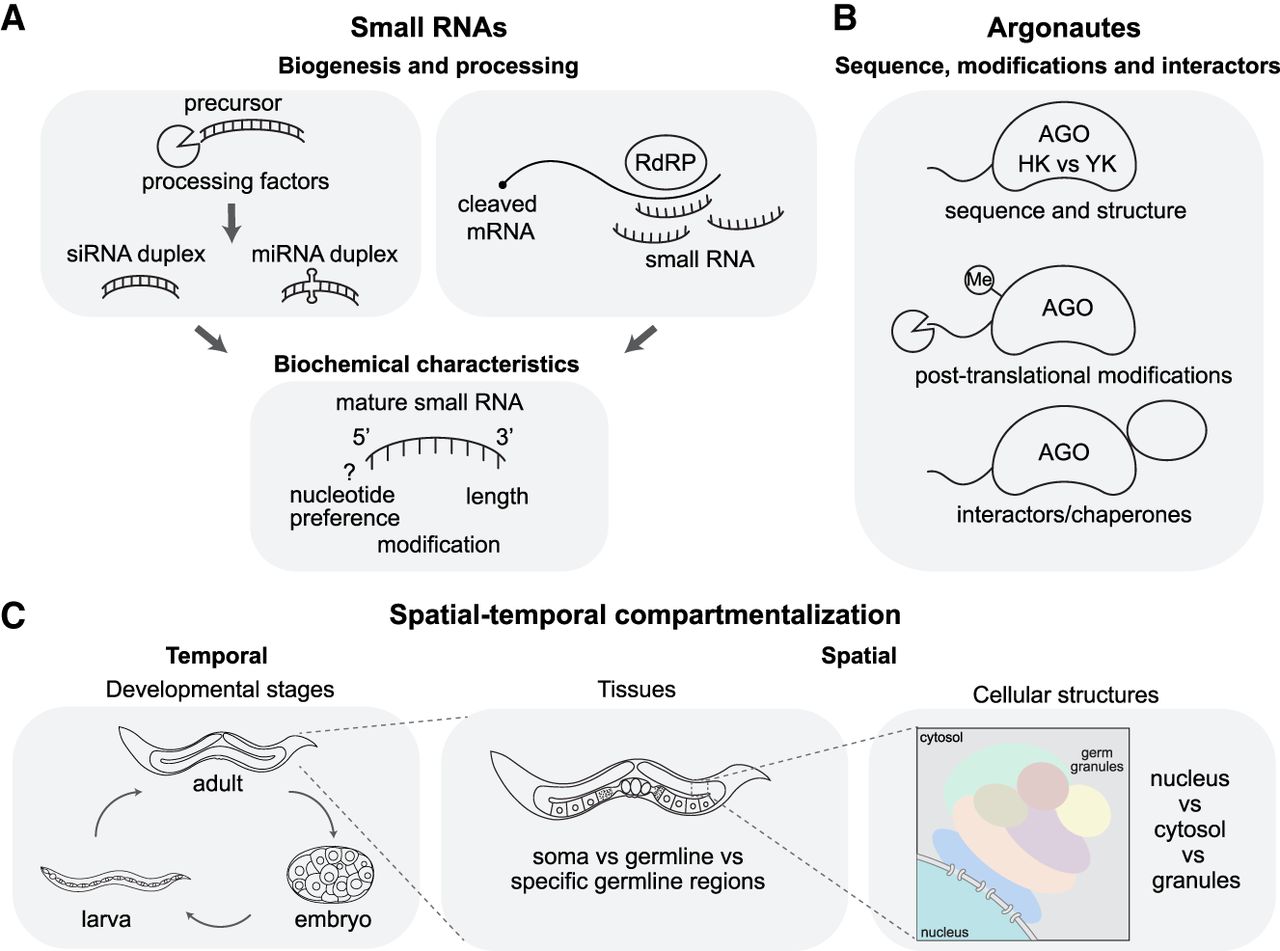
Mechanisms underlying Argonaute–small RNA loading specificity. (A) Biogenesis factors and biochemical features of small RNAs influence their selective loading into specific Argonaute proteins. During biogenesis, precursor structure, the use of particular RNA-dependent RNA polymerases, and the choice of duplex strand shape the properties of mature small RNAs. These properties, including length, 5′ nucleotide preference, and terminal modifications, collectively affect Argonaute loading specificity. (B) Post-translational modifications of Argonautes, together with interactions with accessory proteins, further refine small RNA binding specificity. (C) Spatial and temporal coexpression of small RNAs and their Argonaute partners constrains loading specificity. Effective pairing requires coexpression in developmental stage, tissue, and subcellular compartment, including the nucleus, cytoplasm, or specialized germ granules.




