


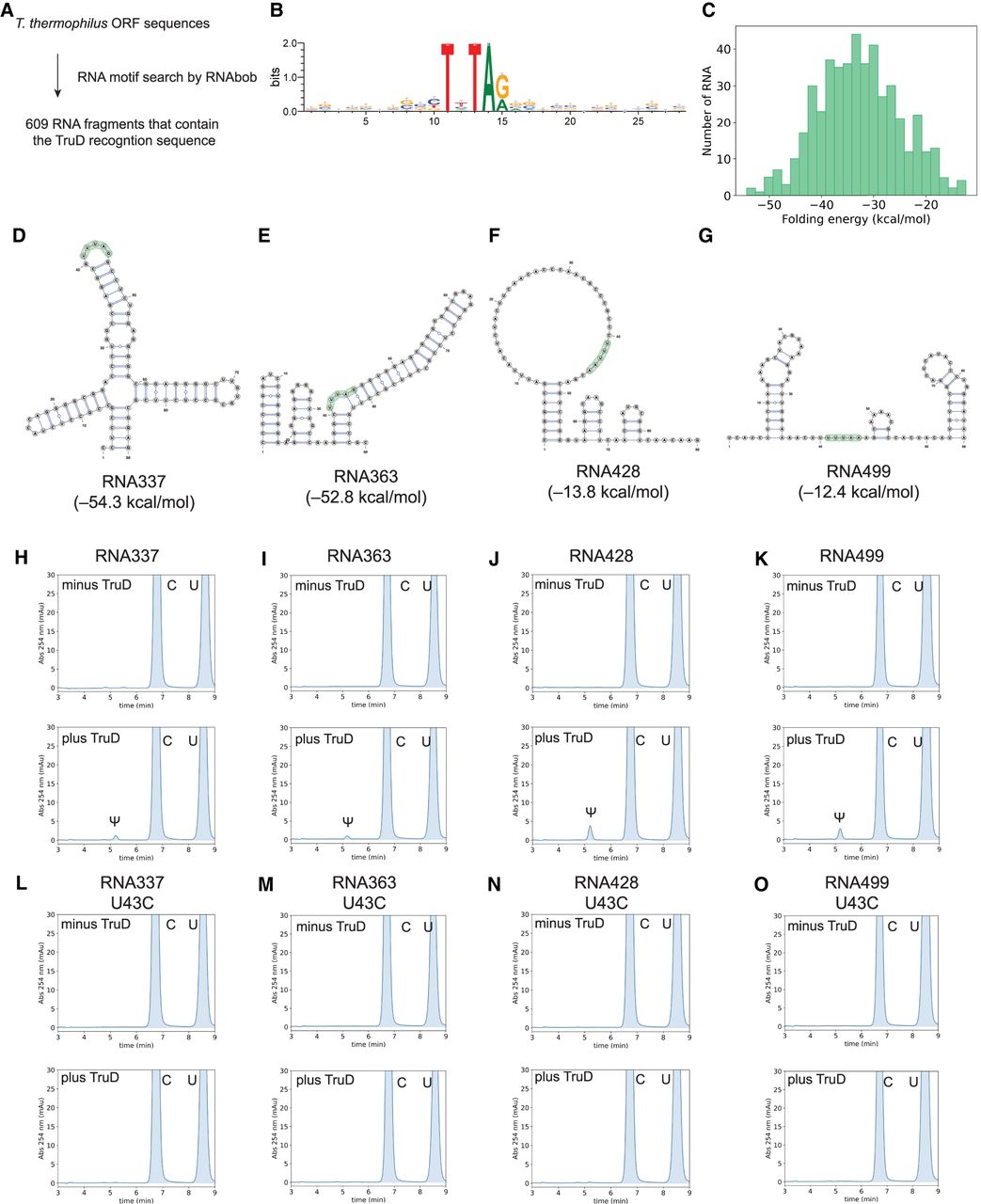
TruD acts on potential substrate mRNA fragments identified from T. thermophilus ORFs. (A) Schematic representation of the identification process for potential TruD substrates. An RNA motif search was conducted using RNABOB to identify sequences containing the recognition sequence. (B) Sequence conservation of the recognition site in the identified potential substrates is analyzed. (C) Minimal folding energies of the potential substrates are plotted on a histogram. Four RNAs were selected for further investigation. (D–G) Secondary structures and folding energies of the selected potential substrates are shown, with the TruD recognition sequence highlighted in green. (H–O) In vitro pseudouridylation assays with (plus TruD) or without (minus TruD) recombinant TruD using in vitro synthesized (H) RNA337, (I) RNA363, (J) RNA428, (K) RNA499, (L) RNA337 U43C, (M) RNA363 U43C, (N) RNA428 U43C, and (O) RNA499 U43C. Pseudouridine formation was detected by nucleoside analysis using HPLC, where pseudouridine eluted ∼5 min. These experiments were performed independently three times (n = 3) and gave the same results; one representative chromatogram is shown.




