


ASOBIOTICS 2024: an interdisciplinary symposium on antisense-based programmable RNA antibiotics
- Jörg Vogel1,2,
- Franziska Faber1,3,
- Lars Barquist1,4,
- Anke Sparmann1,
- Linda Popella2 and
- Chandradhish Ghosh1
- 1Helmholtz Institute for RNA-based Infection Research (HIRI), Helmholtz Centre for Infection Research (HZI), D-97080 Würzburg, Germany
- 2University of Würzburg, Medical Faculty, Institute of Molecular Infection Biology (IMIB), D-97080 Würzburg, Germany
- 3University of Würzburg, Medical Faculty, Institute for Hygiene and Microbiology, D-97080 Würzburg, Germany
- 4Department of Biology, University of Toronto, Mississauga, Ontario, Canada L5L 1C6
- Corresponding author: joerg.vogel{at}uni-wuerzburg.de
Abstract
The international symposium ASOBIOTICS 2024 brought together scientists across disciplines to discuss the challenges of advancing antibacterial antisense oligomers (ASOs) from basic research to clinical application. Hosted by the Helmholtz Institute for RNA-based Infection Research (HIRI) in Würzburg, Germany, on September 12–13, 2024, the event featured presentations covering major milestones and current challenges of this antimicrobial technology and its applications against pathogens, commensals, and bacterial viruses. General design principles and modification of ASOs based on peptide nucleic acid (PNA) or phosphorodiamidate-morpholino-oligomer (PMO) chemistry, promising cellular RNA targets, new delivery technologies, as well as putative resistance mechanisms, were discussed. A panel discussion noted the challenge of nomenclature: antibacterial ASOs lack a single, universally used name. To address this, the term “asobiotics” was proposed to unite a community of like-minded scientists that are committed to advancing ASOs as antimicrobials. A consistent name will simplify literature searches and help scientists and funders appreciate the potential of programmable RNA antibiotics to combat antimicrobial resistance and enable precise microbiome editing.
Keywords
INTRODUCTION
The global increase in antimicrobial resistance (AMR) is one of the greatest threats to human health (GBD 2021 Antimicrobial Resistance Collaborators 2024). This threat necessitates the development of new antibiotics against bacterial pathogens of humans and livestock to overcome existing and emerging resistance mechanisms. The numbers look bleak. While the prevalence of drug-resistant clinical isolates is increasing rapidly, few antibiotics with new modes-of-action are reaching the market. Moreover, we also need new types of antibiotics that target individual microbial species in complex communities. This need is becoming increasingly obvious as we uncover the diverse roles of the over thousand bacterial species that constitute the human microbiome. Some of these species express enzymes that modify prescribed drugs, others modulate the immune system or the activity of remote organs in unfavorable ways (Klaassen and Cui 2015; Lee et al. 2022; Leigh et al. 2022). But most current antibiotics are broad spectrum, which makes it very difficult to eliminate these harmful species specifically. To date, few if any species-specific antibiotics exist. Ideally, such species-specific antibiotics would be based on rational design rules and a platform technology akin to the highly successful mRNA platform that enabled the development and approval of COVID-19 vaccines in record time.
Antisense technologies have the potential to form the foundation for such a new generation of antibiotics. Upon delivery into the bacterial cell, short antisense oligonucleotides or mimics thereof can directly modulate bacterial gene expression. ASOs are generally designed to be complementary to the translation start site of a bacterial target mRNA and sterically block ribosome binding and initiation of translation. Although ASOs are designed to inhibit protein synthesis, there is growing evidence that they can also cause target mRNA depletion, but the mechanisms underlying this effect remain poorly understood. The programmable nature of ASOs based on simple base-pairing rules allows rational and specific drug design. This feature can facilitate the rapid development of ASOs that kill emerging pathogens, sensitize drug-resistant strains, or block expression of key virulence factors—all while sparing the native microbiome. However, despite ample proof-of-concept for efficacy against a diverse range of bacterial pathogens in vitro and in vivo, antimicrobial ASOs are yet to advance to the point of drug approval.
The international two-day symposium ASOBIOTICS 2024 (Fig. 1), which took place on September 12–13, 2024, aimed to bring together—for the first time—pioneers and newcomers in the field of antimicrobial ASOs, as well as experts from related areas. It drew ∼60 participants from nine countries and several different disciplines, such as basic and clinical microbiology, RNA biology, organic chemistry, and data science (Fig. 2). The scientific program (Fig. 3) comprised four sessions, each with three to four invited talks. The first day also featured a poster session and a conference dinner, providing ample opportunity for students and postdocs to discuss their work with senior scientists early during the meeting. The meeting concluded with a panel discussion to reflect the state-of-the-art of the field. The symposium was sponsored and hosted by the Helmholtz Institute for RNA-based Infection Research (HIRI; www.helmholtz-hiri.de), which is situated on the medical campus of the University of Würzburg, Germany.
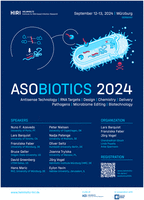
The conference poster of ASOBIOTICS 2024.

ASOBIOTICS 2024 brought together ∼60 participants from nine countries and several different disciplines, such as basic and clinical microbiology, RNA biology, organic chemistry, and data science. (Photo courtesy of HIRI/Luisa Macharowsky.)
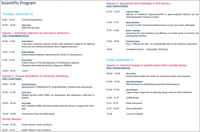
The scientific program of ASOBIOTICS 2024.
In his welcome remarks, HIRI director Jörg Vogel introduced his two co-organizers, Franziska Faber and Lars Barquist, and three additional members of the conference committee, namely, Anke Sparmann, Linda Popella, and Chandradhish (CD) Ghosh. He gave an overview over the structure and goals of the Helmholtz Association, Germany's largest research organization, to which the HIRI as part of the Helmholtz Center for Infection Research (HZI) belongs. The official mission of the Helmholtz Association is to address the grand challenges of science, society, and industry, which include the alarming surge of AMR and our incomplete understanding of the human microbiome. Vogel emphasized how the development of ASO-based antibiotics aligns with the mission of the HIRI, which is to combat infectious diseases by combining interdisciplinary expertise with cutting-edge research infrastructure to exploit the vast potential of RNA as a diagnostic molecule, target, and drug. He also highlighted the pioneering work of Liam Good and Peter E. Nielsen using short antisense peptide nucleic acids (PNAs) to silence target mRNAs of essential proteins in Escherichia coli (e.g., Good and Nielsen 1998; Good et al. 2001).
While the general principle of antisense-mediated bacterial killing has been reproduced by many other laboratories and in additional species (Pifer and Greenberg 2020; Vogel 2020; El-Fateh et al. 2024; Moreira et al. 2024), many aspects of the process have remained incompletely understood. Vogel broke the process down to four stages: (i) ASO delivery to the bacteria at the site of interest in the human body; (ii) cell entry, during which the ASO needs to traverse the chemically complex, multilayered structure of the bacterial envelope; (iii) search for and recognition of the target mRNA of interest in the bacterial cytosol; and (iv) initiation of cell death as a consequence of preventing the synthesis of an essential protein (Fig. 4). Recognizing the range of expertise needed to tackle these different aspects, the conference's scientific program brought together specialists from diverse fields in a dynamic and collaborative setting.
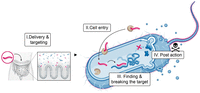
The process of antisense-mediated bacterial killing can be broken down into four stages: (i) ASO delivery to the bacteria at the site of interest in the human body; (ii) cell entry; (iii) search for and recognition of the target mRNA of interest in the bacterial cytosol; and (iv) initiation of cell death as a consequence of preventing the synthesis of an essential protein.
SCIENTIFIC PROGRAM
Session 1: Antisense oligomers as alternative antibiotics
A precision antisense peptide nucleic acid antibiotics platform for fighting infections by multidrug-resistant Gram-negative bacteria
Peter E. Nielsen (University of Copenhagen, Denmark) presented a PNA-based antibiotics platform for fighting infections by multidrug-resistant (MDR) Gram-negative bacteria. This platform has been used to discover antisense PNAs targeting essential bacterial genes exhibiting (sub)micromolar antibacterial activity against E. coli, Klebsiella pneumoniae, Acinetobacter baumannii, and Pseudomonas aeruginosa (including multidrug-resistant clinical isolates) (Good et al. 2001; Nejad et al. 2021; Iubatti et al. 2022). Lead compounds are bactericidal via an antisense mechanism of action, exhibit a low frequency of resistance, have exquisite biostability in human (and mouse) serum, show low toxicity in human cell culture, and good in vivo tolerability in mice. Moreover, these compounds show in vivo efficacy against MDR E. coli and A. baumannii in the urinary tract, sepsis, and soft tissue infection mouse models via systemic administration. Nielsen ended his talk with a discussion of the prospects of developing novel precision antisense antibiotics against MDR Gram-negative bacterial infections.
Antimicrobial antisense peptide nucleic acids for streptococci
Nadja Patenge (University Medicine Rostock, Germany) focused on the design of PNAs for Streptococcus pneumoniae. PNAs targeting the essential gene gyrA coupled to carrier peptides HIV‐1 TAT and (RXR)4XB demonstrated antimicrobial activity (Barkowsky et al. 2022; Abt et al. 2023). RNA-seq analyses revealed upregulation of stress responses and downregulation of genes responsible for DNA-synthesis and repair, among others. Future work will concentrate on the identification of improved PNA carrier systems for streptococci and on the investigation of the global transcriptome response to PNA treatment. A murine infection model will be developed to evaluate the therapeutic potential of antisense PNAs for streptococcal diseases.
A brief history of the development of antibacterial peptide-phosphorodiamidate morpholino oligomers (PPMOs)
Bruce Geller (Oregon State University, Corvallis, and Silentium Biosciences, Inc., USA) reviewed his foundational work on antibacterial phosphorodiamidate morpholino oligomers (PMOs) (Geller et al. 2003). This included optimization of PMO length and position on target mRNA (Deere et al. 2005) and improvements in cell-penetrating peptides (CPPs), which are required for the delivery of the PMO across the bacterial cell envelope. He also presented data on the in vitro safety of CPP-coupled PMOs (PPMOs) and biofilm penetration, and efficacy in multiple mouse models of infection, including E. coli sepsis (Tilley et al. 2007) as well as K. pneumoniae-induced pneumonia (Geller et al. 2018) and urinary tract infections. Data on the use of PPMOs to inhibit antibiotic resistance genes and restore susceptibility of MDR pathogens both in vitro and in vivo was reviewed as well. Geller also presented the rate and mechanism of spontaneous resistance to PPMOs (Puckett et al. 2012). Based on this early work, PPMOs are currently being developed to treat P. aeruginosa infections (see below).
Session 2: Diverse applications of antisense technology
Development of ASObiotics for drug-resistant P. aeruginosa
In his presentation, David Greenberg (University of Texas Southwestern, Dallas, USA) focused on the development of asobiotics for drug-resistant P. aeruginosa. P. aeruginosa is a major human pathogen that causes substantial morbidity and mortality in hospitalized patients. The Greenberg laboratory developed and tested PPMOs targeting the essential genes rpsJ, acpP, and lpxC and demonstrated that lead PPMOs were bactericidal at low micromolar concentration and active in MDR strains. Activity was maintained in the biofilm setting and in mouse pneumonia models (Howard et al. 2017; Moustafa et al. 2021). PPMOs can reduce bacterial lung burden when aerosolized. Greenberg discussed target specificity (Nanayakkara et al. 2023) and the improved in vitro and in vivo stability imparted by the D-isomer versus the L-isomer peptide conjugate. PPMOs could be a future treatment for this important pathogen.
Peptide nucleic acids (PNAs) as therapeutic and diagnostic molecules in malaria
Eylon Yavin (Hebrew University Jerusalem, Israel) presented his group's efforts in developing PNAs that downregulate genes in the malaria parasite, Plasmodium falciparum. He showed that PNAs were able to downregulate a stably expressed luciferase reporter gene as well as pfSec 13, an essential gene in P. falciparum, in a dose-dependent manner (Kolevzon et al. 2014). One of the major concerns in treating malaria by conventional small drug molecules is the rapid emergence of drug resistance (Haldar et al. 2018). In his presentation, Yavin discussed the development of PNAs as RNA sensors (forced-intercalation-PNAs) (Bethge et al. 2008) for detecting two malaria mRNAs that are associated with drug resistance, namely, pfCRT and pfK13 (Tepper et al. 2022, 2024).
ASO-mediated mRNA silencing reveals essential genes in phage-host interplay
Jörg Vogel (HIRI and University of Würzburg, Germany) reported his laboratory's efforts on trying to better understand how antisense antibiotics function by implementing new methods such as RNA-seq (Popella et al. 2021, 2022; Hör et al. 2022; Ghosh et al. 2024) and on exploring applications that extend beyond killing pathogens. Regarding the latter, he described the use of antisense PNA to study gene function not only in bacteria, but also in their main natural predators, i.e., bacteriophages. Using RXR4(XB)-delivered PNA, they have achieved efficient mRNA silencing of P. aeruginosa phages (Gerovac et al. 2024). They used this approach to systematically discover essential genes in the phage-host interplay of the nucleus-forming jumbo phage ΦKZ. Combined with RNA-sequencing and microscopy analyses, their screen discovered new proteins that are essential for phage replication and that can be targeted to protect bacteria from phage infection. This general strategy can be readily adapted to other phage-host systems and has the potential to become a versatile tool in modern phage biology, particularly in the study of defense and counter-defense mechanisms in non-model phage-host pairs. Moreover, there is great potential for antisense-based gene silencing to optimize phage therapy and biotechnological procedures.
Session 3: Approaches and challenges in ASO delivery
Delivery of antisense oligonucleotides to Gram-negative bacteria via the TonB-dependent transport system
Joanna Trylska (University of Warsaw, Poland) described hijacking the bacterial TonB-dependent transport system to deliver PNA into Gram-negative bacteria. This system is crucial for vitamin B12 and ferric-siderophore uptake. She demonstrated that vitamin B12 and siderophore mimics act as PNA carriers to E. coli cells (Równicki et al. 2017). Studies on E. coli mutants confirmed that both carriers use the TonB-dependent transport system. Vitamin B12-PNA is recognized by the BtuB receptor (Pieńko et al. 2021), while the hydroxamate-type siderophore mimic-PNA conjugate is recognized by the FhuE outer-membrane receptor (Tsylents et al. 2024). Molecular dynamics simulations revealed the atomistic mechanism of PNA passage through BtuB, showing that PNA must unfold inside this beta-barrel protein. Overall, this work indicates a potentially powerful approach to delivering ASOs into bacterial cells.
A screen for ASO resistance determinants across four major pathogens
Marco Galardini (TWINCORE, Hannover, Germany) presented work on their systematic characterization of genetic determinants of CPP-PNA resistance across four major Gram-negative pathogens (Mulkern et al. 2024). His laboratory uses an in vitro laboratory evolution-based assay to adapt the bacterial isolates to four CPP-PNA formulations, and used whole-genome sequencing to identify the genetic variants induced during the assay. They observed a strong influence of the choice of CPP on the induced resistance, and a rare occurrence of adaptive mutations in the PNA target site.
Assessing the internalization and diffusion of nucleic acids in bacteria and multispecies biofilms
Nuno F. Azevedo (University of Porto, Portugal) presented an overview of delivery vectors for nucleic acid mimics or nucleic acid analogs used to target bacteria, which include liposomes (Santos et al. 2017; Moreira et al. 2023), CPPs and dendrimers (Santos et al. 2018). Furthermore, he discussed the application of locked nucleic acids and 2′OMe-ASO modification to achieve a better specificity of nucleic acids toward the target (Azevedo et al. 2022) and mentioned the use of fluorescence recovery after photobleaching (FRAP)-based methods and spatial transcriptomics to assess the diffusion and internalization of nucleic acid mimics and associated vectors in microbial cells and potentially in biofilms.
The Clostridioides difficile cell wall: an impenetrable barrier for antisense oligomers?
Franziska Faber (University of Würzburg, Germany) reported the use of PNA-based translational inhibition of mRNAs in the anaerobe, Gram-positive bacterium Clostridioides difficile as a strategy to block specific virulence pathways (pathoblocker). The Faber laboratory is currently evaluating potential PNA candidates and their efficient delivery into C. difficile. Using cell-free in vitro translation systems, they identified target sequences in essential and virulence-associated mRNAs that show efficient translational inhibition by PNAs. To deliver ASOs into the C. difficile cytosol, they are testing different strategies, including CPPs and siderophores as PNA carriers. The long-term goal is to exploit the sporulation pathway as a new pathoblocker target. In combination with narrow-spectrum antibiotics, such a strategy is expected to reduce recurrence rates as well as patient-to-patient transmission.
Session 4: Chemical biology of peptide-based ASOs and ASO design
Functionalizing PNA and others for enhanced nucleic acid analysis
Oliver Seitz (Humboldt University Berlin, Germany) presented methods for enhancing PNA potency. For example, the conjugation of peptides targeting master regulators of apoptosis can improve the potency of antisense compounds due to synergistic effects on the apoptosis pathway (Altrichter and Seitz 2020). However, care must be taken to avoid nonspecific effects when peptide-PNA conjugates carry a hydrophobic payload. A second part of the lecture focused on live-cell mRNA imaging using light-harvesting fluorogenic nucleic acid hybridization probes (Chamiolo et al. 2019; Homer et al. 2024), and a third part described applications of PNA in nucleic acid-catalyzed cleavage chemistry, which is envisaged as an enabling technology for PCR-free nucleic acid diagnostics (Gluhacevic von Krüchten et al. 2022).
PNA synthesis for CATwalking essential bacterial genes
Hans M. Maric (University of Würzburg, Germany) introduced a nanomolar-scale approach for a one-shot parallel synthesis of PNA-peptide conjugates developed in their laboratory. This scalable combinatorial approach offers an efficient way to produce, identify, and optimize PNA-based antisense molecules for precise microbial gene silencing, thereby enhancing our understanding of PNA design and expanding the set of targetable sequences. It was applied to the base-by-base analysis of RNA hybridization in array format to screen for PNAs that efficiently block the translation initiation site of nine essential bacterial genes and inhibit bacterial growth. Due to the small scale and ability to determine bioactivity and bacterial uptake, the approach is ideal for screening PNA-peptide conjugates assembled from canonical as well as modified PNA building blocks. It enables probing hundreds of bacterial genes in various pathogens to discover novel and better trackable genes and develop more potent PNA-based antimicrobial therapies.
A data science approach to defining design rules for ASO antibiotics
Lars Barquist (University of Toronto, Canada) described how his group has been applying data science and machine learning methods to data from high-throughput assays to determine rules underlying ASO efficacy, focusing on PNAs. He discussed mining of large transcriptomic data sets to better understand the requirements for PNA activity, providing new insights into the off-target effects of PNA treatment (Popella et al. 2021, 2022; Jung et al. 2023). He also discussed applying machine learning and methods from explainable artificial intelligence to derive interpretable design rules from large-scale screens of PNA libraries targeting the essential genome of E. coli, building on previous work on CRISPR–Cas systems (Yu et al. 2024). The tools for PNA design have been implemented in the publicly available web application MASON (https://www.helmholtz-hiri.de/en/datasets/mason) (Jung et al. 2023).
Poster session
During the poster session, 25 participants presented cutting-edge research on ASOs as antibacterial agents (Fig. 5). Topics spanned ASO synthesis, delivery mechanisms, gene targets, and bacterial responses to treatments. A key focus was on developing innovative delivery strategies, such as metal chelators (siderophores), vitamin B12, dendritic lipids, liposomes; and on high-throughput peptide screens, providing promising solutions to enhance ASO efficacy. The versatility of ASOs was evident in their application to diverse bacterial species, including ESKAPE pathogens like Staphylococcus aureus and P. aeruginosa, as well as gut pathogens like C. difficile and Salmonella enterica. Other highlights included gene susceptibility studies and the use of machine learning to optimize ASO design. The session fostered discussions and collaborations among attendees.

Lively discussions during the poster session. (Photo courtesy of HIRI/Luisa Macharowsky.)
Panel discussion
In addition to the poster session and invited presentations, the panel discussion held on Friday at noon was especially informative. Chaired by Jörg Vogel, five panelists with different backgrounds offered their personal views on open questions, potential obstacles, and future directions in the field of antisense antibiotics: organic chemist Peter E. Nielsen who has spent almost 30 years trying to advance PNA as an antimicrobial agent and ran a well-funded Novo Nordisk research center on the topic; David Greenberg, an MD and clinician specializing in diagnostics of infectious diseases, who is very close to the rising problem of AMR and provided a first-hand medical perspective; Joanna Trylska, trained as a theoretical biophysicist, who looked at the development of new antibiotics from a pharmaceutical point of view; Paramita Sarkar, trained in India and now a third-year postdoc in Würzburg, who is interested in career opportunities for the next generation of antisense antibiotics researchers; and Anke Sparmann, a scientific writer at the HIRI Würzburg, who has years of experience in the scientific publishing business (Fig. 6).

A panel discussion provided much food for thought. From left to right, participants Anke Sparmann, David Greenberg, Peter E. Nielsen, Joanna Trylska, Paramita Sarkar, and chair Jörg Vogel. (Photo courtesy of HIRI/Luisa Macharowsky.)
Vogel provided several questions to kick off the discussion. How to accelerate the development of antisense antibiotics? How to increase the visibility of this type of research? What can be learned from the development of antibiotics based on small, natural compounds? Is there a need for a more uniform nomenclature? Does the field need agreed-upon, general protocols and guidelines, specifying correct controls and procedures to determine efficacy? What technologies are missing for the detection, tracking, and quantification of asobiotics within animals and cells? Would it make sense to start sharing resources? Are there any partnering opportunities with the pharmaceutical industry? What are short-term, mid-term, and long-term funding perspectives for the development and translation of antisense antibiotics into the clinics? Many of these points were elaborated on during the discussion with the audience and it became clear that it is the potential of targeting microbes with precision that distinguishes antibacterial ASOs from other antimicrobial compounds and strategies. Industry and venture capitalists increasingly recognize that precision antibiotics could be the next major breakthrough, addressing issues caused by the widespread use of broad-spectrum antibiotics. The discussion also highlighted a challenge that stems from the many different terms used for antisense antibiotics in the literature, which complicates tracking progress and comparing results across studies. Despite commendable efforts to comprehensively review existing research (El-Fateh et al. 2024), the lack of a standardized name makes database searches for relevant studies difficult and poses a barrier for newcomers trying to understand the field. While no immediate solution was identified, several participants suggested that the workshop's name, “asobiotics”—short for ASO-based antibiotics—could serve as a suitable unifying term.
Summary and outlook
The meeting underscored the need for interdisciplinary communication to tackle the complex challenges of ASO-based antibacterial drug development. Establishing clear guidelines, experimental standards, and a common nomenclature to ensure consistency and enable collaboration across research fields will be instrumental. A notable concern was the lack of venture capital investment in antibacterial drug development; however, developing asobiotics as a platform technology may offer an attractive avenue for investors. There was consensus that promising therapeutic targets are essential genes, virulence factors, or resistance-related genes. That said, the greatest potential of the technology may lie in the modulation of microbiota rather than directly targeting pathogens. The main obstacles to progress remain in the areas of ASO delivery and in preventing the development of resistance, particularly when uptake is dependent on specific transport mechanisms. Moving forward, addressing these challenges will require continued innovation and cross-disciplinary collaboration.
Looking ahead, there will be another opportunity to gather in the near future, once again in a region that—similar to Würzburg—is renowned for its wine. The HIRI, in collaboration with researchers from the Centre national de la recherche scientifique (CNRS), has announced plans to host a follow-up one-day ASOBIOTICS 2025 workshop in Strasbourg, France, on September 1, 2025. Registration will open in the spring, but those interested are encouraged to contact the corresponding author of this meeting report for early inquiries.
ACKNOWLEDGMENTS
The organizers acknowledge additional financial support by the Helmholtz Association, the Bavarian State Ministry for Science and the Arts through the research network bayresq.net, a Leibniz Award by the German Research Council (to J.V.; DFG Vo875/18), and Peps4Life, Heidelberg, Germany. Thanks also to the HIRI admin team, especially Christian Fröschel, Sylke Kieliba, Luisa Macharowsky, Julia Mendorff, Lars Thierolf, and Hilde Merkert, as well as HIRI PhD students and postdocs for help with the organization.
Footnotes
-
Article is online at http://www.rnajournal.org/cgi/doi/10.1261/rna.080347.124.
-
Freely available online through the RNA Open Access option.
This article, published in RNA, is available under a Creative Commons License (Attribution-NonCommercial 4.0 International), as described at http://creativecommons.org/licenses/by-nc/4.0/.




