


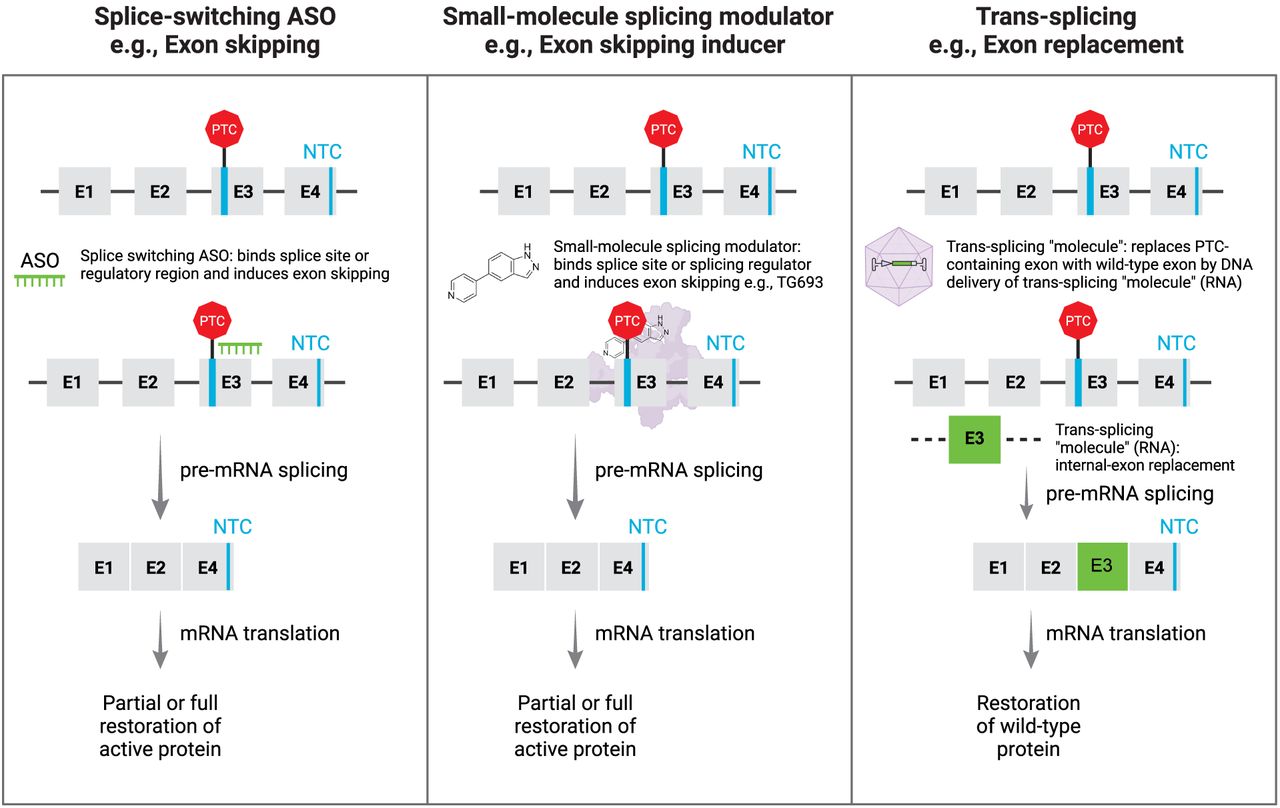
Therapeutic approaches targeting pre-mRNA splicing. Modalities targeting RNA splicing to circumvent the deleterious effects of PTC-causing mutations are shown with the position of the normal termination codon (NTC) indicated. Splice-site selection may be modulated by a splice-switching ASO (left) or a small molecule that manipulates protein–RNA interactions at or near exon–intron junctions (middle), both of which may induce exon skipping of a PTC-containing exon during pre-mRNA splicing and may lead to the restoration of partial or full protein activity. RNA trans-splicing may also be used to replace a PTC-containing exon (right), with internal exon replacement depicted in the diagram. Exon replacement using trans-splicing may lead to restoration of full-length wild-type protein. Notably, exon 3 in the two leftmost panels needs to consist of a multiple of three nucleotides. E, exon; lines between exons, introns.




