


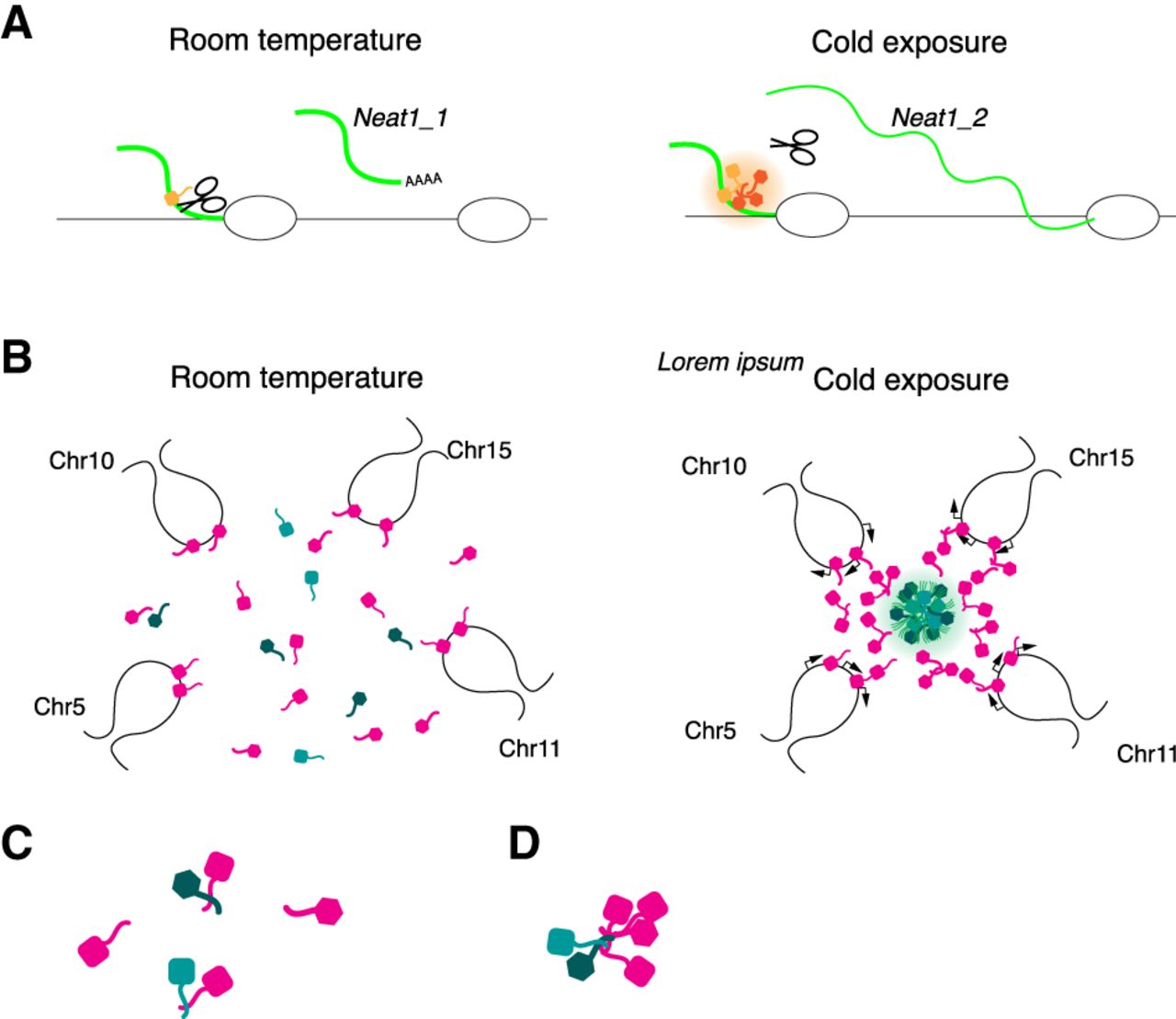
Model of cold-induced formation of paraspeckles and beige adipocyte differentiation. (A) Model for Neat1_2 production upon cold exposure in white adipose tissue. At room temperature, components that induce readthrough of polyadenylation signals (light and dark orange) cannot form a functional assembly, resulting in the production of the short, polyadenylated Neat1_1 isoform. Cold exposure triggers a phase transition in these factors, leading to the readthrough of polyadenylation signals and the production of the long Neat1_2 isoform. (B) Model for the cold-induced movement of gene clusters upregulated during beige cell differentiation. Cold exposure leads to Neat1_2 production and paraspeckle formation, which may initiate the formation of a nuclear compartment enriched in transcriptional activators around paraspeckles. This could occur either by sequestering factors (dark and light green) that typically suppress the assembly of transcriptional activators (magenta) (C) or by providing seeds for the assembly of the factor in the vicinity of paraspeckles (D). Additionally, the decrease in temperature may assist in the formation of such compartments by influencing the phase behavior of transcriptional activators containing IDRs. The formation of the transcriptionally active compartment may subsequently recruit gene clusters to be upregulated during the differentiation of beige adipocytes, resulting in their movement toward paraspeckles.




