


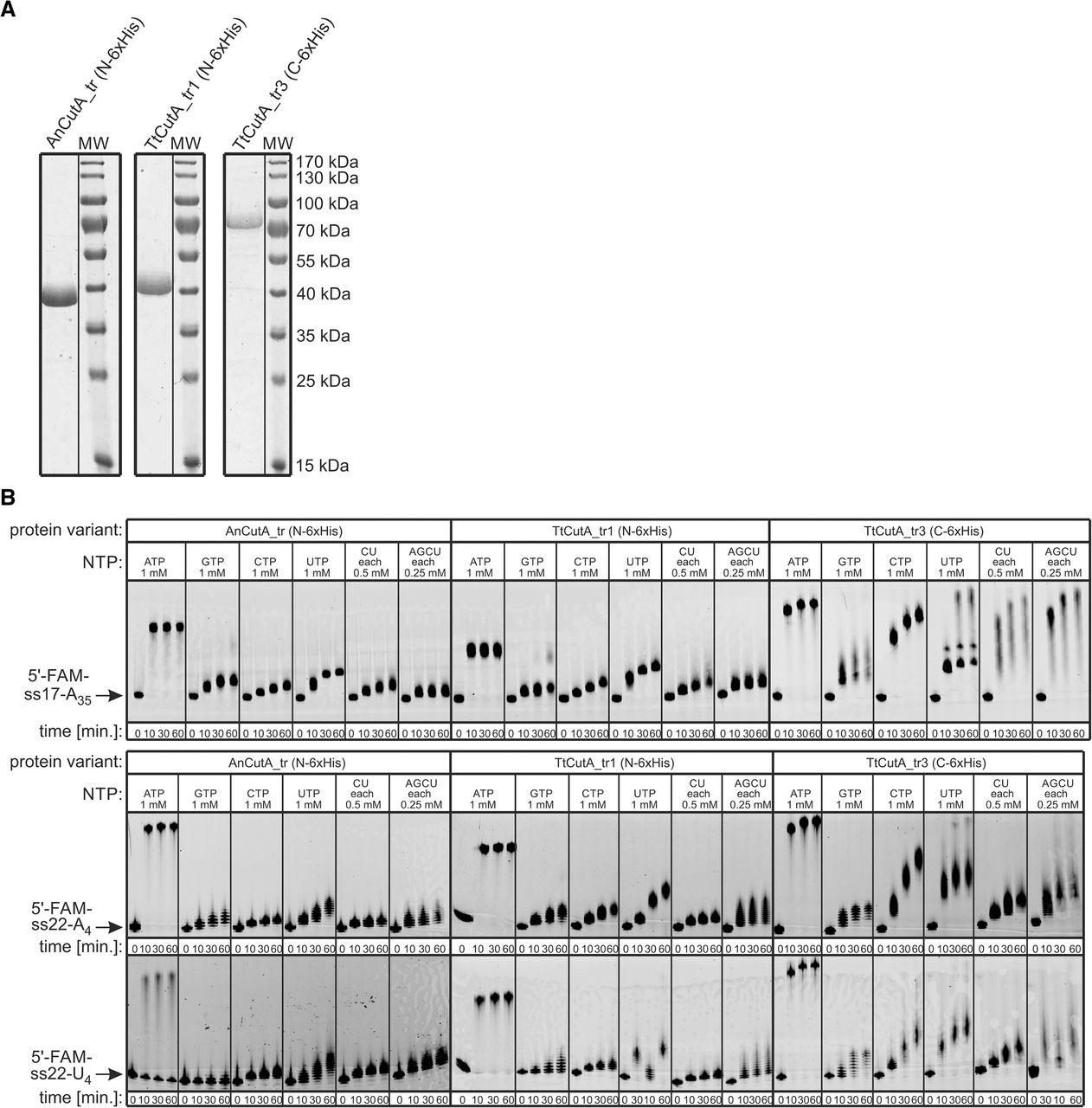
Truncated AnCutA and TtCutA variants are enzymatically active. (A) SDS-PAGE analysis of the recombinant (wild-type) AnCutA_tr, TtCutA_tr1, and TtCutA_tr3 variants, purified by nickel-column affinity chromatography followed by gel filtration. Protein preparations were analyzed together with PageRuler Prestained Protein Ladder (Thermo Fisher Scientific) as a molecular weight marker (lanes MW). Masses of individual bands are indicated on the right. (B) Analysis of nucleotidyltransferase activity, performed for truncated CutA protein variants from panel A with three different RNA oligonucleotides, labeled with FAM at the 5′-end, as substrates (positions indicated with arrows on the left). Reactions were programmed with individual NTPs or mixtures (CU or AGCU), as indicated at the top, and terminated after the time points indicated below the lanes.




