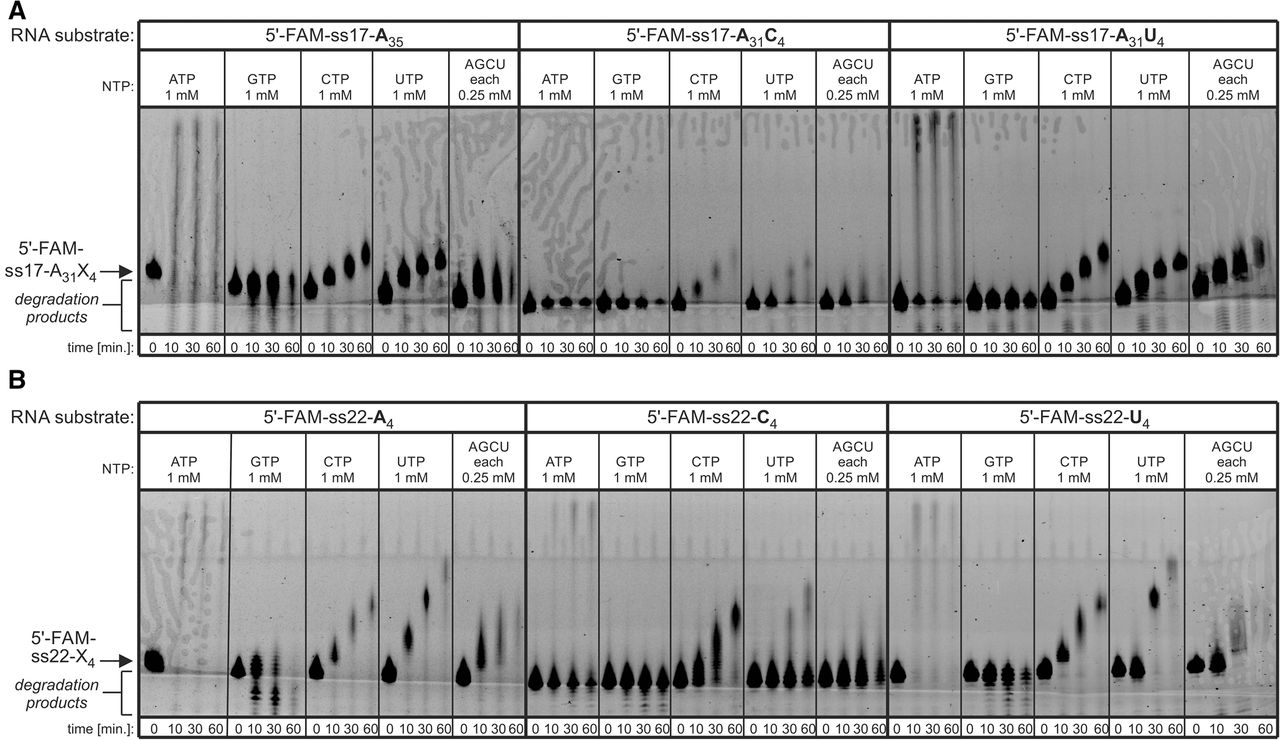
AnCutA efficiently extends 3′-ends of RNA substrates terminating with adenosines or uridines, but not cytidines. Nucleotidyltransferase activity assays were performed for the full-length AnCutA WT protein with two sets of synthetic oligoribonucleotides (ss17-A31 or ss22 in panels A and B, respectively), labeled with fluorescein amidite (FAM) at the 5′-end, having 4-nucleotide-long stretches of adenosines, cytidines, or uridines at their 3′-ends. Reactions were programmed with individual NTPs or a mixture and terminated after the time points indicated below the lanes. Position of the substrates is marked with an arrow on the left. Products of unspecific degradation are indicated.