


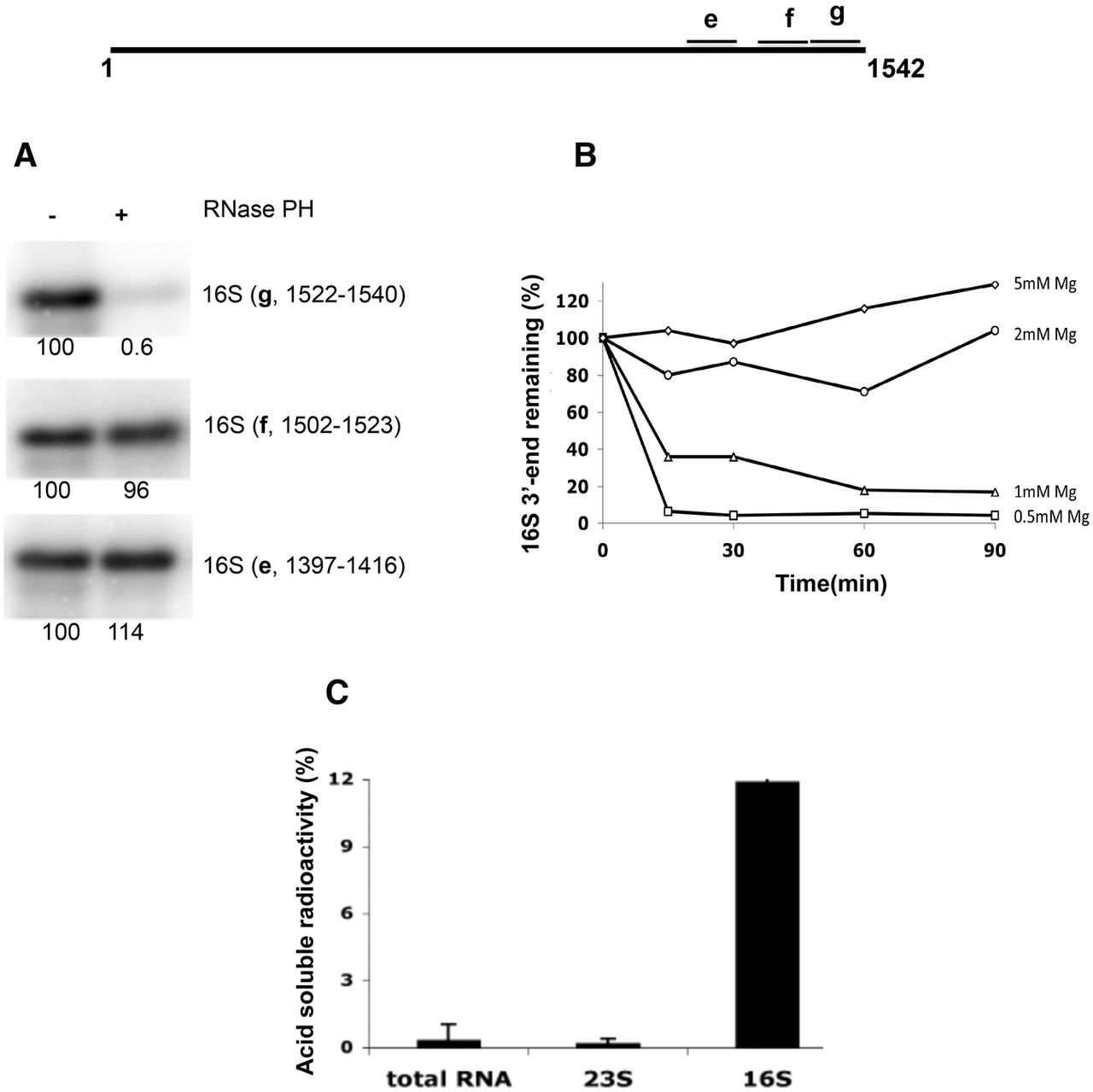
Action of RNase PH on ribosomes in vitro. Purified ribosomes were treated with RNase PH as described in Materials and Methods. (A) Ribosomes were incubated at 0.5 mM Mg2+ in the absence (lane 1) or in the presence (lane 2) of 2.5 µg of RNase PH, and Northern blot analysis was carried out with probes complementary to different regions near the 3′ end of 16S rRNA, as indicated. The number below each band indicates the percentage of intensity compared to the band in the absence of RNase PH, which was set at 100. (B) RNase PH was incubated with 70S ribosomes in the presence of varying concentrations of Mg2+. The action of RNase PH on the 3′ end of 16S rRNA was monitored by Northern analysis using probe g (complementary to nucleotides 1522–1540). The data indicate the change in band intensity compared to the intensity prior to incubation with RNase PH. One representative experiment from those repeated multiple times is shown. (C) In vitro degradation of isolated RNA by RNase PH as described in Materials and Methods. The presence of acid-soluble radioactivity released from [32P] RNA is presented. Radioactivity released in the absence of RNase PH has been subtracted.




