


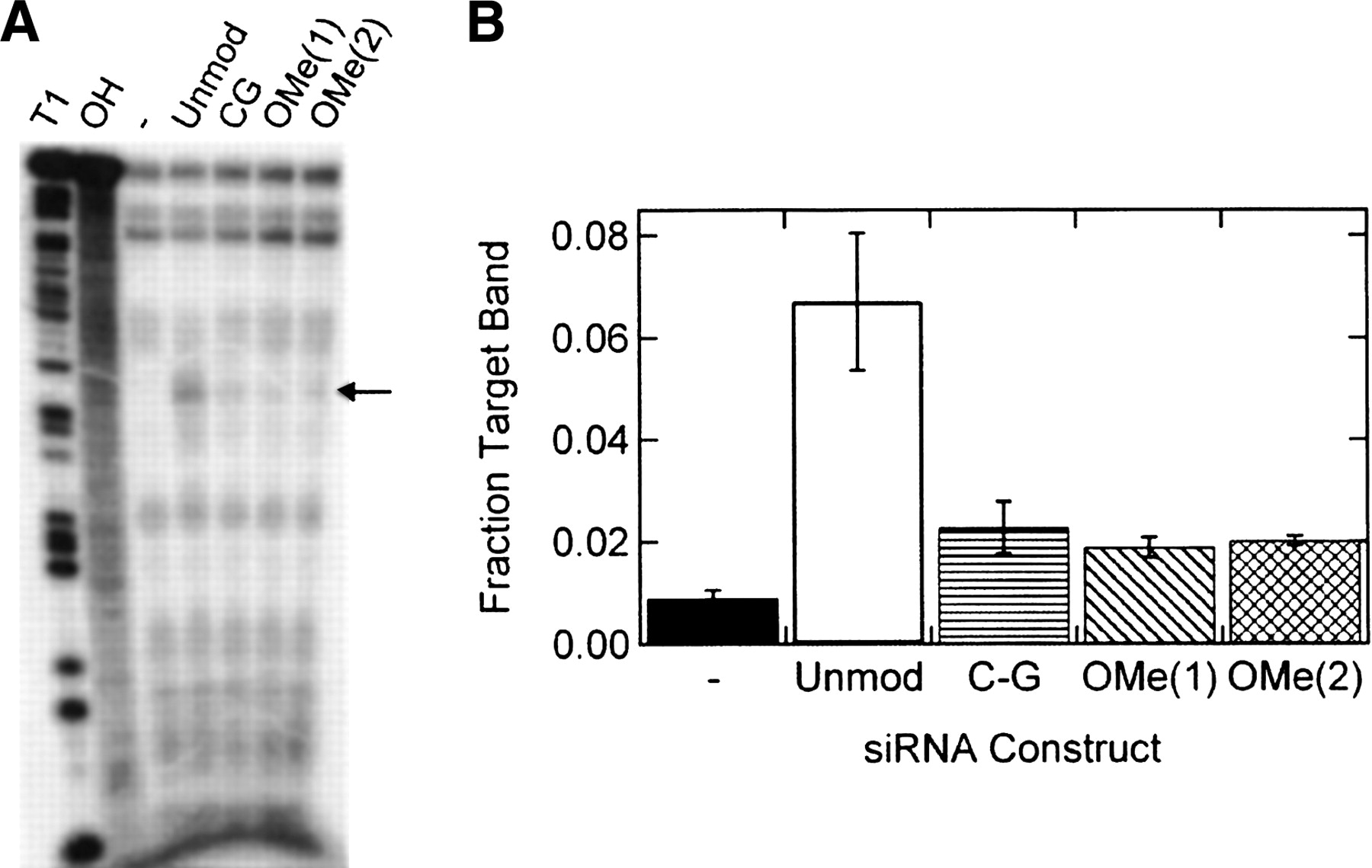
RISC-mediated, siRNA-induced cleavage of pp-luc target RNA by the siRNAs examined in this study. (A) Gel electrophoretic analysis of a representative target cleavage assay, where the “-” lane is target RNA incubated with cell extract in the absence of siRNA, “Unmod” is incubated in the presence of our unmodified siRNA, “C–G” is incubated in the presence of the C–G modified siRNA, “OMe(1)” is incubated in the presence of the siRNA with only the guide strand double 2′-OMe modified, and “OMe(2)” is incubated in the presence of the siRNA with double 2′-O-Me modification (in positions 1 and 2 from the 5′-end) of both the guide and passenger strands. “T1” and “OH” indicate RNase T1 and alkali sequencing ladders, respectively. The arrow indicates the siRNA-induced cleavage site on the target RNA. (B) Quantification of the target band intensity from A relative to the sum of all bands in the respective lane.




