


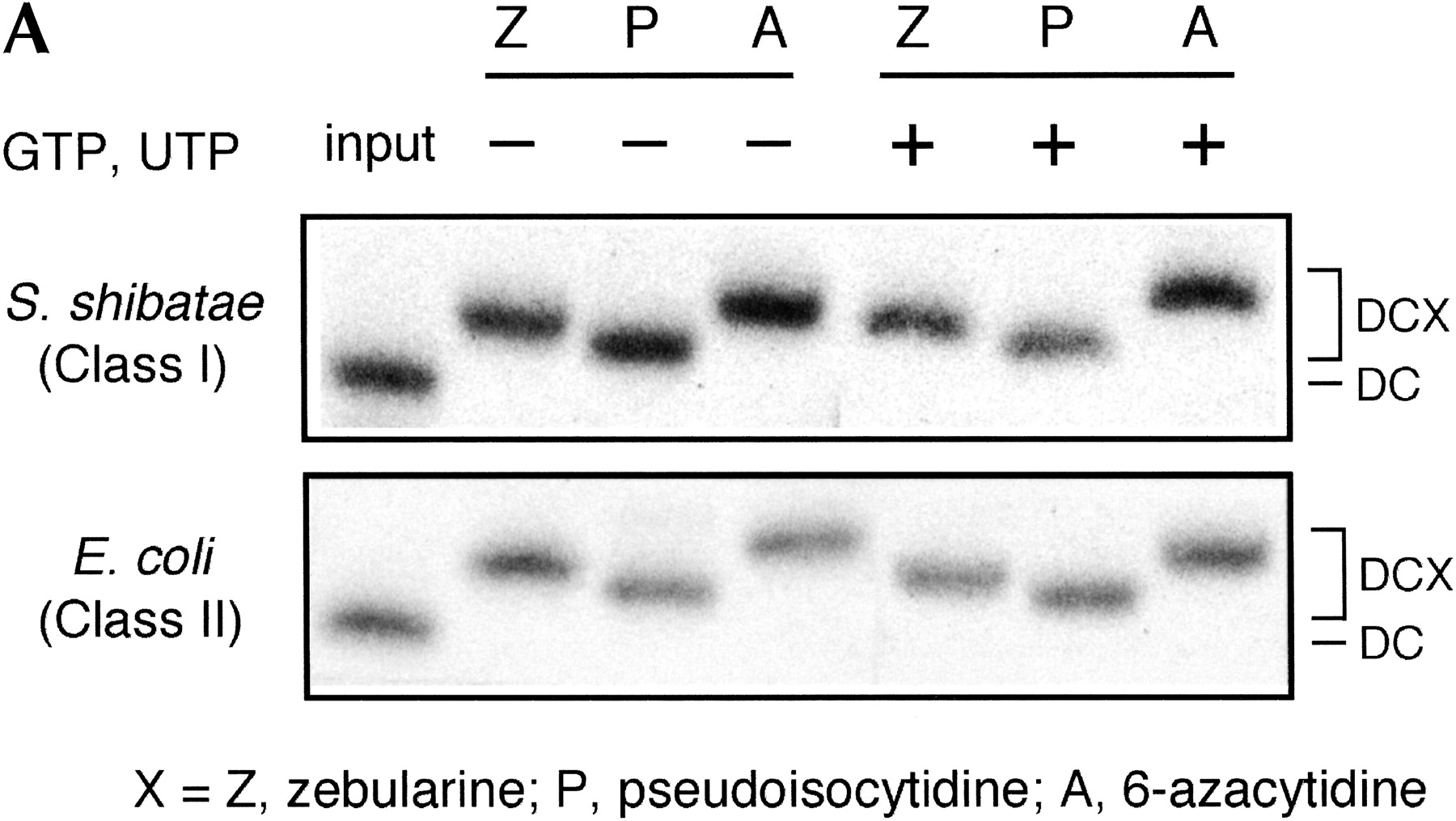
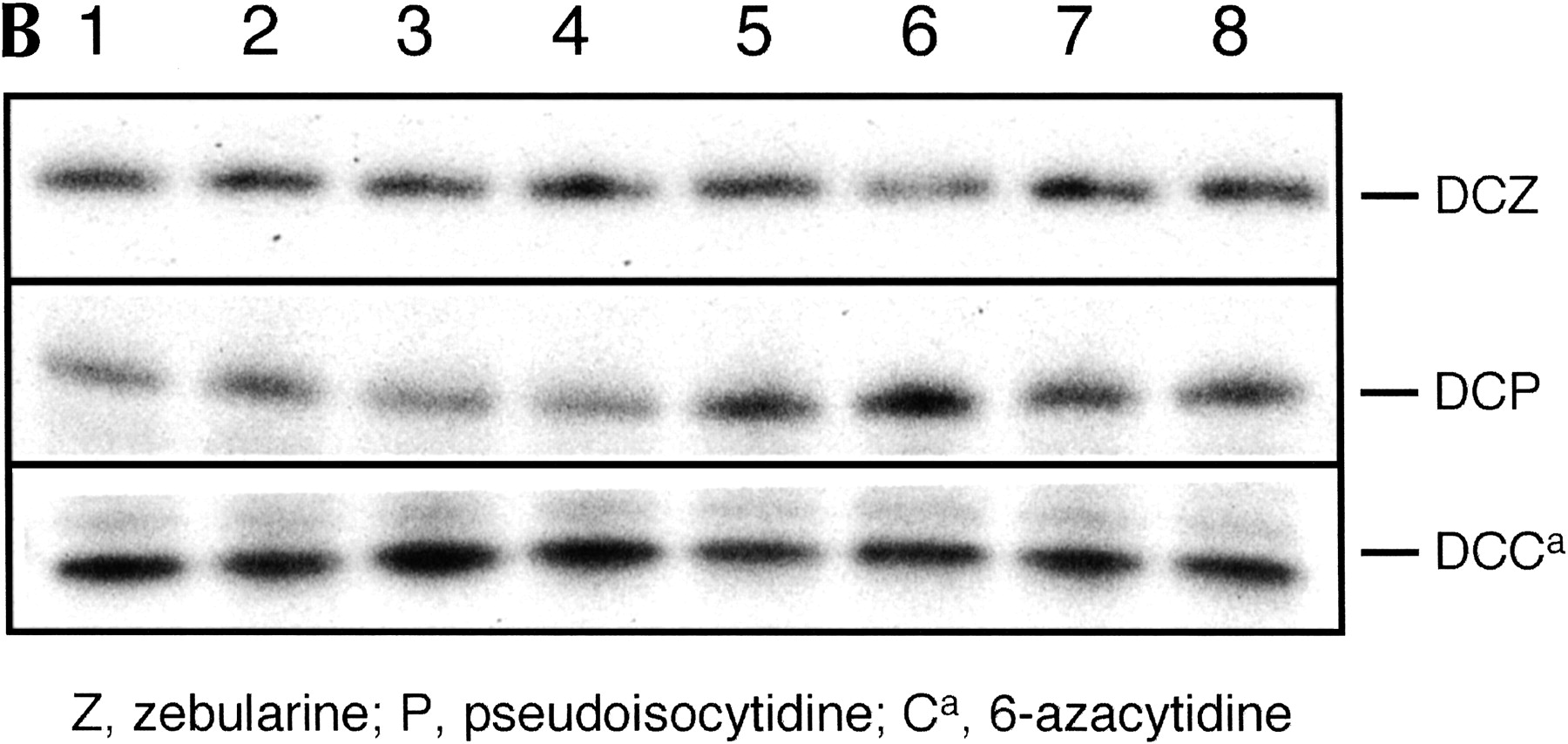
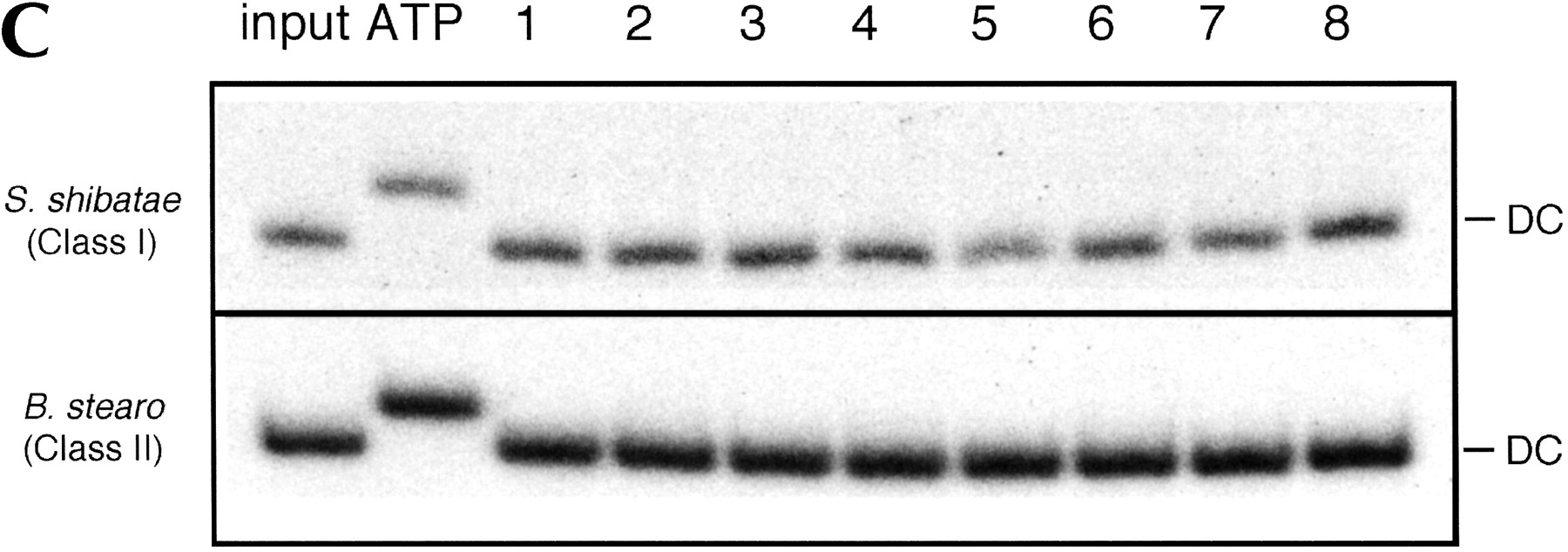
The 3′-terminal C analogs do not relax the specificity of nucleotide addition. (A) Addition of GTP or UTP by class I and class II enzymes tRNA-DCX where X is one of the CTP analogs zebularine, pseudoisocytidine, or 6-azacytidine. Assays as in Figure 5, using CTP analogs (200 μM) with or without GTP and UTP (1 mM each). Input tRNA-DC (leftmost lane) is converted to tRNA-DCX (left three lanes) but cannot accept GTP or UTP (right three lanes). (B) Addition of ATP analogs (1 mM) to the tRNA-DCX substrates where X is as in A. ATP analogs (1 mM) numbered as in Figure 4A. The class I S. shibatae enzyme was used in this assay. (C) Addition of ATP analogs (1 mM) to tRNA-DC by class I and class II enzymes. Analogs numbered as in Figure 4A (numbered lanes); tRNA-DC substrate only (leftmost lane); positive control containing CTP as well as ATP (second lane from left).




