


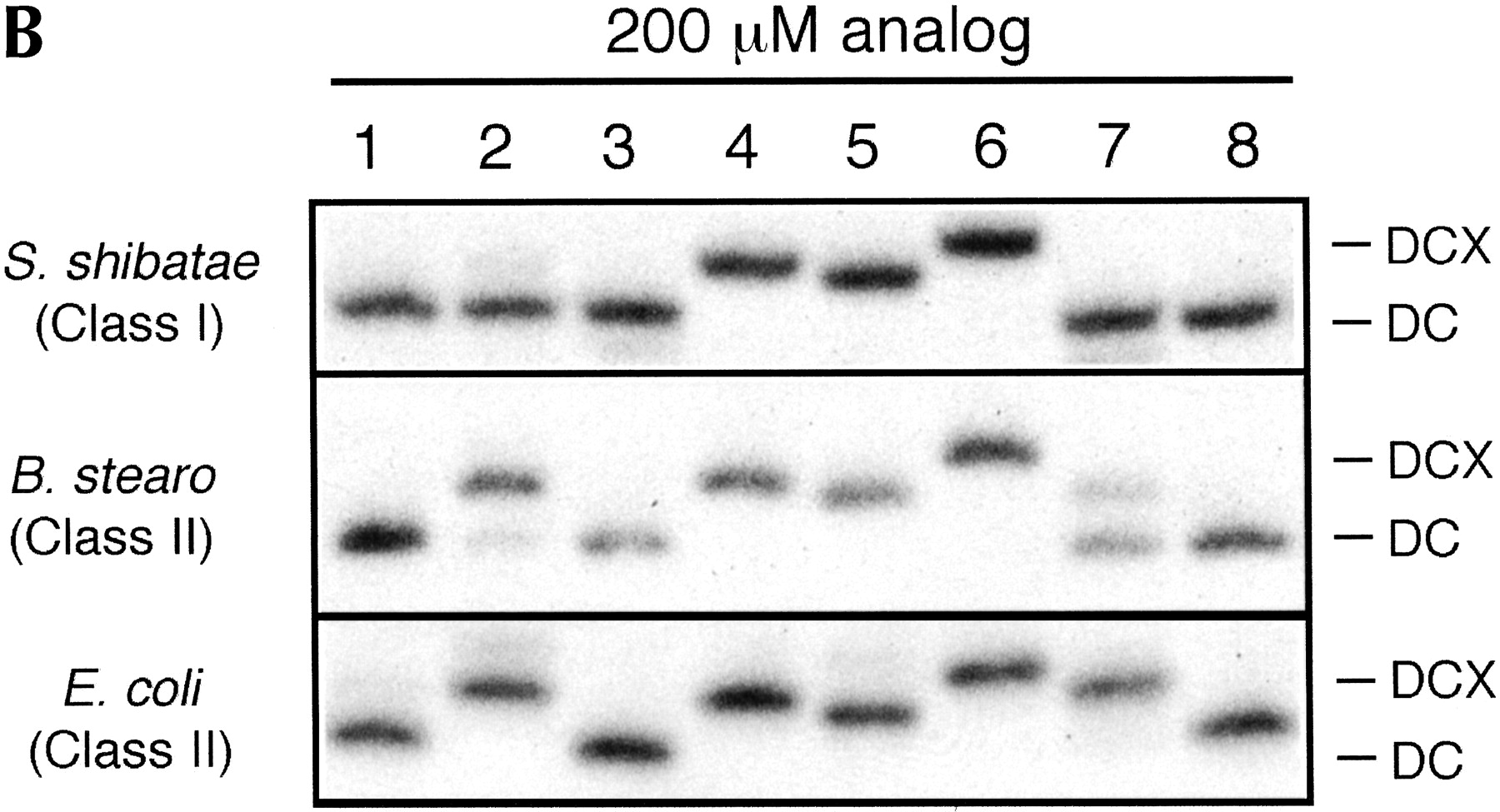
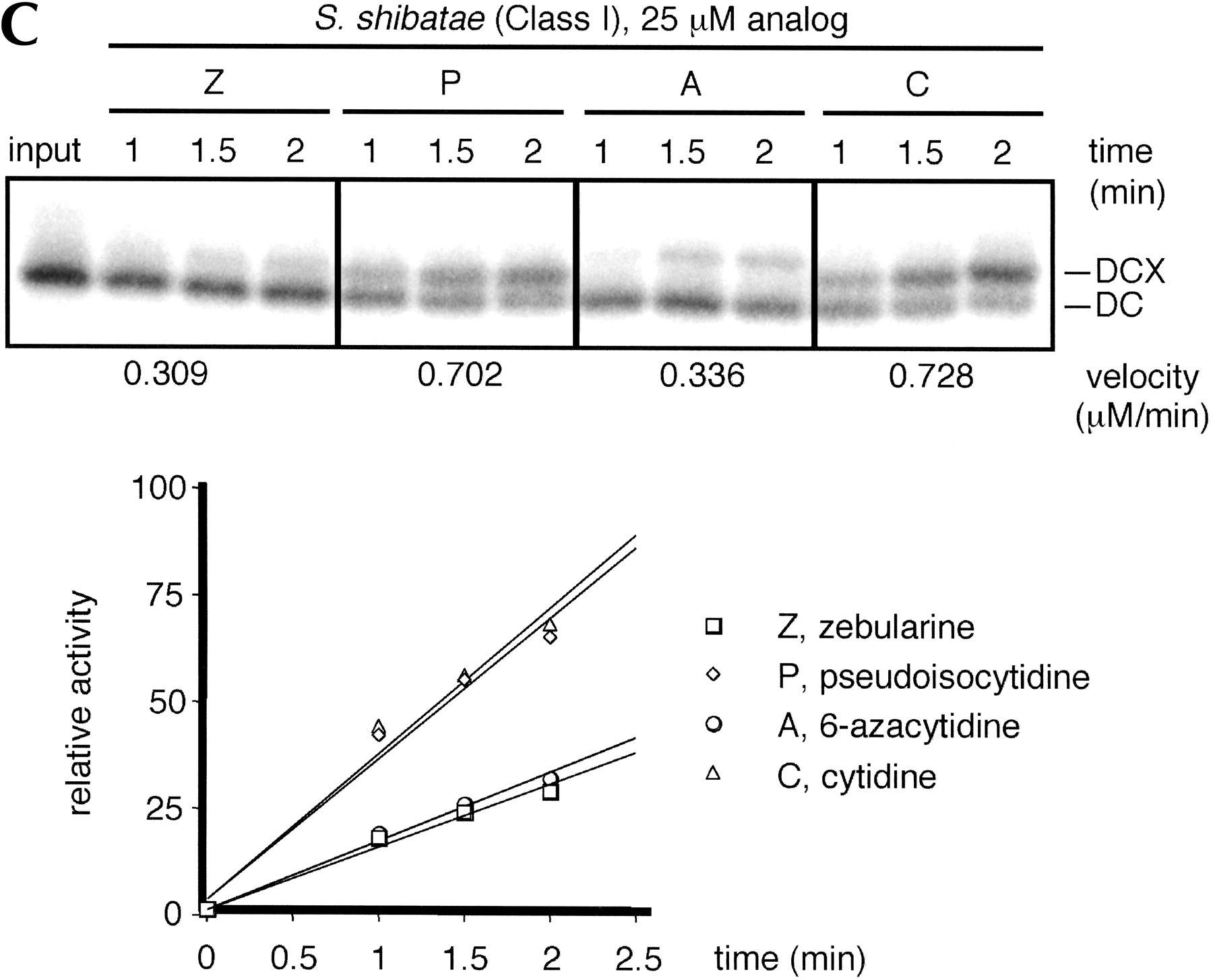
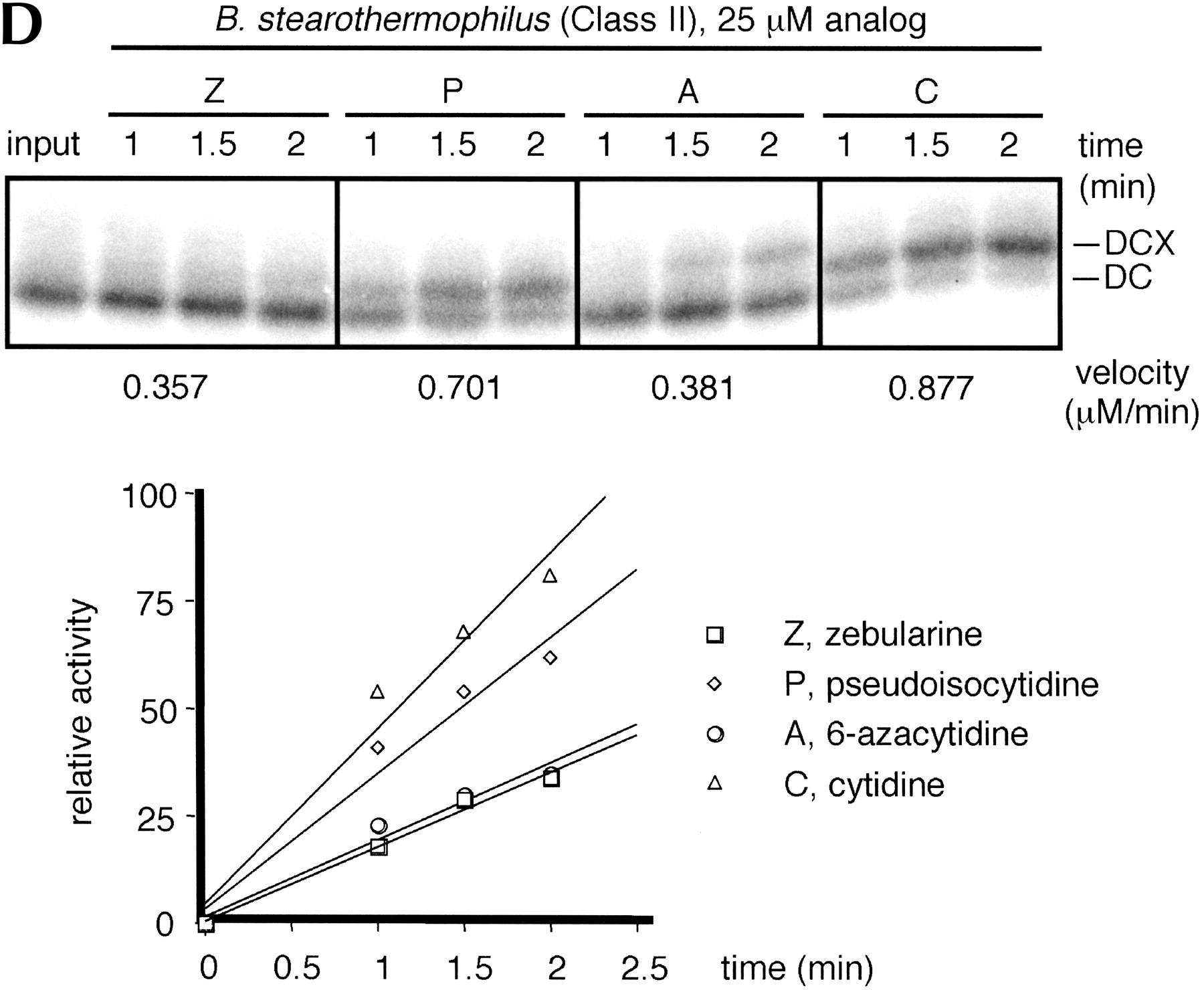
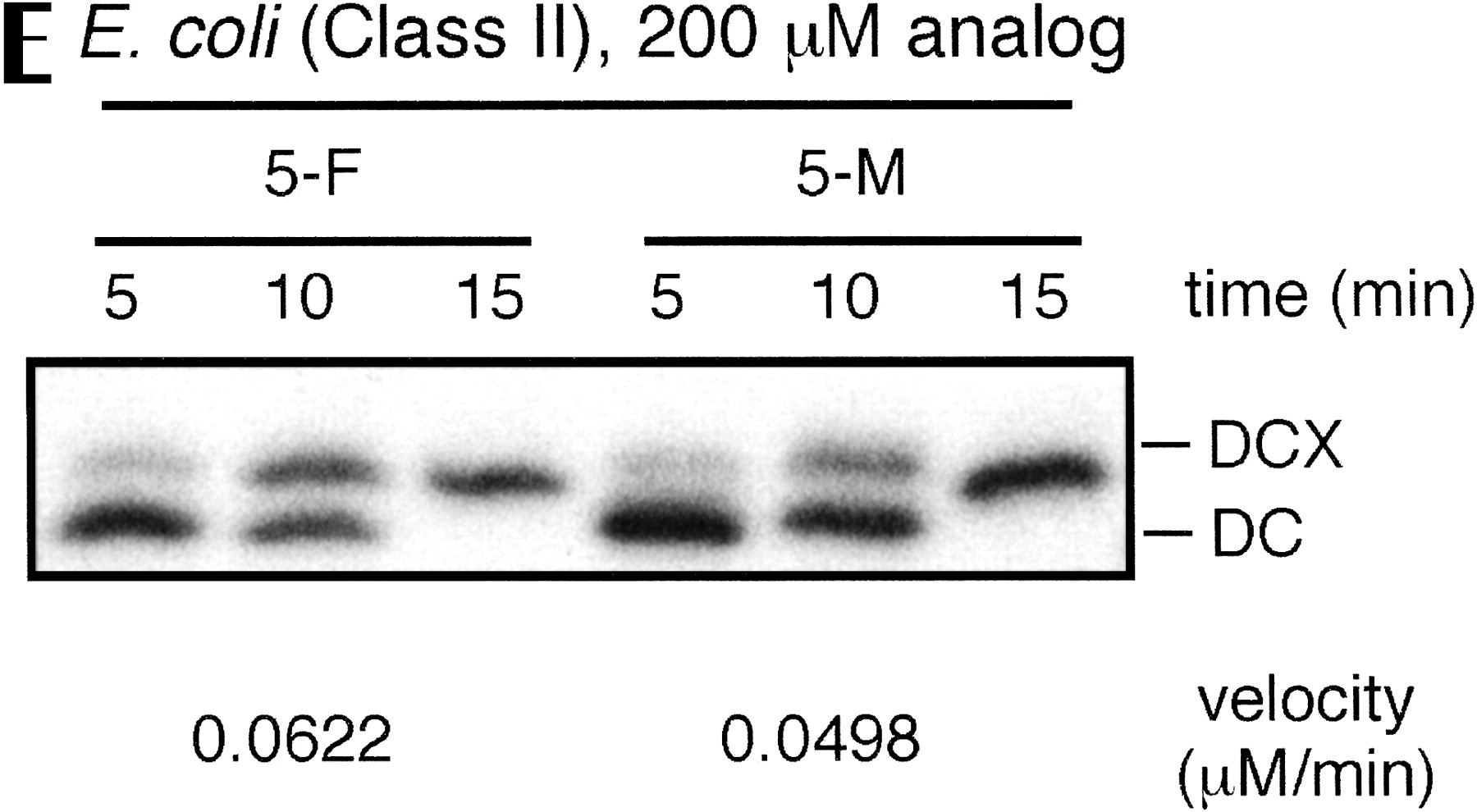
Addition of CTP analogs to tRNA-DC. (A) CTP analogs tested, with modifications indicated in red. Analogs are 2′-deoxycytidine (lane 1), 5-fluorocytidine (lane 2), 2′-deoxy-2′-fluorocytidine (lane 3), zebularine (lane 4), pseudoisocytidine (lane 5), 6-azacytidine (lane 6), 5-methylcytidine (lane 7), and 6-azauridine (lane 8). (B) Incorporation of CTP analogs into uniformly labeled tRNA substrates lacking 3′-terminal CA at high analog concentration (200 μM). The CTP reaction goes to completion in 5 min (data not shown); these assays were carried out for 15 min to screen for analogs that are inefficiently incorporated. (C and D) CTP analogs that were efficiently incorporated in B were retested at lower analog concentration (25 μM) for shorter times using the class I enzyme of S. shibatae (C) and class II enyzme of B. stearothermophilus (D). (E) CTP analogs that were inefficiently incorporated in B were retested in the linear range; the class I enzyme could not incorporate 5-fluorocytidine or 5-methylcytidine (B). All products were resolved by 12% denaturing PAGE and visualized by phosphorimaging. Note that in this and subsequent figures, tRNA mobility can depend strongly on the identity of the 3′ terminal nucleotide (for example, cf. lanes 2,4,5,6,7 in the middle panel).




