


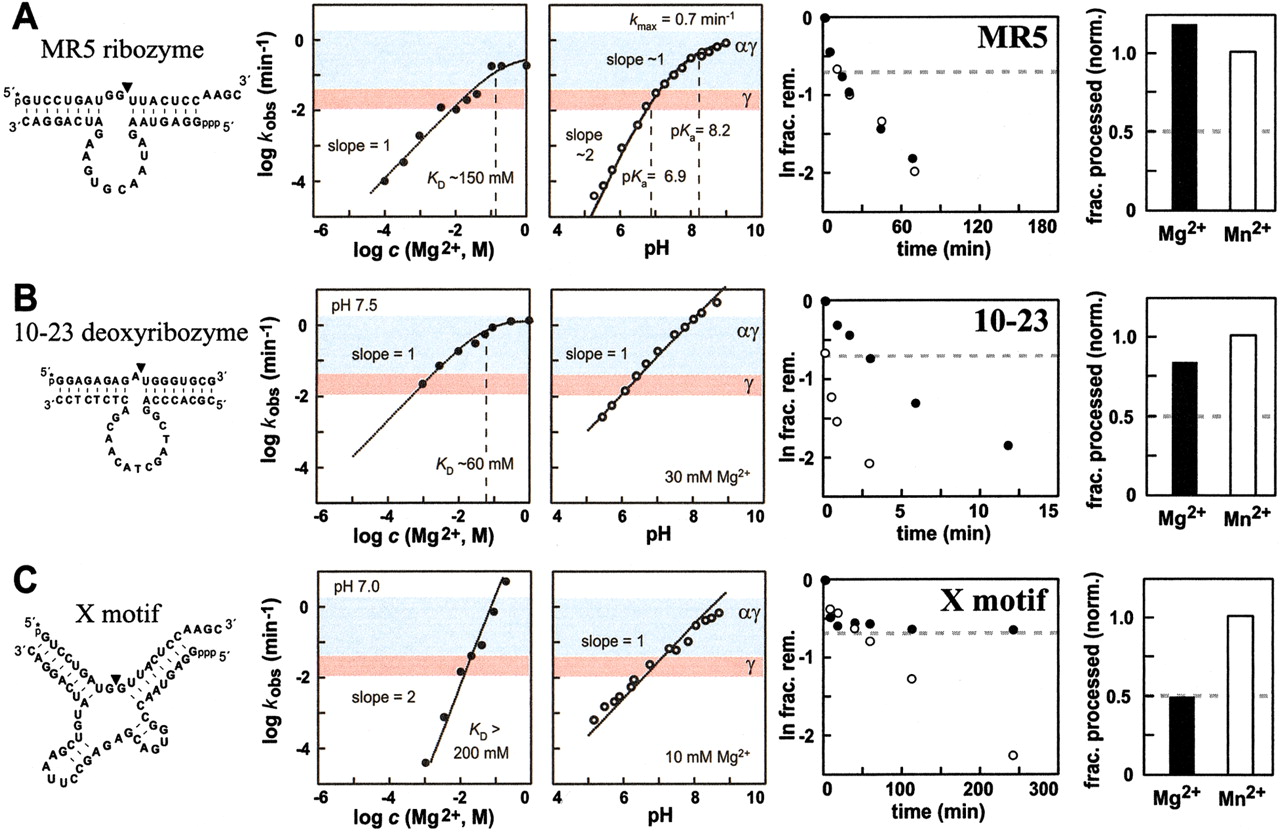
Enzymes with more complicated kinetic profiles can meet or break the αγ speed limit. (A–C) Sequences, secondary-structure models, and characteristics for the MR5, 10–23, and X-motif enzymes, respectively. The cofactor and pH dependencies for each enzyme are depicted in the plots to the left, and the data resulting from thio-effect examination are given in the plots to the right. Other notations are as described in the legends to Figures 2–4. Reagent concentrations (enzyme, KCl, and cofactor, respectively) were as follows for each construct: MR5: 24 nM, 250 mM, 200 mM; 10–23: 100 nM, 0 mM, 30 mM; X-motif: 50 nM, 0 mM, 20 mM. Below pH 7, assays of MR5 were buffered with Bis-Tris. Assays of X-motif were buffered with HEPES in the range pH 6.7 to pH 8. Portions of the data presented in Figure 5C were obtained from Lazarev et al. (2003) for comparison.




