


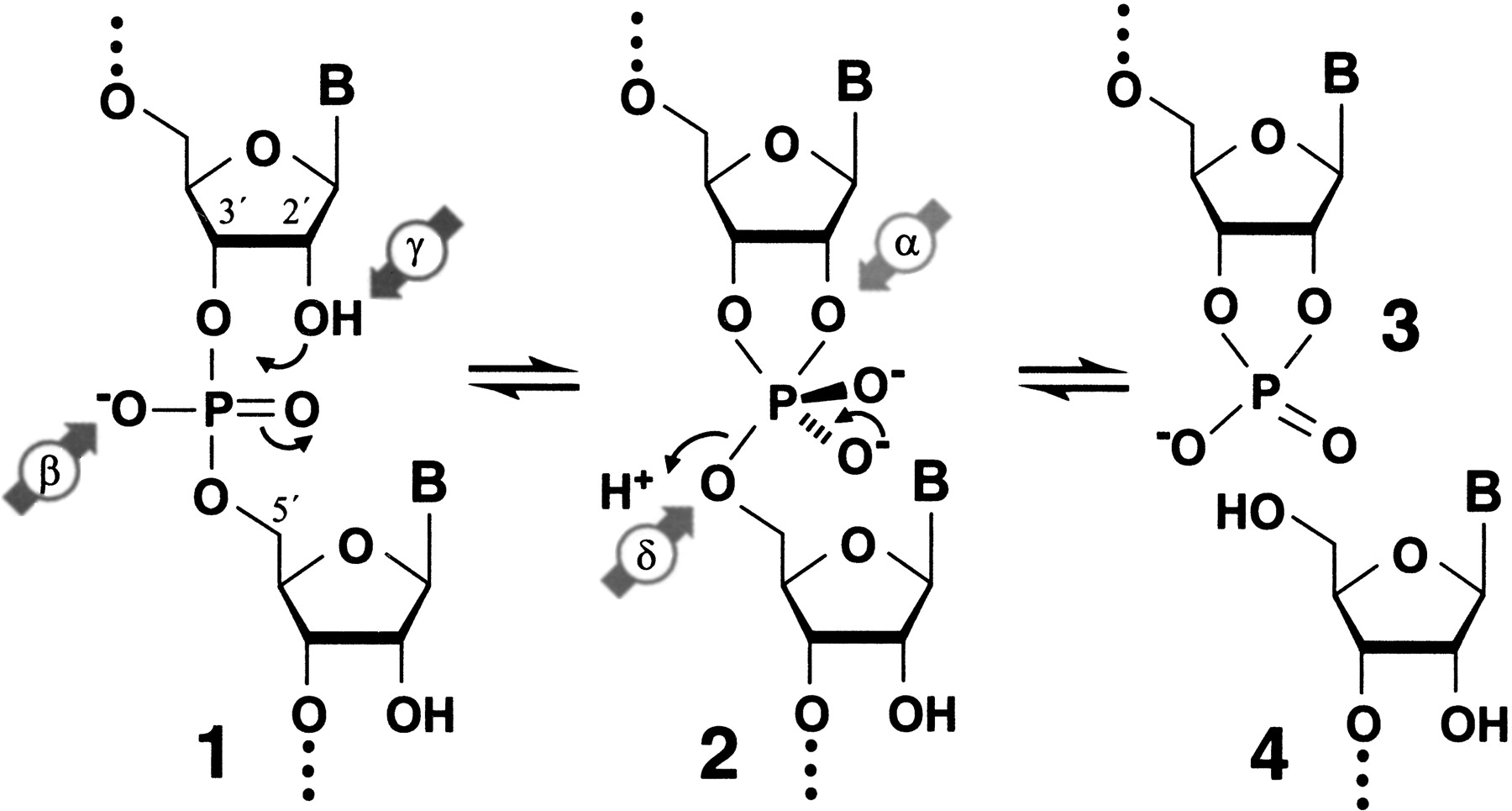
FIGURE 1.
Mechanism for RNA cleavage by internal phosphoester transfer involving the 2′-hydroxyl group. The phosphorus center of the RNA linkage (1) is attacked by the 2′-oxygen nucleophile, which generates the dianionic phosphorane species (2). This pentacoordinate structure degrades to yield 2′,3′-cyclic phosphate-terminated (3) and 5′-hydroxyl-terminated (4) RNA fragments. The four main strategies (see text) for catalytic activation of this reaction are denoted (Greek lettering and arrows) in this depiction of an otherwise uncatalyzed phosphoester transfer reaction.




