


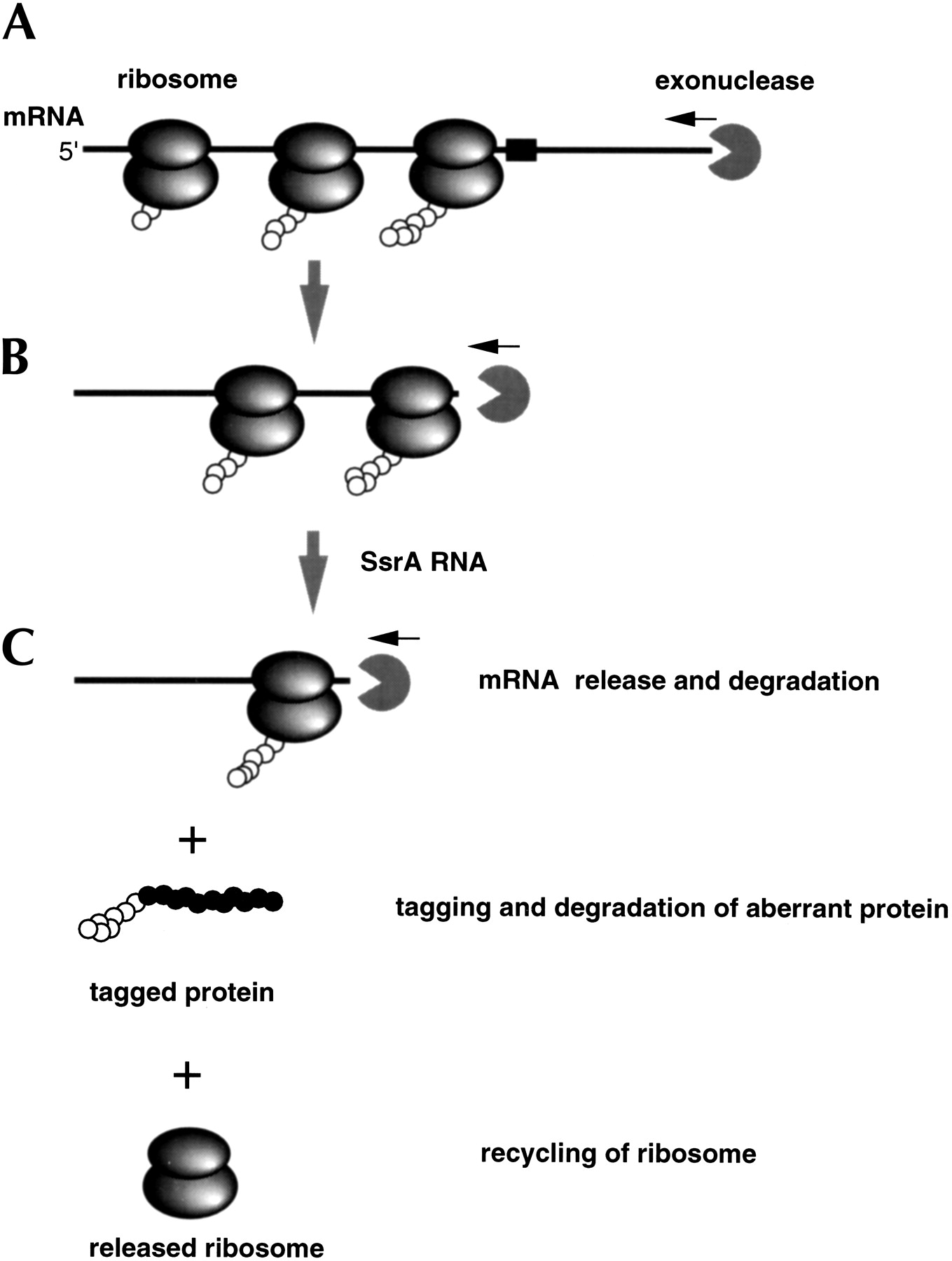
Model for mRNA quality control by SsrA RNA. (A) The 3′ end of an mRNA is attacked by 3′-to-5′ exonucleases (RNase II and/or PNPase). When a ribosome translates the entire coding region before an exonuclease reaches the stop cordon (shown by a closed box), the full-length polypeptide is normally produced. (B) When the exonuclease goes through the stop codon, it encounters another ribosome on the mRNA. The mRNA is protected from the attack of the exonuclease by the stalled ribosome in the absence of SsrA RNA. (C) When the SsrA system is functional, the mRNA is released from the stalled ribosome as part of the trans-translation process, and then the exonuclease chews back the truncated mRNA to the next ribosome. Then SsrA RNA acts to remove the next ribosome followed by exonuclease. This scenario is repeated until the truncated mRNA is degraded. Thus, SsrA RNA contributes to mRNA quality control by facilitating degradation of truncated mRNA. The rapid degradation of truncated mRNA prevents the synthesis of truncated proteins. SsrA RNA-mediated trans-translation is acting as a multiple quality-control system in bacterial cells.




