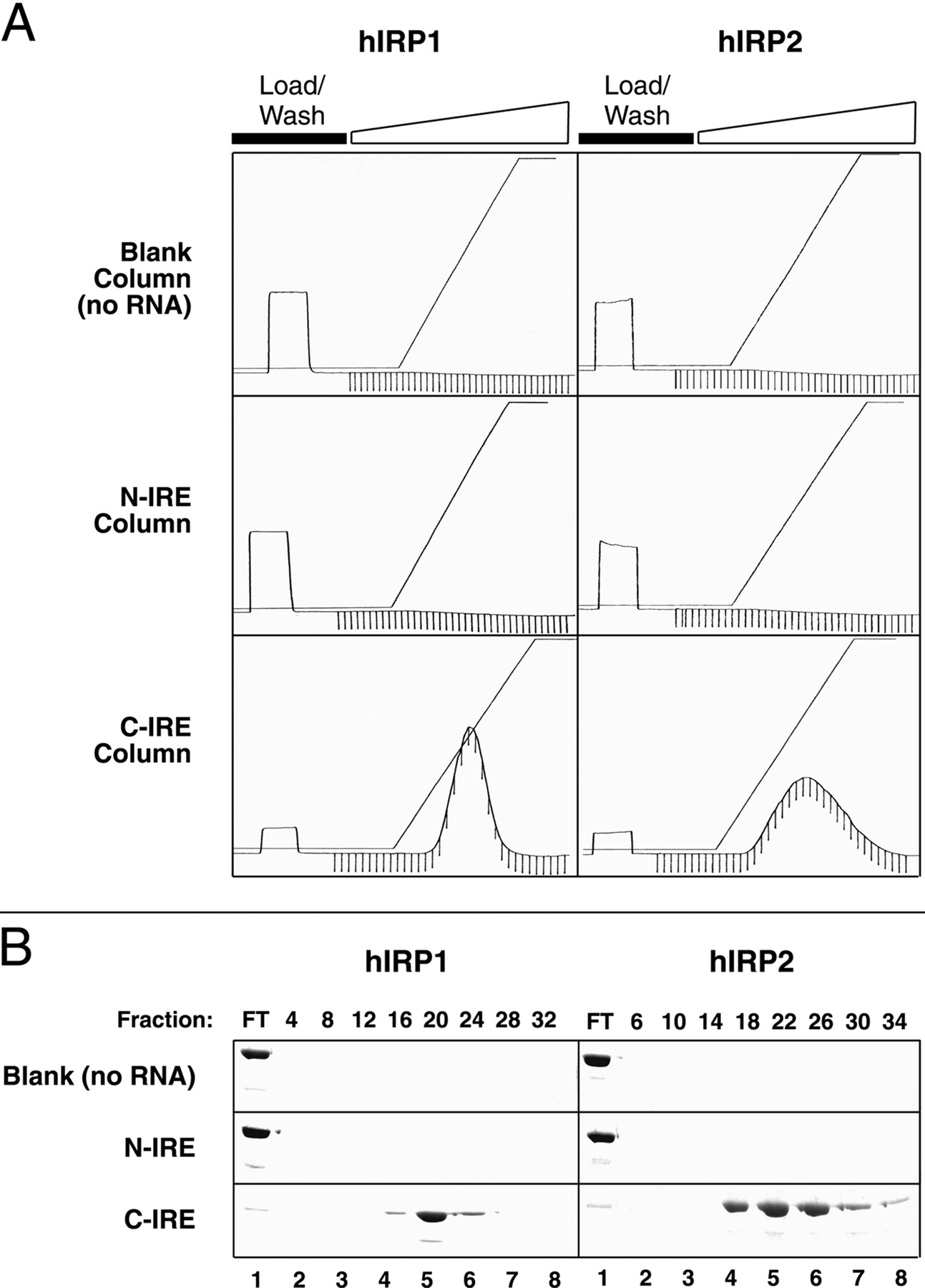
The large-scale, high-affinity binding of hIRP1 and hIRP2 is specific for the consensus IRE (C-IRE) column. (A) Protein preparations (containing an estimated 7–10 mg of protein) of hIRP1 or hIRP2 collected at the completion of the first three chromatographic steps were equilibrated in 250 mM NaCl, then passed through a column containing no RNA, a column with a disrupted IRE (N-IRE), or a column with the consensus IRE (C-IRE). No binding of protein was detected with either the no-RNA or N-IRE columns, despite the large quantity of RNA on the latter. In contrast, both proteins bound in large quantity (7–10 mg), and with high affinity to the C-IRE column, requiring ∼1.2 M NaCl and ∼1.5 M NaCl, respectively, to elute. (B) SDS-PAGE analysis of fractions collected during chromatography indicated no Coomassie-detectable protein in either of the first two columns. Some IRP appears in the flow-through of the C-IRE column, and may arise from either slow binding kinetics during loading or may indicate the presence of inactive conformers.