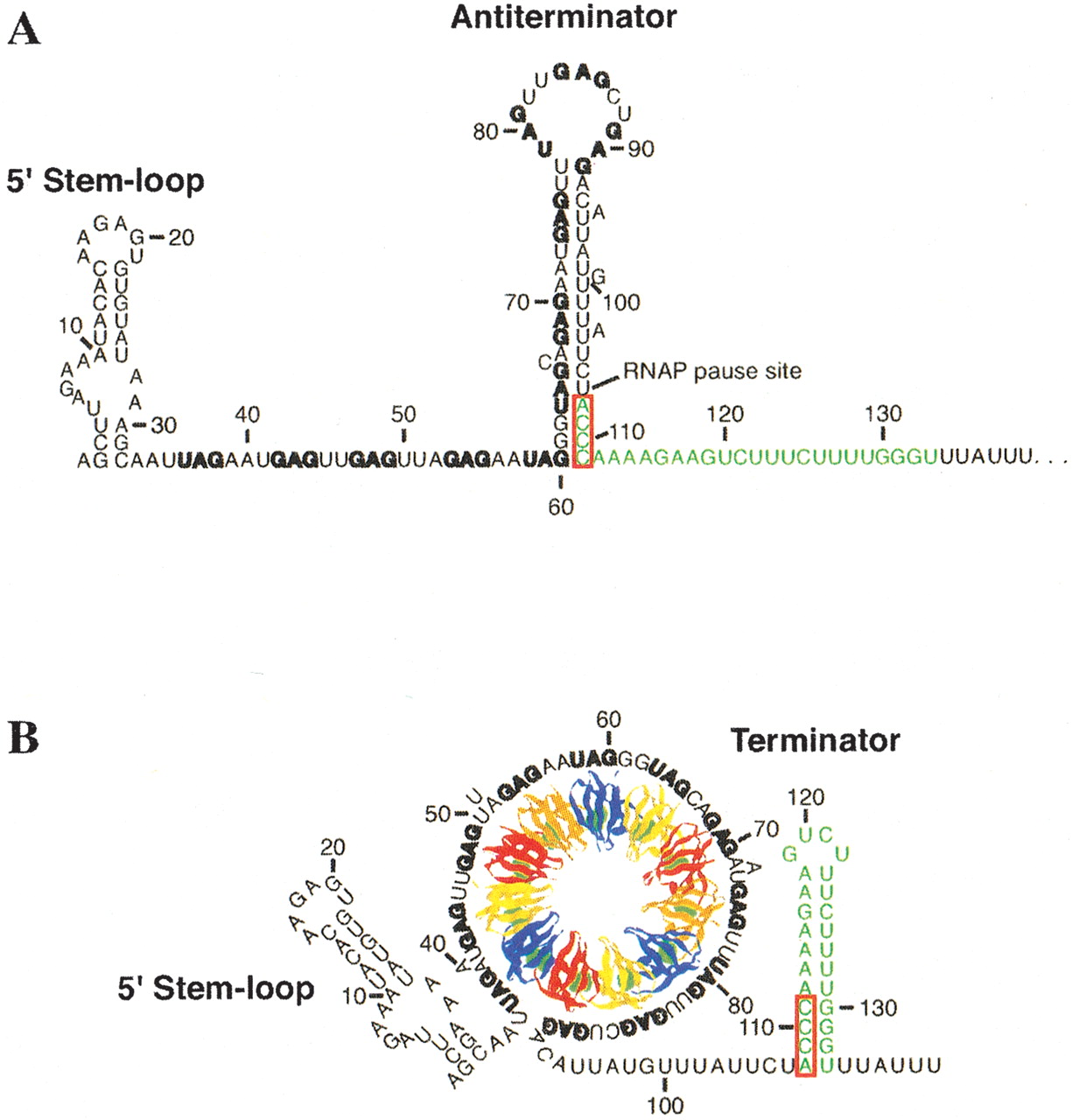
Model of the transcription attenuation mechanism of the B. subtilis trpEDCFBA operon. (A) Under tryptophan limiting conditions, TRAP is not activated. During transcription the 5′ stem–loop and antiterminator structures form. Antiterminator formation prevents formation of the overlapping intrinsic terminator, resulting in transcription readthrough into the trp operon structural genes. (B) Under excess tryptophan conditions, TRAP is activated. During transcription TRAP can interact with the 5′ stem–loop and bind to the (G/U)AG repeats as they are synthesized. TRAP binding prevents formation of the antiterminator, thereby allowing formation of the terminator, resulting in termination of transcription before RNA polymerase can reach the trp operon structural genes. NusA stimulates RNA polymerase, pausing at U107, which allows additional time for TRAP to bind. The (G/U)AG repeats are indicated in bold type, and the terminator is shown in green. The mutually exclusive antiterminator and terminator structures overlap by four nucleotides (outlined in red). The 11 subunits of TRAP are shown in blue, yellow, red, and orange; the tryptophan molecules are shown in green. The structure of TRAP and wrapping of the RNA around the periphery of the protein are based on crystal structures (Antson et al. 1995, 1999). Numbering is from the start of transcription.