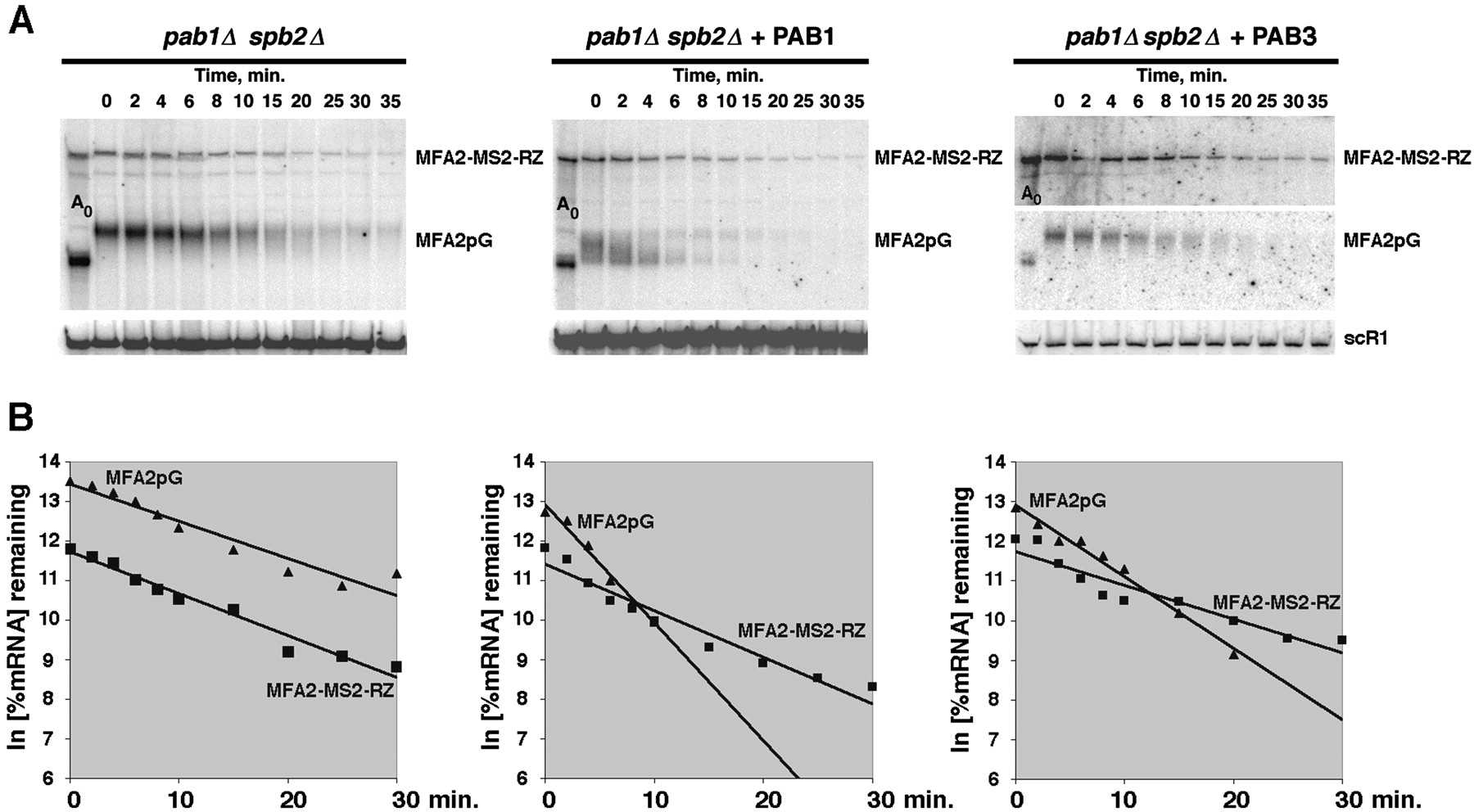
PAB3 and Pab1p act to correct the lag by binding to the target mRNAs, rather than by acting indirectly. (A) Decay of the MFA2pG and MFA2-MS2-RZ mRNAs analyzed by Northern blotting in the pab1Δ spb2Δ yeast cells expressing Pab1p (YDB246), PAB3 (YDB256), or no PABP (YRP881), as indicated above the respective panels, after the transcriptional shutoff by glucose of the GAL1 promoter that drives the expression of the MFA2pG and MFA2-MS2-RZ transcripts. Time points after the glucose addition are shown above the panels. RNA in the lane marked Ao was a 0-min time point sample that was deadenylated by the oligo(dT)/RNaseH treatment. Blots were probed sequentially with the oligonucleotide probes specific for MFA2-MS2-RZ and MFA2pG. Signals were normalized relative to the scR1 RNA (RNA pol III transcript) signals (bottom). (B) Quantitation of the decay profiles shown in A.