


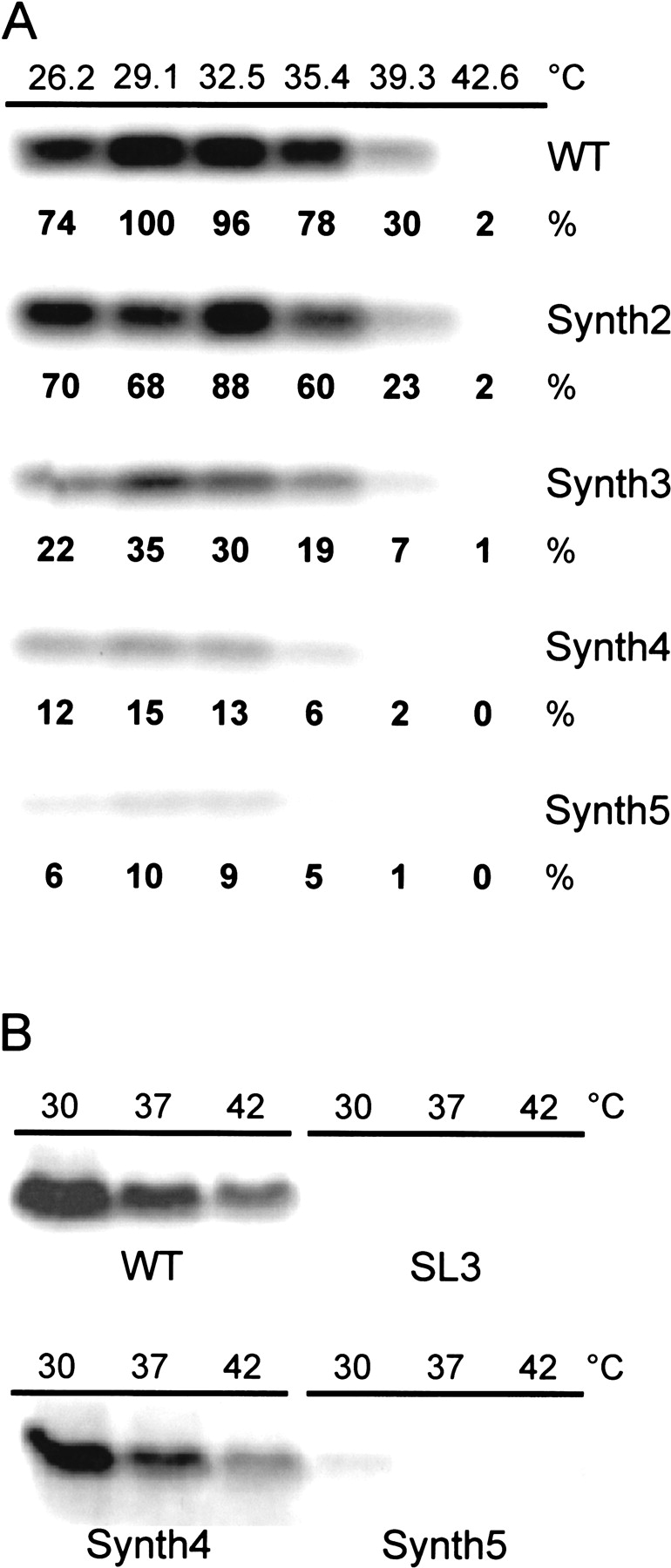
Uridylylation of VPg does not require the stem region of the CRE, but is influenced by CRE stability. In both panels the reaction temperature is indicated in the row labeled °C, and in (A) the amount of product is shown normalized to the maximal level observed with the unmodified native CRE (WT). The in vitro uridylylation assay was constituted with RNA templates containing a synthetic stem region and the native CRE terminal loop (Synth2–Synth5). Synth3 to Synth5 differ only in the number of hydrogen bonds stabilizing the base of the stem (see Fig. 3C). (B) In vitro uridylylation of VPg primed with full-length RNA (∼5.5 kb) from subgenomic replicon cDNAs pT7/Rep3, pT7/Rep3/SL3, pT7/Rep3/SL3cSynth4, and pT7/Rep3/SL3cSynth5, labeled WT, SL3, Synth4, and Synth5, respectively.




