


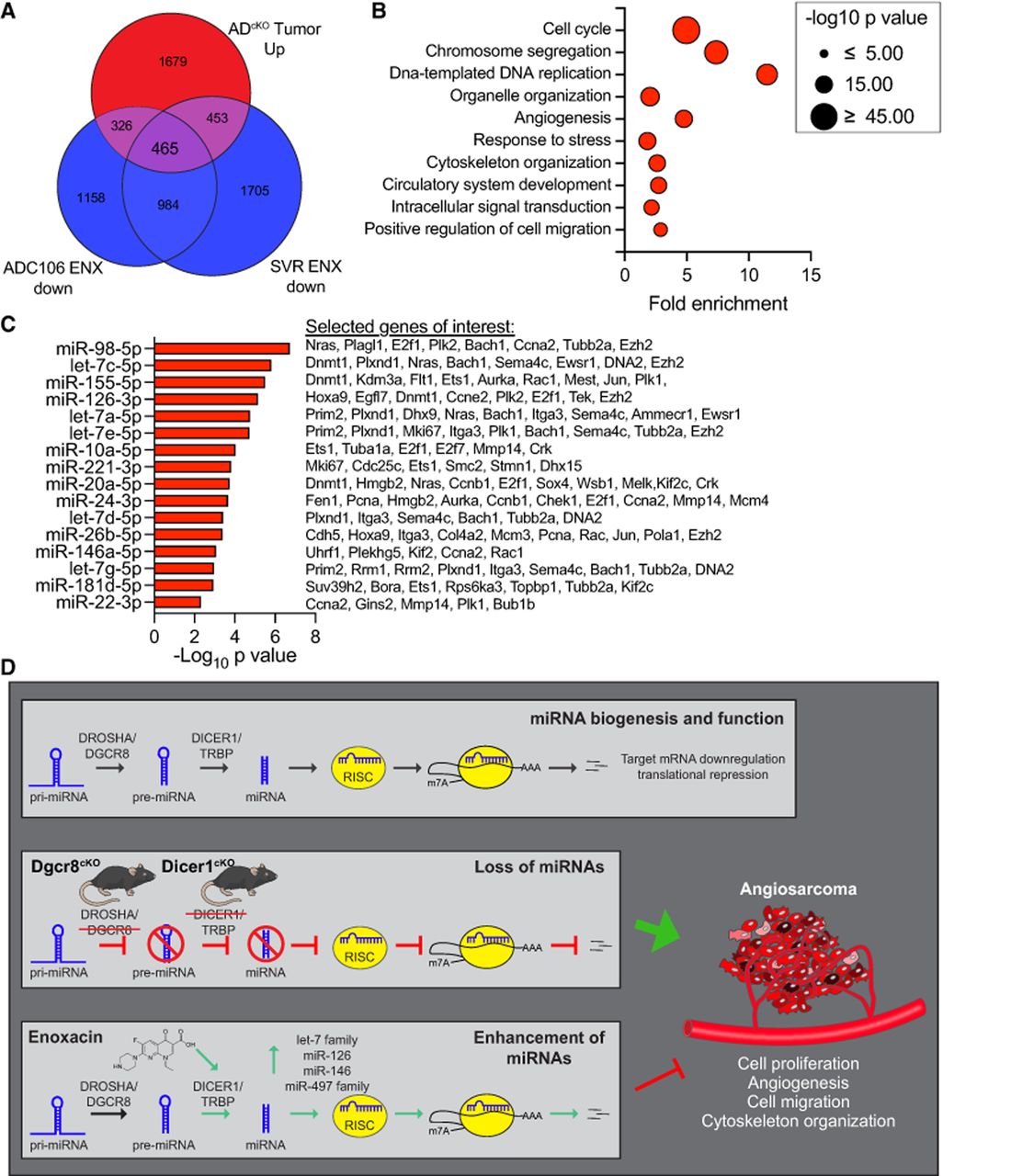
Commonly enriched miRNAs regulate cell cycle, angiogenesis, and cell migration pathways in angiosarcoma. (A) Euler diagram of the overlapping genes that are increased in expression in aP2-Cre;Dicer1Fl/Fl (ADcKO, from GSE85834) tumors compared to normal aorta (FDR < 0.05, log2 fold change > 0.5) and all genes with decreased expression in ADC106 or SVR cells (FDR < 0.0). (B) DAVID gene ontology analysis of enriched terms within the 465 overlapping genes from (A). (C) The top miRNAs with increased abundance in common between ADC106 and SVR cells treated with ENX with enrichment of target genes among the overlapping genes from (A). All miRNAs with significant (FDR < 0.05) enrichment of target genes plotted. Selected oncogenic genes experimentally validated to be regulated by miRNAs are indicated. (D) Graphical abstract illustrating normal miRNA biogenesis and function of miRNAs. Conditional Dgcr8 or Dicer1 deletion in aP2-Cre expressing cells disrupts canonical miRNA biogenesis, leading to angiosarcoma development in mice. This highlights the important tumor-suppressing role of miRNAs in angiosarcoma. Pharmacologic repurposing of the antibiotic enoxacin enhances the expression of several tumor-suppressing miRNAs and demonstrates anticancer properties in angiosarcoma by repressing oncogenic pathways such as cell proliferation, angiogenesis, cell migration, and cytoskeleton organization. Mouse illustration from NIAID NIH BIOART Source (bioart.niaid.nih.gov/bioart/279).




