


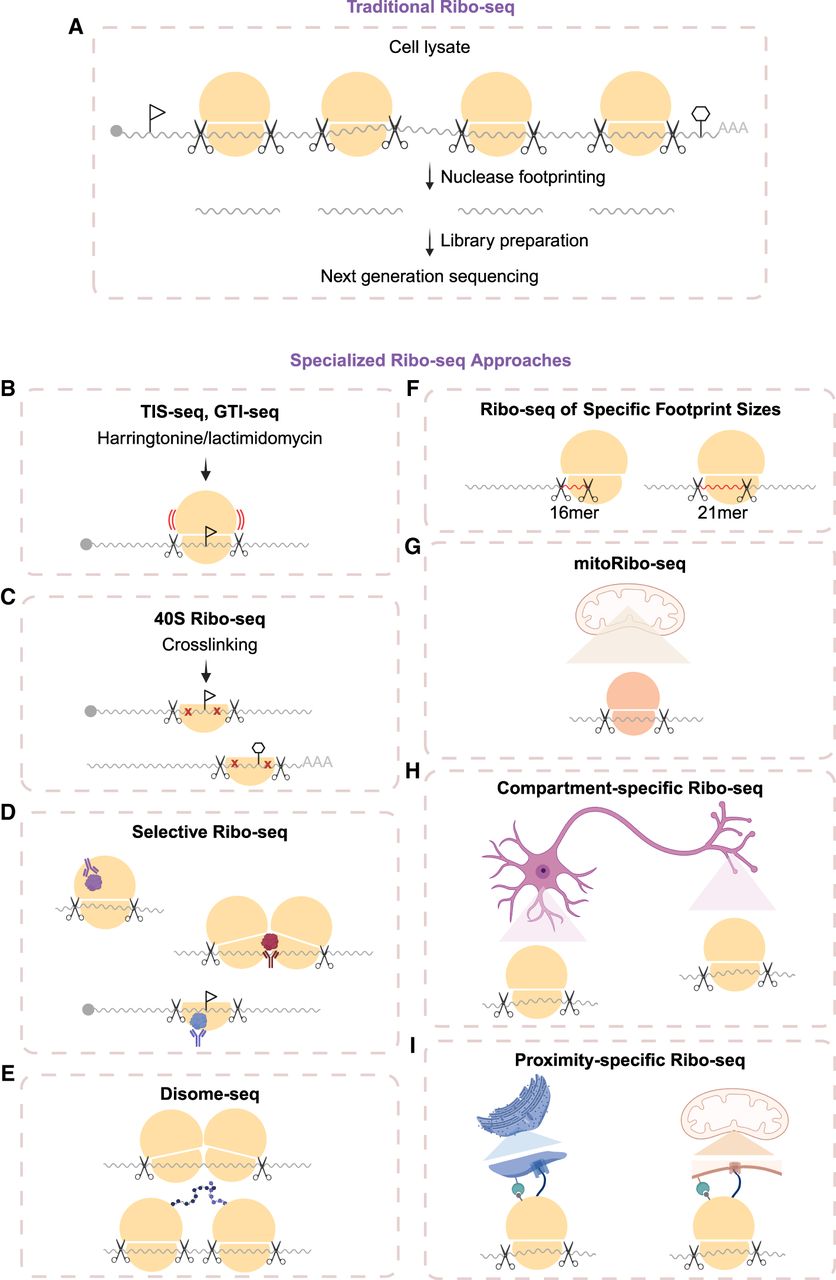
(A) Schematic representation of traditional Ribo-seq, which is optimized to isolate footprints from translating 80S ribosomes. (B–I) Specialized Ribo-seq approaches to study subset of ribosomes: initiating 80S ribosomes (B); 40S subunits resulting from initiation and/or ribosome recycling defect (C); 80S, disomes, or 40S subunits bound to translation factors or carrying posttranslational modifications (D); collided ribosomes or disomes interacting through their nascent chains (E); specific sizes of footprints from ribosomes stalled at truncated mRNAs (16mer) or with open A-site (21mer) (F); mitoribosomes (G); ribosomes at specific cellular compartments (H); and ribosomes that are localized to endoplasmic reticulum and mitochondria (I).




