


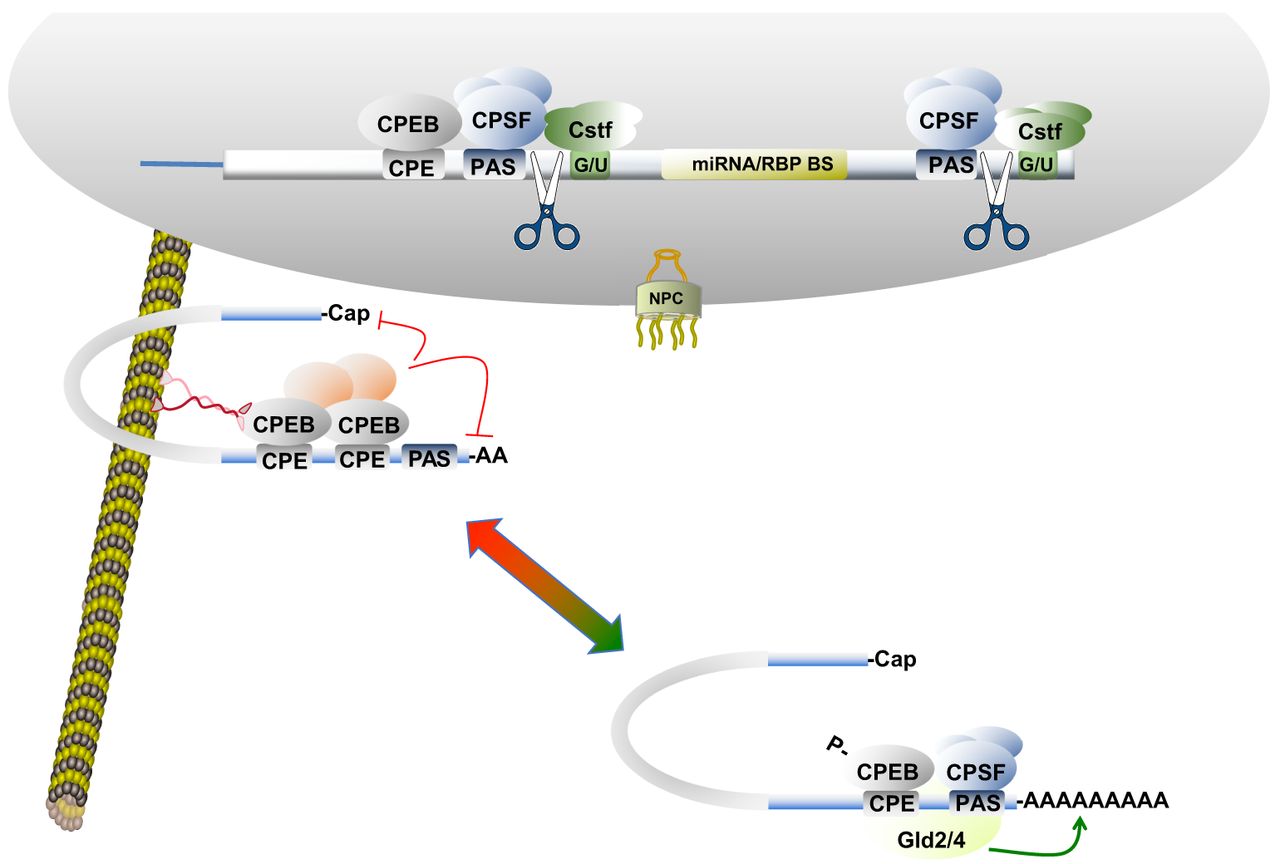
Proposed model of nucleocytoplasmic functions of CPEB1. In the nucleus, CPEB1 facilitates the recruitment of CPSF to suboptimal (upstream) polyadenylation sites (PAS), thereby promoting the generation of shorter 3′ UTRs. In the cytoplasm, nonphosphorylated CPEB1 assembles a repression complex by recruiting deadenylases and associated cofactors, effectively blocking the mRNA cap and rendering the mRNA translationally silent. These mRNPs (messenger RNP particles) can associate with motor proteins, enabling their subcellular localization along microtubules. Upon phosphorylation, CPEB1 undergoes activation, leading to the remodeling of the mRNP complex. This remodeling facilitates the recruitment of CPSF and the cytoplasmic PAPs Gld2 or Gld4, which extend the poly(A) tail. Simultaneously, CPEB1 recruits cap-ribose methyltransferases, promoting the formation of CapI and CapII structures, thereby enhancing mRNA stability and translational efficiency.




