


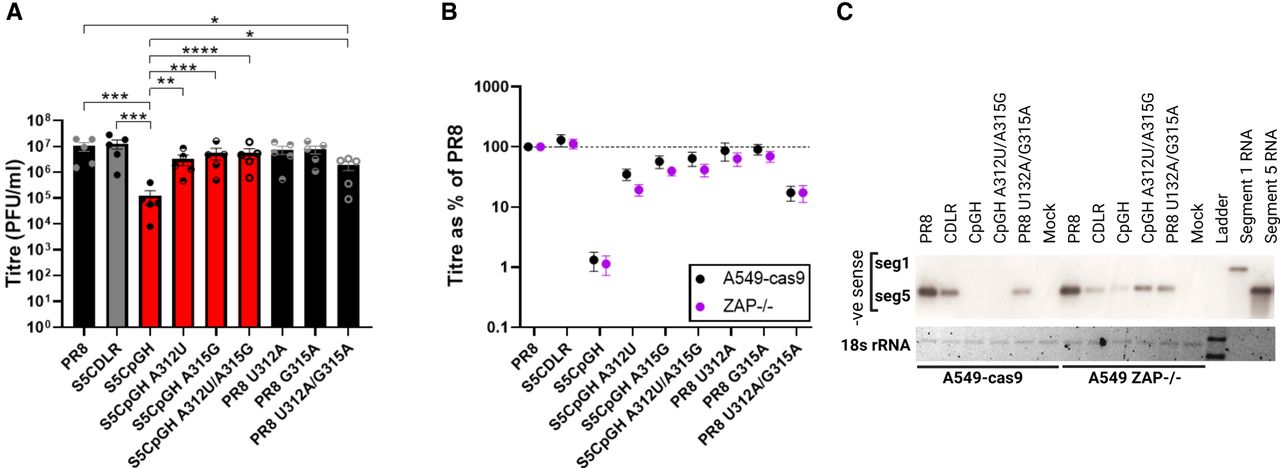
Single nucleotide reversions at positions 312 and 315 of the CpGH virus restored WT fitness. The CpGH virus (S5CpGH) incorporated an 8A tract in the coding sequence. This was removed by reversion to WT sequence at these nucleotide positions through mutations A312U and/or A315G. Conversely, the poly(A) stretch was introduced into WT PR8 via U312A and/or G315A mutations. (A) Titer of virus panel grown at MOI 0.01 for 48 h in A549 cells. (B) To determine whether ZAP sensing was apparent for any mutants, the virus panel was grown in A549-cas9 or ZAP−/− cells, and titers were normalized to WT PR8 titers. (C) To determine whether input RNA from incoming virions was degraded, A549-cas9 cells were infected with the virus panel at MOI 10 in the presence of cycloheximide; RNA was harvested at 24 h postinfection, electrophoresed, and northern blotted using probes for IAV segments 1 and 5 (negative orientation). Ribosomal RNA (rRNA) served as a loading control.




