


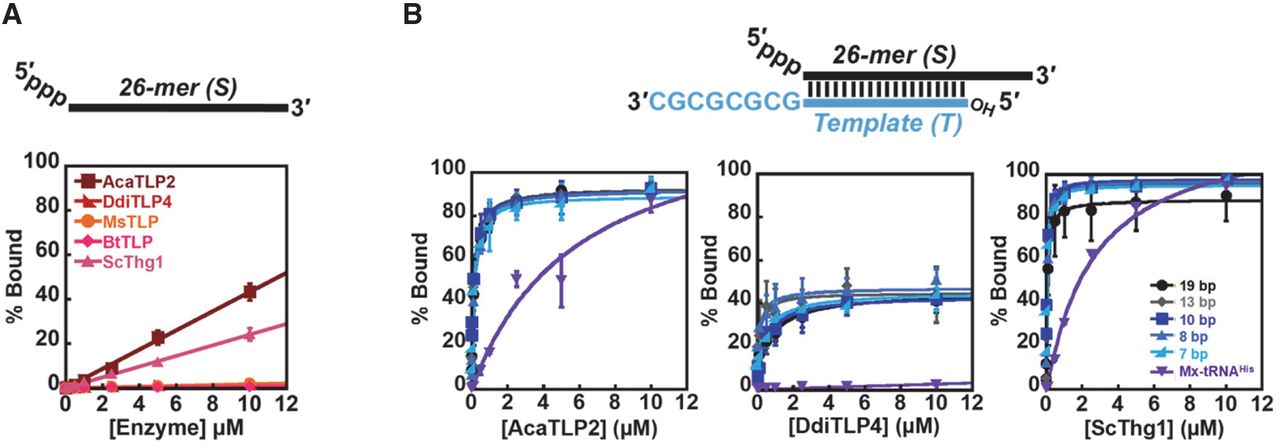
Thg1/TLP enzymes bind RNA duplexes with high affinity. (A) Binding to the single-stranded model RNA substrate (26-mer) was measured using a double filter-binding assay, with the indicated enzymes (AcaTLP2, DdiTLP4, MsTLP, BtTLP, and ScThg1) representing diverse Thg1/TLPs from Eukarya, Archaea, and Bacteria. The fraction of bound RNA product was plotted vs. the concentration added in each reaction (0–10 μM), with linear fits representing nonspecific binding (KD > 10 μM) for enzymes that exhibited detectable RNA binding in the assays. Average fraction bound was determined from triplicate assays performed with each enzyme. (B) Binding to RNA duplexes with varied base-paired length (from 7 to 19 bp) and M. xanthus tRNAHis was measured using a double filter-binding assay. Average fraction bound was determined from triplicate assays performed with AcaTLP2, DdiTLP4, and ScThg1, as indicated, and plotted vs. concentration of each enzyme added (0–10 μM). The data were fit to Equation 2 to determine the apparent KD for each enzyme binding to the tested RNAs, which are indicated in Table 1.




