


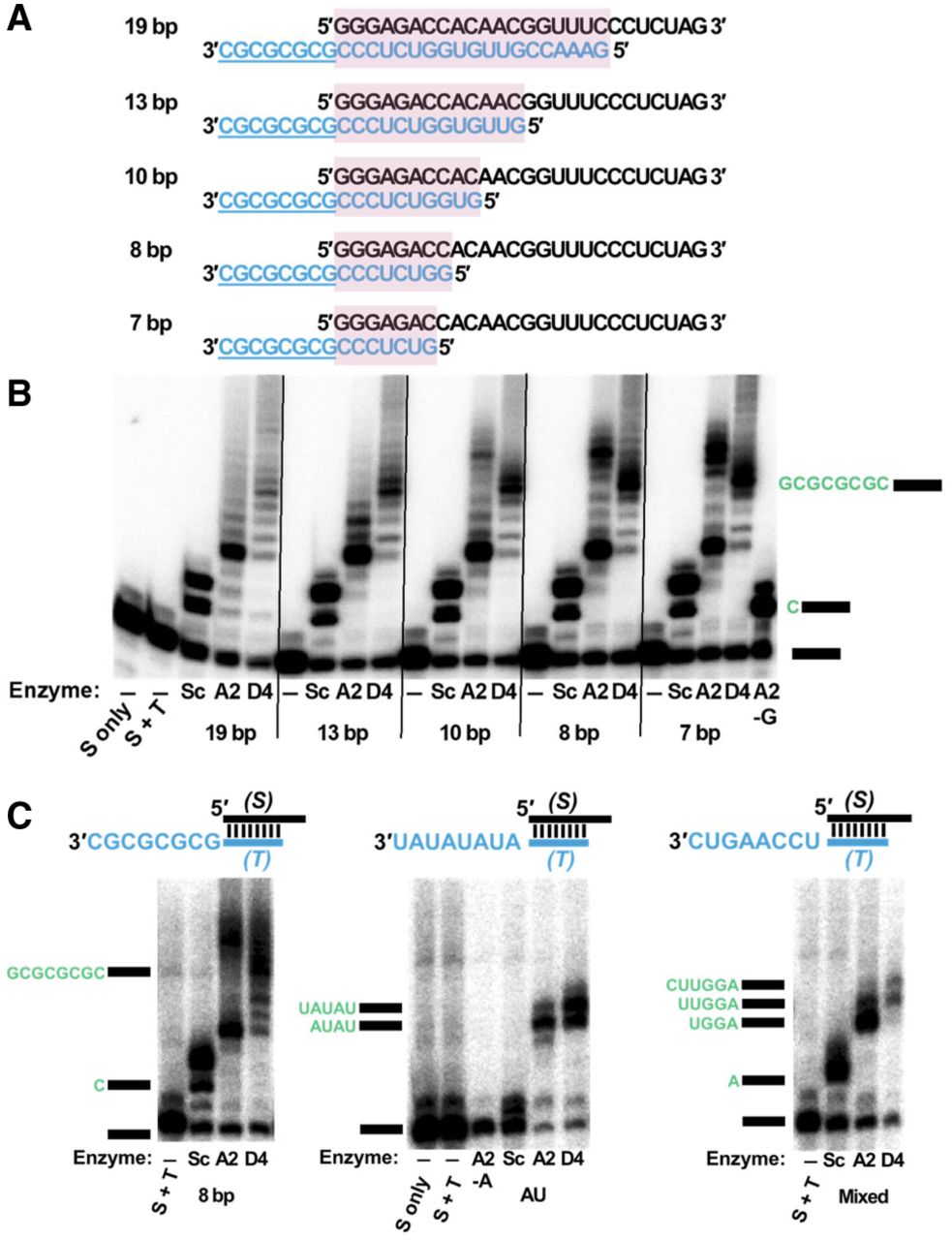
AcaTLP2 and DdiTLP4 catalyze 3′–5′ polymerase activity with RNA duplexes of varying base-paired length and sequence. (A) Design of duplex RNAs using the same 26-mer RNA substrate (shown in black) and template sequences of varied length (shown in blue) to generate varied base-paired regions of 7–19 bp (highlighted in pink). (B) Assays with the indicated GC-template duplexes from 19 to 7 bp are shown using three different Thg1/TLP enzymes (Sc: ScThg1, A2: AcaTLP2, D4: DdiTLP4) in reactions containing CTP and GTP. The band corresponding to single C-addition product is shown in the last lane (A2-G), and migration of the unreacted substrate only (S only) and substrate in the presence of template (S + T) are also shown, as described in Figure 2. (C) Assays with 8 bp duplexes containing three different template sequences (shown in blue) using the same Thg1/TLP enzymes tested above (Sc: ScThg1, A2: AcaTLP2, D4: DdiTLP4) in reactions containing either GTP and CTP (GC-duplex, left), ATP and UTP (AU-duplex, middle), or all four NTPs (mixed duplex, right). Reactions shown here were all resolved on the same gel so that the length of the observed products could be assigned by comparison to the GC duplex control (left duplex). However, the results for each substrate have been digitally separated to facilitate clearer labeling for each set of reaction products.




