


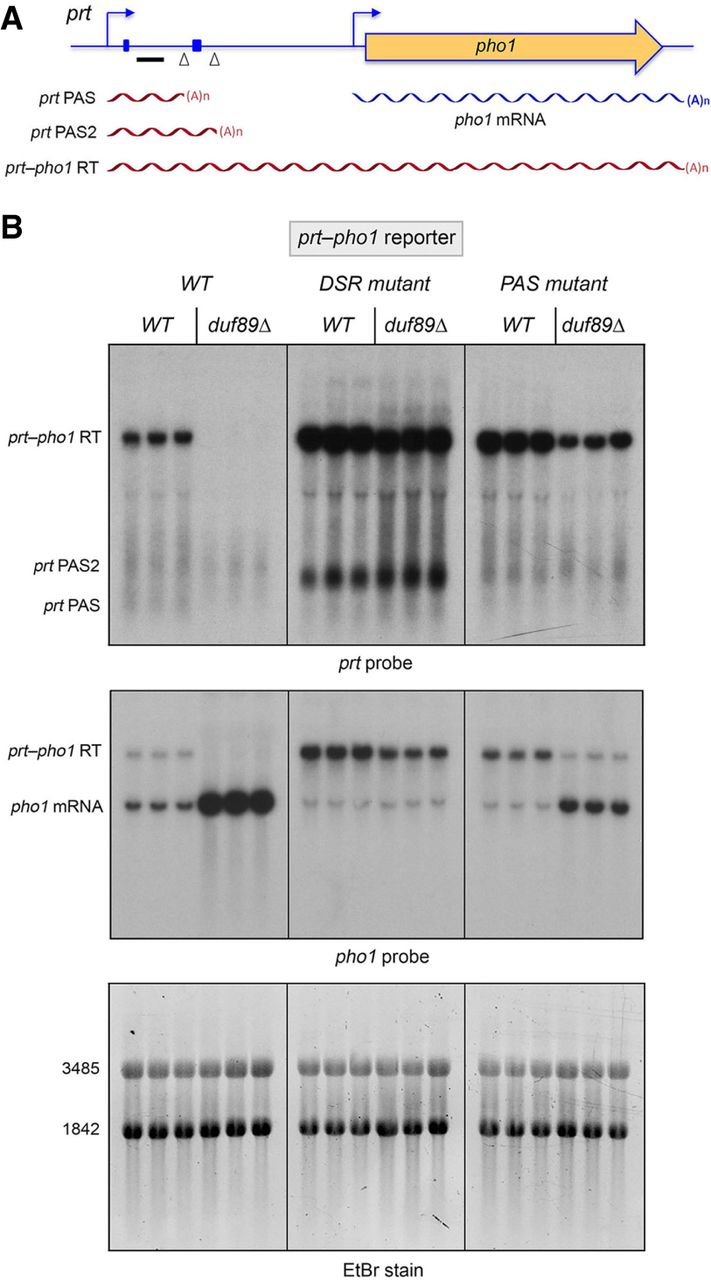
Derepression of pho1 expression by duf89Δ ensues from squelching the production of interfering prt lncRNA. (A) Schematic of the prt–pho1 locus in the reporter plasmid. Transcription start sites are indicated by bent blue arrows. Triangles denote internal poly(A) sites PAS and PAS2. DSR element clusters are indicated by small blue boxes. The gene-specific probe for prt (a 32P-labeled ssDNA complementary to the segment of the prt RNA from nucleotides +160 to +202) is denoted by a horizontal black bar. Three classes of poly(A)+ prt transcripts are depicted as red wavy lines below the prt–pho1 locus. (B) RNA was isolated from three independent cultures of duf89-WT pho1Δ or duf89Δ pho1Δ cells bearing the wild-type (WT) prt–pho1 reporter plasmid or mutant prt–pho1 plasmids in which the prt DSR clusters or PAS and PAS2 polyadenylation signals were altered by nucleobase substitutions. The RNAs were resolved by formaldehyde-agarose gel electrophoresis and stained with ethidium bromide to visualize 28S and 18S ribosomal RNAs (3485 and 1842 nucleotides, respectively) (bottom panel). The RNAs in the gel were transferred to a membrane and hybridized to the prt probe (top panel) and a pho1 mRNA probe (middle panel). Annealed probes were visualized by autoradiography. The various classes of prt and pho1 transcripts are indicated on the left.




