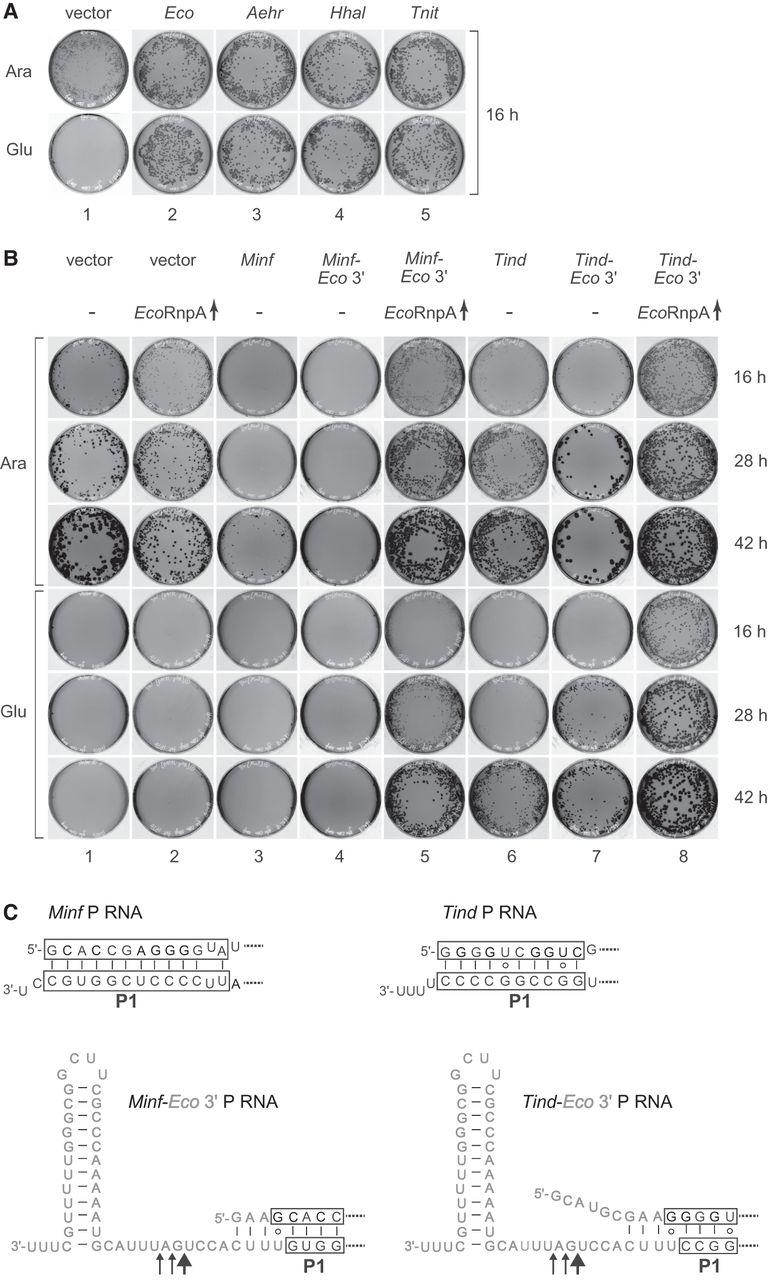
Functionality of heterologous P RNAs in the RNase P complementation test strain E. coli BW. (A) Analysis of P RNAs (rnpB genes) from A. ehrlichii (Aehr), H. halophila (Hhal), and T. nitratireducens (Tnit) using the homologous E. coli rnpB gene (Eco) as positive control; all P RNAs were expressed from the low copy vector pACYC177 under control of the native E. coli rnpB promoter (for details, see the Supplemental Material). Colony growth was documented after 16 h of incubation at 37°C on agar plates supplemented with arabinose (Ara, permissive conditions) or glucose (Glu, nonpermissive conditions). Three independent experiments gave comparable complementation results. (B) Analysis of in vivo functionality of M. infernorum (Minf) and T. indicus (Tind) rnpB genes in E. coli BW. Complementation efficiency was additionally analyzed by simultaneous plasmid pBR322-borne overexpression of the E. coli RNase P protein (RnpA; indicated by EcoRnpA↑) and/or by fusing the heterologous rnpB gene not only to the E. coli rnpB promoter, but also to the 3′-flanking region of E. coli rnpB (Minf-Eco 3′, Tind-Eco 3′) to attenuate P RNA decay in E. coli. Colony growth in the presence of arabinose or glucose was documented after 16, 28, and 42 h at 37°C. Five independent experiments gave comparable complementation results. (C) The 5′- and 3′-ends of Minf and Tind P RNA as annotated in their genomes are shown at the top; Minf and Tind P RNA transcripts equipped with the 3′-flanking region of E. coli rnpB are illustrated at the bottom. Boxes mark the nucleotides in helix P1 that are identical between the native and engineered P RNAs. The thin vertical arrows at the bottom indicate RNase E cleavages and the thick arrow the mature 3′-end after trimming by exonucleolytic activities (Kim et al. 2005).