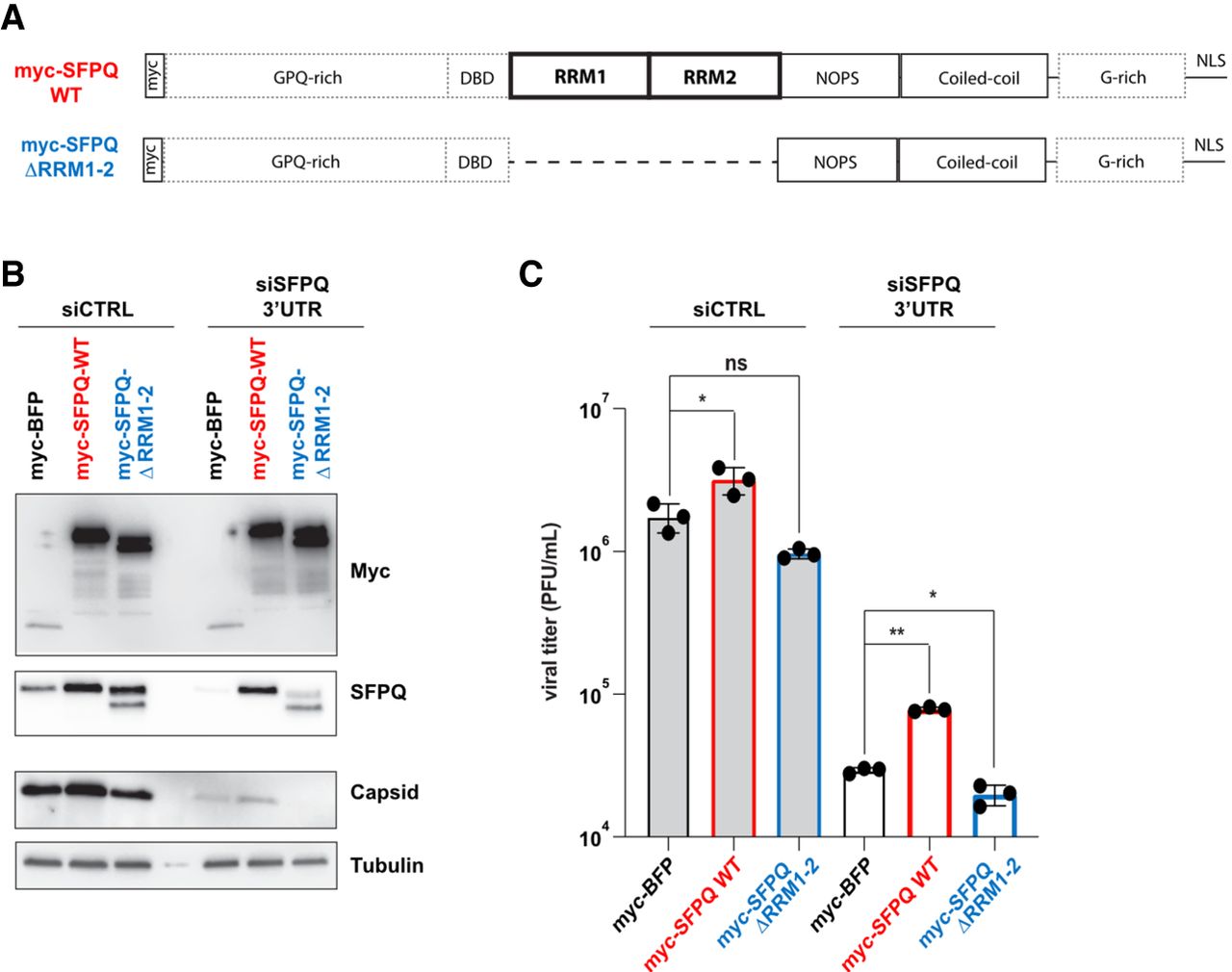
The RNA binding domains are important for the SFPQ proviral activity on SINV. (A) Schematic representation of myc-SFPQ wild-type (WT) and ΔRRM1-2 protein architectures. The well-characterized RNA recognition motifs (RRM) 1 and 2, the non-A/paraspeckle (NOPS) and the coiled-coil domains are indicated. The less characterized GPQ-rich region, the DNA-binding domain (DBD) and the G-rich region are indicated in dashed boxes. (B) Western blot on SINV-GFP infected HCT116 cells treated with siCTRL or siSFPQ-3′UTR and then transfected with a control myc-BFP, or a myc-SFPQ WT or a myc-SFPQ ΔRRM1-2 plasmid. Antibodies directed against the myc-tag, SFPQ and the viral capsid protein were used. Tubulin was used as loading control. (C) SINV-GFP viral production upon siRNA treatment and plasmid transfection measured by plaque assay (PFU/mL) on three independent biological replicates. Ns, non significant, (*) P < 0.05, (**) P < 0.01, one-way ANOVA with multiple comparison.