How to build a protoribosome: structural insights from the first protoribosome constructs that have proven to be catalytically active
- Corresponding author: fox{at}uh.edu
Abstract
The modern ribosome catalyzes all coded protein synthesis in extant organisms. It is likely that its core structure is a direct descendant from the ribosome present in the last common ancestor (LCA). Hence, its earliest origins likely predate the LCA and therefore date further back in time. Of special interest is the pseudosymmetrical region (SymR) that lies deep within the large subunit (LSU) where the peptidyl transfer reaction takes place. It was previously proposed that two RNA oligomers, representing the P- and A-regions of extant ribosomes dimerized to create a pore-like structure, which hosted the necessary properties that facilitate peptide bond formation. However, recent experimental studies show that this may not be the case. Instead, several RNA constructs derived exclusively from the P-region were shown to form a homodimer capable of peptide bond synthesis. Of special interest will be the origin issues because the homodimer would have allowed a pre-LCA ribosome that was significantly smaller than previously proposed. For the A-region, the immediate issue will likely be its origin and whether it enhances ribosome performance. Here, we reanalyze the RNA/RNA interaction regions that most likely lead to SymR formation in light of these recent findings. Further, it has been suggested that the ability of these RNA constructs to dimerize and enhance peptide bond formation is sequence-dependent. We have analyzed the implications of sequence variations as parts of functional and nonfunctional constructs.
Keywords
INTRODUCTION
The modern ribosome is a ribonucleoprotein complex where coded protein synthesis takes place in all living systems. The essential role of the ribosome and its universality have a profound impact on discussions regarding its origin. It is noteworthy that different reconstructions of the genetic content of the last common ancestor (LCA) strongly suggest that its translation machinery was essentially complete (Mushegian and Koonin 1996; Kyrpides et al. 1999; Harris et al. 2003; Koonin 2003; Mirkin et al. 2003; Delaye et al. 2005; Yang et al. 2005; Ouzounis et al. 2006; Ranea et al. 2006). Thus, the origin of the translation machinery, especially the common elements, likely predate the LCA.
The first ribosome crystallographic structures, which included both subunits, significantly advanced the understanding of ribosome function (Schluenzen et al. 2000; Wimberly et al. 2000; Harms et al. 2001). Early studies and many subsequent structural ones have shown that the synthesis of the peptide bond takes place in an area of Domain V of the large subunit (LSU), referred to as the peptidyl transferase center (PTC). Early analysis of ribosomal proteins explored the role of the small terminal fragment of bL27, which appears to go deep into the PTC area (Harms et al. 2001; Colca et al. 2003; Maguire et al. 2005). Further, recent high resolution crystallographic structures also revealed that uL2, uL3, and uL4 touch some ribonucleotides that delineate the PTC (Ben-Shem et al. 2011; Dunkle et al. 2011; Gabdulkhakov et al. 2013; Polikanov et al. 2014). However, none of these reach the void where the peptidyl transfer reaction takes place. Therefore, and in support of a possible RNA World, it has been concluded that the ribosome is a ribozyme (Cech 2000; Steitz and Moore 2003).
The original proposal of “a sizable two-fold symmetry-related region within asymmetric ribosome” reached the ribosome community almost 20 years ago at the 28th FEBS meeting in Istanbul (Agmon et al. 2003). A pseudosymmetrical region (SymR), which contains the ribonucleotides that delineate the PTC, was discovered within Domain V of the LSU (Agmon et al. 2003, 2005; Bashan et al. 2003). This observation led to the proposal that buried within the LSU of the extant ribosomes, in and around the PTC, still lies the vestige of an ancient ribozyme, now called the “protoribosome” (Bashan et al. 2003; Agmon et al. 2005, 2009; Agmon 2009, 2016; Davidovich et al. 2010; Krupkin et al. 2011; Huang et al. 2013; Yonath 2017). The terms SymR and protoribosome as used through this text refer to model structures for which there is still a need to generate new data.
The SymR region was suggested to be the oldest and minimal version of the PTC, which was able to fold and create a pore-like structure that retained catalytic abilities (Agmon 2009; Davidovich et al. 2010; Fox et al. 2012; Huang et al. 2013; Rivas and Fox 2020). The original SymR proposal argued that the PTC is made from two independent halves, representing the ribosomal P- and A-regions, respectively (Agmon et al. 2005). The SymR then was envisioned to have come into existence as the result of a dimerization event between these two RNAs prior to the LCA (Agmon 2009; Huang et al. 2013; Rivas and Fox 2020).
To facilitate this dimerization, the hypothetical protoribosome would likely have utilized long-range RNA/RNA interactions to form a stable and still flexible structure (Rivas and Fox 2020). A detailed search showed that several canonical base pairs exist within each half, but none of them connect the two halves. However, further inspection revealed six regions of nonstandard RNA/RNA interactions, which were proposed to facilitate the hypothetical hybridization of the P- and A-region RNAs (Rivas and Fox 2020).
Recently, the Yonath group reported not just one, but five modified versions derived from the original SymR proposal, which exhibit the capacity to synthesize a peptide bond (Bose et al. 2021, 2022). Among these, one resembles a shorter version of the SymR, with the particularity that both P- and A-regions are covalently linked (Fig. 1). A key feature of the remaining four versions of the P-region is the ability to self-dimerize. In contrast, constructs containing the A-region RNA alone do not form an active dimer structure and seem unessential for dimerization of the P-region RNA. Homodimerization and peptide bond formation have recently been confirmed independently in one of Yonath's P-region constructs, which included a complementary CCA end (Kawabata et al. 2022).
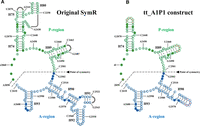
Secondary structure representation of the pseudosymmetrical region (SymR) and the tt_A1P1 construct of the protoribosome plotted over the Thermus thermophilus secondary structure of Domain V from the LSU. Secondary structure was derived from crystallographic structure data (Petrov et al. 2013, 2014a). Filled circles mark ribonucleotides that comprise the six regions of RNA/RNA interactions that have been proposed to be the driving force behind the hybridization of the P- and A-regions (Supplemental Table S1; Rivas and Fox 2020). (A) Secondary structure representation for the original proposal of the SymR (Agmon et al. 2005). P-region comprises 89 ribonucleotides and A-region is equally made from 89 for a total of 178. No proposal was originally made for the possible sequences that should be used at the tips of H75, H89, and H91 nor for the connection at the end of H80 and the beginning of H74. Hence, they are represented by gray arrows. (B) Secondary structure representation of the protoribosome construct tt_A1P1 (Bose et al. 2021, 2022). It starts with G2058 (red font) instead of A2058 due to experimental protocol requirements. P-region comprises 71 ribonucleotides while A-region is made from 64 for a total of 135. Sequence 5′-CUUCGG-3′ was used to close helixes 74, 89, and 90 (red font). C2463 and A2518 in proposed region 2 were left out in the tt_A1P1 construct (Supplemental Table S1).
Herein, it is shown that the five functional laboratory-derived models of the protoribosome each retain some of the previously proposed sites of interaction in the SymR. It is suggested that these interactions allow the constructs to assemble into a pore-like structure that retains catalytic ability. In addition, we speculate on why a highly similar P-region construct is apparently not able to even dimerize.
RESULTS AND DISCUSSION
The tt_A1P1 construct resembles SymR
In its original version, the SymR structure was proposed to be formed from two independent RNA fragments representing the P- and A-regions, respectively. It was envisioned that this heterodimer would be stabilized primarily by RNA/RNA interactions (Agmon et al. 2005; Agmon 2009). A recent structural analysis suggested that there are in fact six conserved regions of nonstandard long-range RNA/RNA interactions, which might have fulfilled this task (Rivas and Fox 2020). As can be seen in Figure 1 and Supplemental Table S1, most of the ribonucleotides involved in these interaction regions are still present in the various constructs. One of the catalytically active versions of the hypothetical protoribosome, called tt_A1P1 (Table 1), was derived from Thermus thermophilus ribosomal RNA. This RNA construct was synthetized as a continuous RNA chain that includes both the P- and A-regions as they occur in extant ribosomes. The latter immediately eliminates the hybridization variable, while the folding and stabilization processes remain to be understood.
Summary of the characteristics of 13 RNA constructs
When compared to secondary structures built from crystallographic data of extant ribosomes (Fig. 1), the secondary structure predictions of the tt_A1P1 construct (Supplemental Figs. S2, S3) exhibit a different base-pairing pattern in H74, H89, and H90. Of the three, H90 changes the most. This suggests the P-site shape tolerates less disruption than the A-site in a functional construct. H93 does not exhibit any alteration from its native state.
Not all the previously described RNA/RNA interaction regions are equally easy to establish within the tt_A1P1 construct. This is likely because it is isolated from the influence of other nearby RNA and protein elements that naturally occur during large subunit folding. Predictions of secondary structure suggest that G2502 and A2503 will not be available to form the base stacking elements. In addition, U2504 is no longer a splayed-apart base. These ribonucleotides seem to be sequestered within an extended H90 (Supplemental Figs. S2, S3). Also, U2491, G2570, and A2572 are no longer associated in their respective helical parts, when compared to the Thermus thermophilus native secondary structure (Fig. 1; Supplemental Figs. S2, S3). The latter strongly suggests that the association and stabilization of the tt_A1P1 construct largely depends on the well-characterized GUGA tetraloop motif, which is most likely aided by the splayed-apart A2439. Both elements likely enable the association of H74 and H93, acting as a clamp to form the pore-like structure, which retains the catalytic ability of the PTC.
However, one should not rule out possible emergent unknown RNA/RNA interactions that could assist in the stabilization of the tt_A1P1 construct. As noted elsewhere, RNA functional molecules are flexible enough to replace one form of RNA interaction by another form of RNA association with nearby ribonucleotides, and in doing so they can retain structure and function (Rivas and Fox 2022). Similar phenomena have been seen in other RNA systems too. For example, it has been observed that different RNA structures located at different positions in the sequence may have equivalent architectural functions in RNase-P (Haas et al. 1991). Even further, such intrinsic flexibility has been exploited by in vitro evolution experiments to change substrate affinity and even develop new catalytic properties among ribozymes (Lehman and Joyce 1993; Dai and Joyce 2000; McGinness and Joyce 2002).
Possible origin of the A-region
Undoubtedly, the most relevant discovery with deeper evolutionary implications was the realization that homodimerization of several P-region constructs, derived from T. thermophilus (tt), Staphylococcus aureus (sa), and Enterococcus facium (ef), may lead to the formation of catalytically active protoribosomes (Table 1). Constructs tt_P1, tt_P1c, sa_P1c, and ef_P1c all were shown to dimerize and are able to catalyze peptide bond formation (Bose et al. 2021, 2022). These results, and the fact that constructs derived exclusively from the A-region alone have not been able to even dimerize (Table 1), led the Yonath group to conclude that the P-region likely predates the existence of the A-region. This has been independently proposed by Petrov et al. (2014b). This important conclusion raises a new question. How is it that the A-region arose in the first place?
It seems plausible that peptides produced by the hypothetical protoribosome might have facilitated the stabilization of the very same protoribosome that made them. This would allow the two parts of the protoribosome to mutate independently (Bose et al. 2021). Metal ions such as magnesium or ferrous iron (Petrov et al. 2011; Athavale et al. 2012) may also have played a structural role in the individual RNAs and in their assembled complex prior to facilitating their ligation into a single chain (Rivas and Fox 2020). Such ligation might have guided the differentiation of one P-region into an A-region by eliminating the dimerization requirement, while retaining the catalytic properties of a protoribosome. Together, these two processes could ultimately explain the existence of both regions.
SymR RNA/RNA interactions in the P-site homodimers
Given the proven ability of the P-site RNA construct to associate with itself and produce a catalytic homodimer, it became necessary to infer which, if any, of the previously described RNA/RNA interactions are still relevant for the dimerization process. To address this, a structural alignment was performed between the P- and A-region derived from the crystallographic structure of the T. thermophilus large subunit. The latter represents an approach to structurally infer if equivalent P-region ribonucleotides could replace the associations established by the A-region within a P-region homodimer. As expected, due to their proposed evolutionary origin (Agmon et al. 2009; Rivas and Fox 2020; Bose et al. 2021), H74 and H89 broadly resemble H90 and H93, respectively. But in detail, only A2600 has a suitable splayed-apart counterpart (U2492), which has a similar base and ribose position and orientation. The latter indicates that although the overall shape of the P- and A-region secondary and tertiary structures are similar, in detail both sequence and structure are no longer equivalent. Such results immediately raise the possibility of new emergent RNA/RNA interactions taking place within the hypothetical homodimers.
Nevertheless, the structural superposition strengthens previous insights over the pore-like structure that seems to be necessary for peptide bond formation by the protoribosome (Fox et al. 2012). As can be seen in Figure 2 and Supplemental Figure S4, such a pore-like structure would most likely be assembled from the interaction between H74 from the first P-region RNA and H89 from the second P′-region RNA, and vice versa (Fig. 3). This form of interaction clearly resembles region 1 and possibly region 4, both as previously described (Supplemental Table S1; Agmon et al. 2005; Agmon 2009; Rivas and Fox 2020). This makes these contacts the most probable association elements, which would allow dimerization and stabilization of the homodimers.
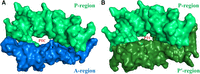
Proposed pore-like structure of the pseudosymmetrical region (Agmon et al. 2005; Agmon 2009; Rivas and Fox 2020) and the tt_P1 construct (Bose et al. 2021, 2022). Both were modeled over the crystallographic structure of T. thermophilus (PDB ID 4WPO, Lin et al. 2015). (A) P- and A-regions (green and blue, respectively) hybridize together to form a heterodimer with a pore-like structure that enhances peptide bond formation, as it occurs in the extant ribosomal region called the peptidyl transferase center or PTC. (B) Space-filled structural model of two tt_P1 constructs highlighted in two tonalities of green, hypothetically dimerized into a similar pore-like structure that is also able to enhance peptide bond formation. Structure was obtained by structural superposition of a second tt_P1 element over the original A-region RNA as described in the Materials and Methods section.
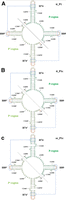
Proposed secondary structures of the P-region constructs from Thermus thermophilus (tt_P1, tt_P1c) and Escherichia coli (ec_P1c). Structures were drawn based on sequences reported by Bose et al. (2022) and secondary structure predictions (Supplemental Fig. S5–S10). Each structure is depicted as a pair of P-region and P′-region, meaning two independent but identical entities, which are necessary to form a pore-like structure capable of catalyzing peptide bond formation. The T. thermophilus ribosome numbering system is used. Initial guanine is highlighted using red font. The 5′ and 3′ ends of each RNA oligomer are labeled. 5′-CUUCGG-3′ and 5′-GUGA-3′ sequences at the tips of helices 74 and 89 are also highlighted by using red font. Proposed regions of long-range RNA/RNA interactions are surrounded by blue-dotted boxes and connected by blue-dotted lines. (A) tt_P1 construct with 5′-CUUCGG-3′ sequence at the tip of both H74 and H89. This construct is made from 71 ribonucleotides. It has been reported as able to dimerize and be catalytically active. (B) tt_P1c construct with 5′-CUUCGG-3′ sequence at the tip of H74 and the 5′-GUGA-3′ sequence at the tip of H89. It is made from 67 ribonucleotides. It is also reported as able to dimerize and be catalytically active. (C) ec_P1c construct with 5′-CUUCGG-3′ sequence at the tip of H74 and the 5′-GUGA-3′ sequence at the tip of H89. It is also made from 67 ribonucleotides. Reported as neither able to dimerize nor catalytically active. Seven sequence differences are found. The initial G2058 being restored to the conserved A2058. In H74, the pair G2070:C2441 was replaced by A2070:U2441, and the pair G2072:U2438 was replaced by C2072:G2438. In H89, the pair C2461:G2489 was replaced by A2461:U2489. Change in the base pair pattern of H74, as the consequence of the change in pair G2070:C2441 while replaced by A2070:U2441, seems to be negatively affecting this construct's capacity to dimerize and consequently to show catalytic activity.
At first sight, one might think that the homodimer/heterodimer distinction is insignificant. However, improved understanding is vital to delineate the problem and suggests new and likely better questions. The much smaller number of residues needed to form the PTC with the homodimer suggests a much simpler ribosome may have existed before the LCA. If a heterodimer was not needed, why does it exist now and how was it initially formed? How does ribosome performance with the homodimer and heterodimer compare?
A sequence variation with no apparent effects
The tt_P1 construct was designed to be connected at the tips of H74 and H89 by the 5′-CUUCGG-3′ sequence (Fig. 3; Supplemental Figs. S1, S5, S6; Bose et al. 2022). A major change in this construct was implemented to potentially increase the chances of hybridization. As previously mentioned, the GUGA tetraloop in the original SymR model was localized at the tip of H93 (Fig. 1) and was considered to be one of the most significant interactions, which would contribute to the P- and A-region hybridization (Agmon et al. 2005; Agmon 2009; Rivas and Fox 2020). Because the SymR proposal suggested H93 and H89 were symmetric equivalents, the authors (Bose et al. 2022) replaced the 5′-CUUCGG-3′ sequence by a GUGA tetraloop in H89, thereby creating a variant called tt_P1c (Fig. 3; Supplemental Figs. S1, S7, S8). This change decreased the size of the construct, from 71 to 67 ribonucleotides (Fig. 3). With the tetraloop change in its sequence and size, hybridization stability increased (Kd of 47.43 ± 7.10 and 10.57 ± 1.16 µM, respectively) while catalytic activity was retained (Bose et al. 2022). Constructs sa_P1c, ef_P1c, and ec_P1c were also designed to include the GUGA tetraloop in H89 (Supplemental Figs. S9, S10, S12–S15). The ec_P1c construct was the one reported to be unable to hybridize or produce a peptide bond. These results immediately suggest that the GUGA tetraloop is not critical for the construct's ability to dimerize, while revealing that ec_P1c likely has other features that prevent it from dimerizing.
Small sequence variations produced big consequences
Despite the high conservation of the PTC region throughout the entire phylogeny, one construct derived from Escherichia coli (ec) called ec_P1c, has been found unable to dimerize. Consequently, no peptide bond formation was detected (Bose et al. 2021, 2022). This construct differs from the closest fully functional tt_P1c in just seven positions (Supplemental Fig. S1).
The starting base in almost all the constructs was guanine (G2058) instead of the bacterial conserved adenine (A2058). This was required to meet T7 RNA polymerase requirements imposed by the in vitro transcription protocol (Bose et al. 2022). The latter was not required in the ec_P1c construct since it was chemically synthesized. The remaining six differences are associated with the covariation of three base pairs, two in H74 and one in H89. In H74, the pair G2070:C2441 was replaced by A2070:U2441, and G2072:U2438 was replaced by C2072:G2438. In H89, the pair C2461:G2489 was replaced by A2461:U2489 (Fig. 3; Supplemental Fig. S1). This discrepancy immediately suggests that among these mutations lies the difference that must have structural implications which prevent hybridization of ec_P1c. Even further, while the sa_P1c and ef_P1c constructs shared the H74 sequence with tt_P1c, the base-pairing pattern of H89 is affected by replacement of G2458 by U2458. The new H89 pattern does not prevent dimerization or catalytic activity (Table 1; Supplemental Figs. S1, S12–S15).
As can be appreciated in Figure 3, another change occurs in the base-pairing pattern of H74 between catalytically active constructs (Supplemental Figs. S5–S8, S12–S15) and ec_P1c (Supplemental Figs. S9–S11), due to sequence variations. The extant secondary structures of H74 that were derived from both E. coli and T. thermophilus crystallographic data (Petrov et al. 2013, 2014a) reveal that this area, regardless of sequence, folds much in the same way as depicted in Figure 1. Bases U2068, A2439, and C2440 are not associated by standard base pairs to other elements inside the helix. This allows A2439 to be a splayed-apart base that reaches A2600 in extant rRNA in what has been called region 4 of the interaction within the SymR proposal (Supplemental Table S1; Rivas and Fox 2020). However, the base-pairing pattern is most likely conserved due to the interaction with other rRNA and ribosomal protein elements in extant ribosomes. Secondary structure predictions of the tt_P1 and tt_P1c constructs reveal a different pattern, possibly due to the G2070:C2441 pair (Supplemental Figs. S5–S8). As can be seen in Figure 3, U2068 and C2443 are now part of the helical region. Meanwhile, C2440 now base pairs with G2070, leaving A2439 as a single splayed-apart base. The identical base pair arrangement of H74 is also found on sa_P1c (Supplemental Figs. S12, S13) and ef_P1c (Supplemental Figs. S14, S15) predictions, both reported as hybridizing and catalytically active (Table 1). Such a base pair arrangement is unlikely if A2070 and U2441 happen to be part of the H74 sequence, as it is in the case of the ec_P1c construct (Fig. 3; Supplemental Figs. S9–S11).
Even further, contrary to what was found in the other constructs, when the ec_P1c sequence was subjected to secondary structure prediction by mfold (Zuker 2003), two almost equally probable structures emerged (Supplemental Figs. S9, S11). The first structure (ΔG of −24.90) resembles the P-region, while the second (ΔG of −23.70) changes the overall shape of H89. This sets a more complex scenario for the hybridization problem since in theory the experiment could have two conformational populations in which homo- and heterodimers could be forming or not forming at all.
Together, these results strongly suggest that the overall shape of H74 could be the main reason the E. coli construct ec_P1c was not able to hybridize or exhibit the expected catalytic activity. Therefore, we speculate that the ability of H74 to accept and retain interactions with H89 is far more important than the H89 capping sequence.
Toward a size limit
Two P-region constructs were designed as smaller versions of the tt_P1c (67 ribonucleotides) with one sequence variation each at the tip of H74. Such versions are tt_P1m (64 ribonucleotides), which replaces the 5′-CUUCGG-3′ by the 5′-UAA-3′ sequence and the tt_P1n (65 ribonucleotides), which replaces the same 5′-CUUCGG-3′ by 5′-UUAA-3′. H74 in these constructs is shorter by two or three ribonucleotides, respectively (tt_P1c = 31, tt_P1m = 28, tt_P1n = 29) (Supplemental Figs. S16–S19). Although hybridization of both constructs was reported to be successful, catalytic activity was not observed (Table 1; Bose et al. 2021, 2022). The latter suggests that even if the hybrids retain the potential to acquire the necessary conformation, their hybridization products are affected to the point in which the geometry of the resulting pore-like structure is changed. As a result, it is now incompatible with peptide bond formation. Therefore, apparently a minimum size threshold may have been reached.
Not so short RNAs on the early Earth
Historically, the prebiotic synthesis and polymerization of RNA has been described as highly difficult if not impossible (Shapiro 2007). Others argued that RNA-based origin of life theories must experimentally develop plausible abiotic synthesis of RNA oligomers long enough to support Darwinian evolution (Joyce 2012; Robertson and Joyce 2012; Krishnamurthy 2015). It is noteworthy that the current protoribosome proposal depends on an RNA oligomer whose length is 67 ribonucleotides. Until recently, an RNA of this length would seem prohibitive. This view is marginally changed by a recent report that basaltic glasses under prebiotic conditions can catalyze the formation of 100–300 ribonucleotide RNA oligomers (Jerome et al. 2022). Although such a model requires the presence of 5′-triphosphate ribonucleosides, it has been shown that these can also be synthesized out of borate nucleosides and cyclic phosphate (Kim and Benner 2021); both most likely present in the early Earth (Krishnamurthy et al. 2000; Kim and Kim 2019). As convenient as this model sounds, there are issues that remain to be addressed, such as the formation of undesired 2′, 5′-linkages and homochirality problems that every inorganic synthesis posits. Nevertheless, if one adheres to such a model, acknowledging all of its challenges, the synthesis of a 67-ribonucleotide chain may have been possible prior to the LCA.
Although, we must recognize that synthesis of long RNA chains is still to be confirmed, and new syntheses are likely be discovered in the future. Even further, the model could be simplified more. There could be simpler solutions such as a 34-mer that could self-dimerize to a 68-mer.
We also sustain that a robust scenario, with a holistic view, will never portray RNA evolving as an isolated molecule, but rather a molecule that can coexist and sometimes find benefit from the interaction with nonribosome-related small proto-peptides or depsipeptides (Frenkel-Pinter et al. 2020, 2021, 2022). Like any other RNA molecule, the protoribosome constructs presented by Yonath's group also exhibit a strong Mg2+ requirement to hybridize (Bose et al. 2022). This adds another layer of complexity to the interactions that the protoribosome would have gone through at the dawn of life. Together, divalent cations, proto-peptides or depsipeptides and RNA must have had interdependencies that ultimately drove the protoribosome's evolution.
Conclusion
Vestiges of the hypothesized protoribosome appear to be present within the extant ribosome. Being the most conserved area in the LSU, the PTC still carries the information necessary to revive an ancient catalytic RNA capable of enhancing peptide bond formation. The SymR model that claims the P- and A-region hybridized together into a pore-like structure is now upended by the observation that the P-region can simply self-hybridize to create a catalytic center with an RNA oligomer of about half the previously expected size. This new result eliminates the need for the heterodimerization of two larger RNA chains of 89 residues each.
But with one problem solved (like the length), new ones are generated, and critical issues remain. In particular, is this putative homodimer able to link more than two amino acids? This would likely require the homodimer to form a functional pore to direct a growing peptide to what has become the exit tunnel entrance in modern ribosomes (Fox et al. 2012). Initial observation of the homodimer suggests that such a pore may be present in at least some of the constructs. Future experimental work may resolve this issue. Finally, it seems highly possible that the A-region RNA evolved later in the protoribosome evolution. It remains to be determined how this might have occurred, under which evolutive pressures, and at what stage in the ribosome's early history.
MATERIALS AND METHODS
Sequence analysis
Sequences for catalytically active constructs tt_A1P1, tt_P1, tt_P1c, sa_P1c, and ef_P1c and catalytically inactive ec_P1c, tt_P1m, and tt_P1n, were retrieved from supplemental material published in Bose et al. (2022). Mutations were identified by manual alignment of respective P-region sequences (Supplemental Fig. S1), and then mapped into the secondary structures to infer their structural implications.
Structural alignment
Structural comparison between the P- and A-regions was done by structural alignment of corresponding segments derived from the T. thermophilus crystallographic structure (PDB ID 4WPO, Lin et al. 2015). Structures of segments were retrieved using PyMOL (The PyMOL Molecular Graphics System, version 2.4.1, Schrödinger) and aligned with the cealign algorithm implemented within PyMOL. Constructs tt_A1 (64 ribonucleotides) and tt_P1 (71 ribonucleotides) were used for comparison. Overall alignment with an RMSD of 5.515 Å over 48 residues was reported by the software. Ribonucleotides, which have been described as involved in nonstandard RNA/RNA interaction regions in the SymR A-site segment (Supplemental Table S1), were localized over the A-site structure and compared against P-site equivalent ribonucleotides. The likelihood of such residues being able to mimic SymR interactions when two P-region constructs dimerized was determined by the relative position of the phosphate and sugar backbone as well as the orientation of their respective bases.
Secondary structure predictions
Retrieved sequences were initially submitted to the mfold web server that has been optimized for 37°C folding (Zuker 2003). Estimated ΔG values (Kcal/mol) previously reported by Bose et al. (2022) and confirmed by us include the following constructs: tt_A1P1 ΔG = −64.30 (Supplemental Fig. S2), tt_P1 ΔG = −33.00 (Supplemental Fig. S4), tt_P1c ΔG = −28.90 (Supplemental Fig. S6), ec_P1c ΔG = −24.90 (Supplemental Fig. S8), sa_P1c ΔG = −31.00 (Supplemental Fig. S11), ef_P1c ΔG = −30.10 (Supplemental Fig. S13), tt_P1m ΔG = −21.30 (Supplemental Fig. S15), and tt_P1n ΔG = −22.00 (Supplemental Fig. S17). The alternative folding of ec_P1c ΔG = −23.70 (Supplemental Fig. S10) was not previously reported.
The RNAfold server (Gruber et al. 2008) was then used as an independent RNA secondary structure prediction tool different from the RNAstructure web server also used by Bose et al. (2022). Equivalent results were obtained using Turner thermodynamic parameters (Mathews et al. 1999). tt_A1P1 ΔG = −64.20 (Supplemental Fig. S3), tt_P1 ΔG = −33.10 (Supplemental Fig. S5), tt_P1c ΔG = −29.00 (Supplemental Fig. S7), ec_P1c ΔG = −25.00 (Supplemental Fig. S9), sa_P1c ΔG = −31.50 (Supplemental Fig. S12), ef_P1c ΔG = −30.60 (Supplemental Fig. S14), tt_P1m ΔG = −21.40 (Supplemental Fig. S16), and tt_P1n ΔG = −22.10 (Supplemental Fig. S18). All RNAfold ΔG values are express in Kcal/mol.
SUPPLEMENTAL MATERIAL
Supplemental material is available for this article.
ACKNOWLEDGMENTS
Mario Rivas Medrano's research was initially supported by an appointment to the NASA Postdoctoral Program at the NASA Astrobiology Institute, administered by Universities Space Research Association under contract with NASA. This work was subsequently supported in part by a subcontract to the University of Houston from NASA Contract 80NSSC18K1139 under the Center for the Origin of Life, at the Georgia Institute of Technology. The authors would like to thank Dr. Quyen Tran for help in implementing and maintaining computational tools.
Author contributions: M.R.M. and G.E.F. conceived the work. M.R.M. conducted all the computational work. Results were discussed with G.E.F. Both authors contributed equally to the writing process and preparation of the manuscript.
Footnotes
-
Article is online at http://www.rnajournal.org/cgi/doi/10.1261/rna.079417.122.
- Received August 14, 2022.
- Accepted December 11, 2022.
This article is distributed exclusively by the RNA Society for the first 12 months after the full-issue publication date (see http://rnajournal.cshlp.org/site/misc/terms.xhtml). After 12 months, it is available under a Creative Commons License (Attribution-NonCommercial 4.0 International), as described at http://creativecommons.org/licenses/by-nc/4.0/.
REFERENCES
MEET THE FIRST AUTHOR

Meet the First Author(s) is an editorial feature within RNA, in which the first author(s) of research-based papers in each issue have the opportunity to introduce themselves and their work to readers of RNA and the RNA research community. Mario Rivas is the first author of this paper, “How to build a protoribosome: structural insights from the first protoribosome constructs that have proven to be catalytically active.” Mario is a former NASA Postdoctoral Fellow and current Postdoctoral Fellow in the Biology and Biochemistry Department of the University of Houston, working in the laboratory of Dr. George E. Fox from the Center for the Origin of Life (COOL). His research interest focuses on the origin and early evolution of life from the perspective of molecular evolution.
What are the major results described in your paper and how do they impact this branch of the field?
Recent results from Yonath's group revealed the existence of an ancient RNA machine capable of peptide bond synthesis, now called the protoribosome. To increase the understanding of how this protoribosome works and how it might have originated at the dawn of life is the main focus of our manuscript. Here, we have contrasted the functional and nonfunctional constructs that were developed by Yonath's group and delivered our conclusions based on secondary structure predictions.
What led you to study RNA or this aspect of RNA science?
“The RNA World” hypothesis was proposed more than 30 years ago. This proposal speculated on the RNA intrinsic dichotomy, where it acts as a genetic and a catalytic biomolecule. It also grants a central role to RNA in the origin and early evolution of life. The protoribosome, being an ancient RNA machine, represents one key aspect that supports this idea.
During the course of these experiments, were there any surprising results or particular difficulties that altered your thinking and subsequent focus?
Yonath's group demonstration that the P-site oligomer alone can hybridize and create a catalytic unit is astonishing. Thanks to the latter, we were able to speculate about the interactions that could hold two P-site oligomers in the absence of an A-site counterpart. This represents a simpler model of the protoribosome; smaller chains and a plausible mechanism of producing such small oligos strengthened our views on their possible role during the very early stages of life.
Are there specific individuals or groups who have influenced your philosophy or approach to science?
The NASA astrobiology community and specifically the Center for the Origin of Life (COOL). This center is integrated by the most relevant scientists in the United States whose research touches the early evolution of life, with emphasis on the ribosome. Their seminars and the opportunity to share ideas with such specialized and intellectually generous characters definitely enhanced and strengthened my ideas, hypothesis and views.