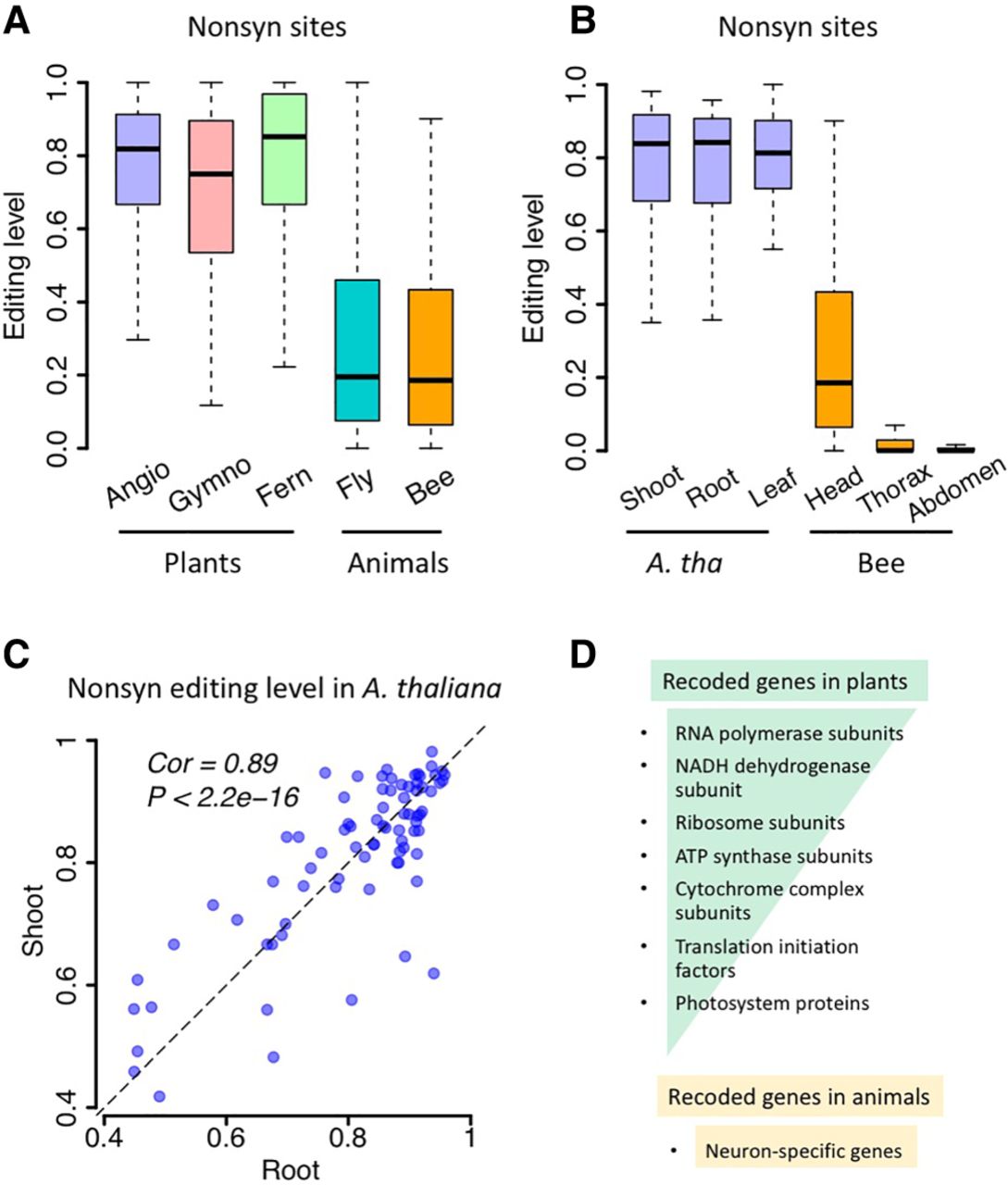
Comparison of editing levels. (A) Nonsynonymous editing levels in plants (angiosperms, gymnosperms, and ferns used in this study) and animals. Fly, Drosophila melanogaster; Honeybee, Apis mellifera. Plants have considerably higher editing levels than animals, supporting the restorative hypothesis. (B) Nonsynonymous editing levels in shoots, roots, and leaves of Arabidopsis thaliana, and in different tissues of honeybee. A. thaliana obviously has less tissue-specificity than honeybee, supporting the restorative hypothesis. (C) Correlation of nonsynonymous editing levels between roots and shoots. (D) Genes enriched with nonsynonymous RNA editing sites. Genes are ranked with decreasing numbers of nonsynonymous editing sites.