


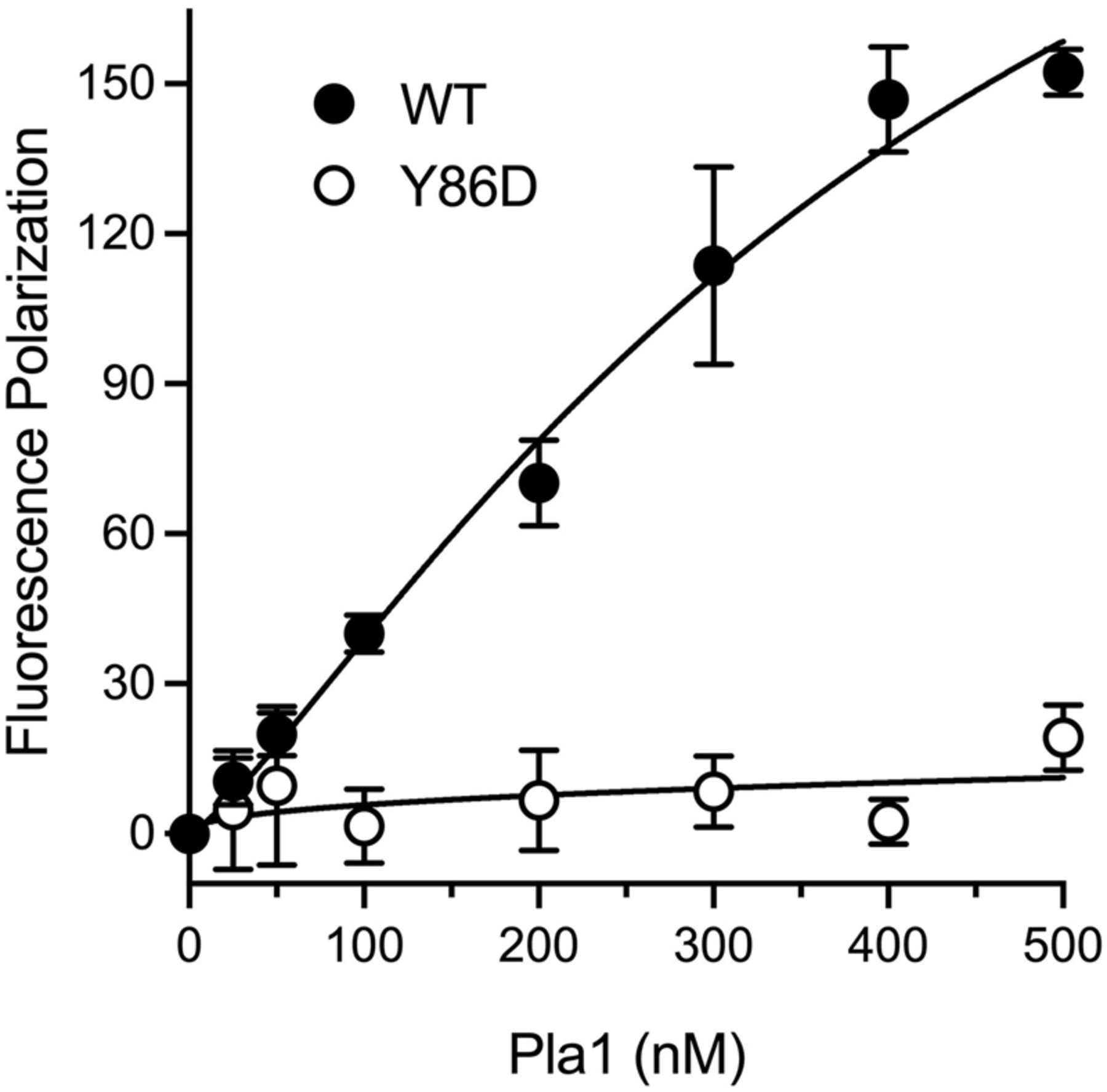
The Y86D mutation impairs Pla1 binding to an RNA primer. Binding of the specified concentrations of Pla1 WT or Y86D enzyme to 10 nM 5′-(6-FAM)-UUUCUGUGGCUA was determined in 50 mM Tris-HCl, pH 7.4, 50 mM NaCl, and 1 mM MnCl2 in a 30 µL reaction. Binding reactions were set up in a 384-well plate (Corning 4514) and incubated at room temperature in the dark for 20 min prior to measurement. Excitation of the ligand was performed with linearly polarized light at 485 nm, and emission was measured at 535 nm at planes that were parallel and perpendicular to the plane of excitation at room temperature using a SpectraMax iD5 plate reader (settings: endpoint measurement mode; detection with 400 msec integration, auto photomultiplier tube, and 1 mm read height). The data are averages (±SEM) of three independent assays, where each assay is the average of three technical replicates. The data were fit to a Hill slope equation in GraphPad Prism with an estimated Kd of 456 nM and goodness of fit correlation coefficient of 0.99 for the Pla1 wild-type curve.




