


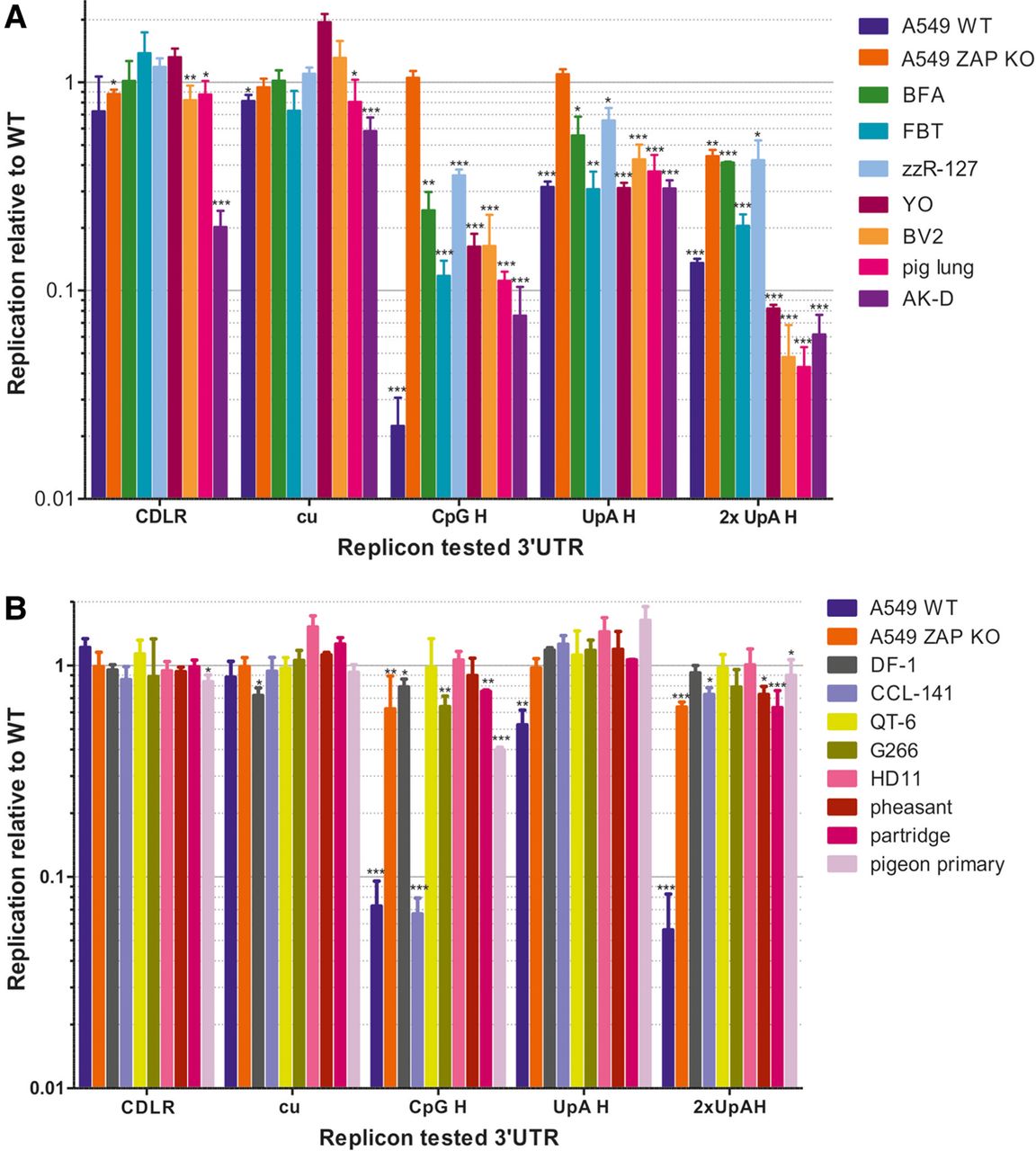
Replication of E7 replicons in a range of (A) mammalian and (B) avian cell lines. Cells were transfected with 50 ng/well of in vitro transcribed RNA of E7 replicons as described in Figure 1. The bar heights depict mean replication relative to the WT replicon in each cell line; the data were derived from three biological replicates; error bars show standard deviations. Significance of differences from WT replication were calculated by two-tailed paired t-test; asterisks show significance values as follows: (***) P < 0.001, (**) P < 0.002, and (*) P < 0.033. Abbreviations: mammalian cell lines: BFA: bovine fetal aorta (host species Bos taurus); FBT: fetal bovine turbinate; zzR-127 (Bos taurus): goat fetal tongue cell line; YO: derived from a hybrid myeloma YB2/3HL (Capra hircus); BV2: microglial cells (Mus musculus); AK-D: fetal cat lung (Felis catus). Avian cell lines: DF-1: chicken embryo fibroblast (Gallus gallus); CCL-141: duck embryo (Anas platyrhynchos); QT6: Japanese quail fibrosarcoma (Coturnix japonica); G266: male zebra finch (Taeniopygia guttata); HD11 chicken macrophage-like (G. gallus); primary cells from pigeon, partridge, and quail.




