


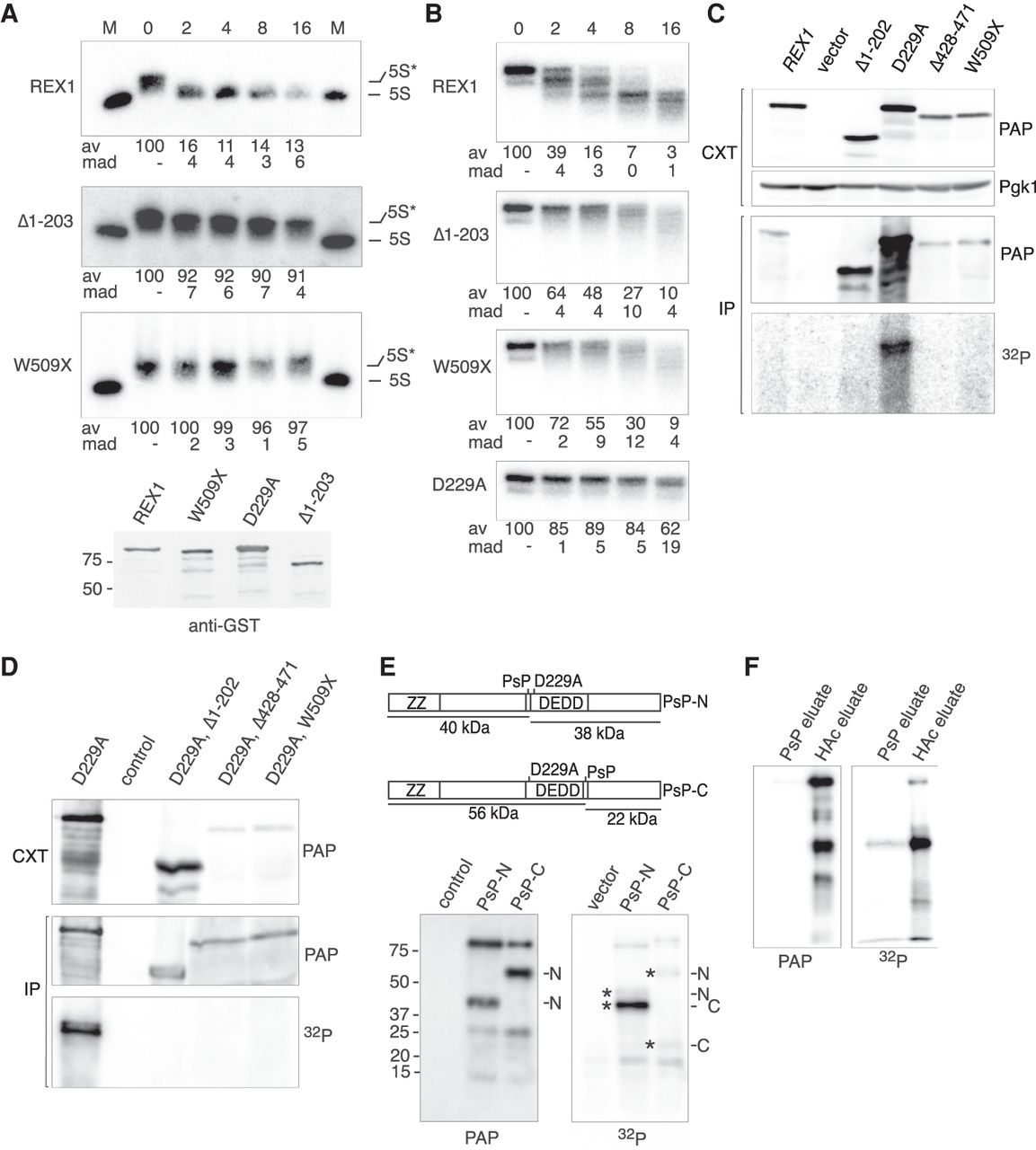
The amino- and carboxy-terminal regions of Rex1 are required for RNA binding. (A,B) In vitro nuclease assays. (A) 5S rRNA processing assays. (B) Assays using a 5′ 32P-labeled DNA oligonucleotide. Time points (minutes) are indicated above each panel. Lanes labeled M contain cellular RNA from a wild-type strain. The amount of full-length substrate (as a mean average [av] percentage of the total) remaining at each timepoint is indicated below, together with the mean absolute deviation (mad) values (n ≥ 2). The lower panel shows a western analysis of the purified proteins assayed. (C–F) In vivo RNA crosslinking analyses. Analyses are shown of whole-cell extracts (CXT) and purified proteins (IP). Westerns show zz-tagged proteins (labeled PAP) or the Pgk1 protein. PhosphoImaged blots are labeled 32P. Control samples are from a strain expressing nontagged Rex1. (C) Analysis of wild-type and mutant Rex1 proteins. (D) Analysis of deletion mutants bearing the active site mutation. (E) Proteolytic cleavage of Rex1/RNA complexes. PsP cleavage sites and the predicted fragments are indicated. Analyses shown are of the acid eluates after proteolysis. Asterisks denote cleavage products. (F) comparison of PsP eluates and acetic acid (HAc) eluates of the PsP-N construct. A fivefold relative excess of the PsP eluate over the acid eluate was analyzed.




