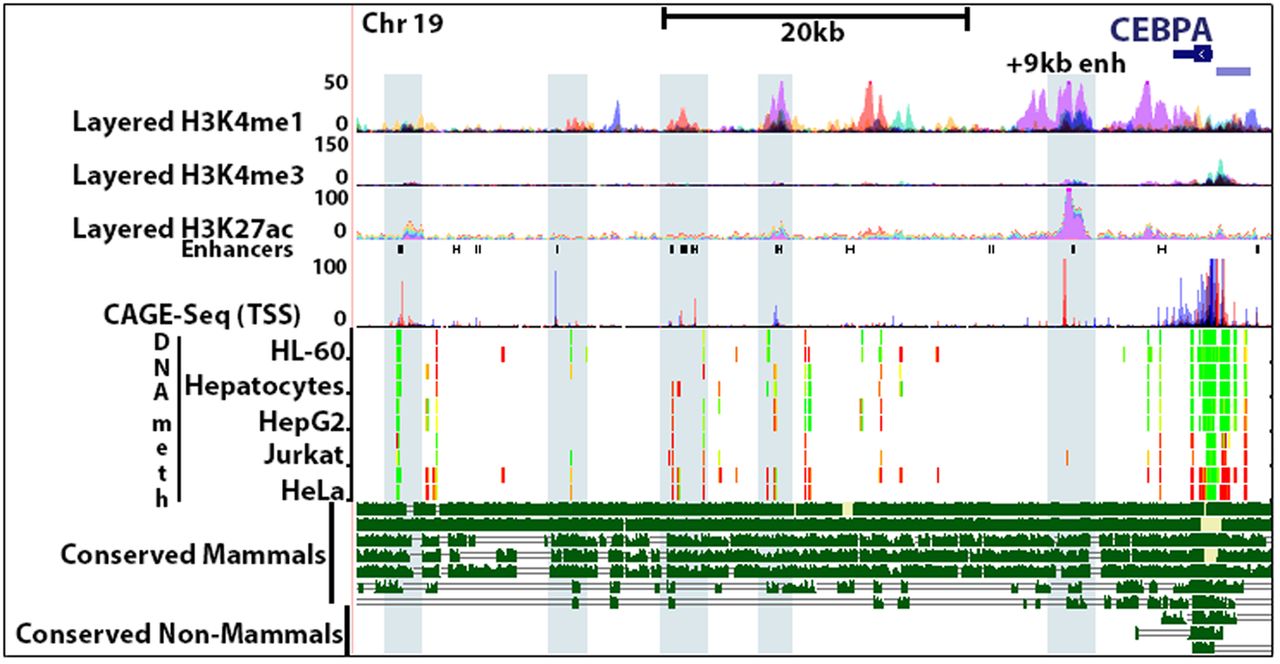
Enhancer predictive markers H3K4me, H3K4me3, and H3K27ac are depicted as an overlay of ChIP-seq data from GM12878, H1-hESC, HSMM, HUVEC, K562, NHEK, and NHLF cell lines (ENCODE). Predicted enhancers are demarcated as black rectangles (FANTOM5–RIKEN). CAGE-seq data (FANTOM5–RIKEN) shows sites of active transcription (red: positive strand, blue: negative strand). The +9 kb enhancer shows a high degree of active transcription initiation. Light blue rectangles highlight overlap between downstream CEBPA enhancers and sites of active transcription. DNA methylation (ENCODE) of the CEBPA promoter has previously been shown to suppress CEBPA expression (methylation status: green—low, yellow—intermediate, red—high). Some enhancers overlap with sites of CpG methylation while others, like the +9 kb, do not. Mammalian CEBPA enhancers (chimp, rhesus, mouse, dog, elephant, opossum, and platypus) show broad sequence conservation across all species, including the +9 kb enhancer (magenta rectangle). In contrast, nonmammals (chicken, lizard, zebrafish) lack the same enhancer sequences. (See Materials and Methods for track information.)