


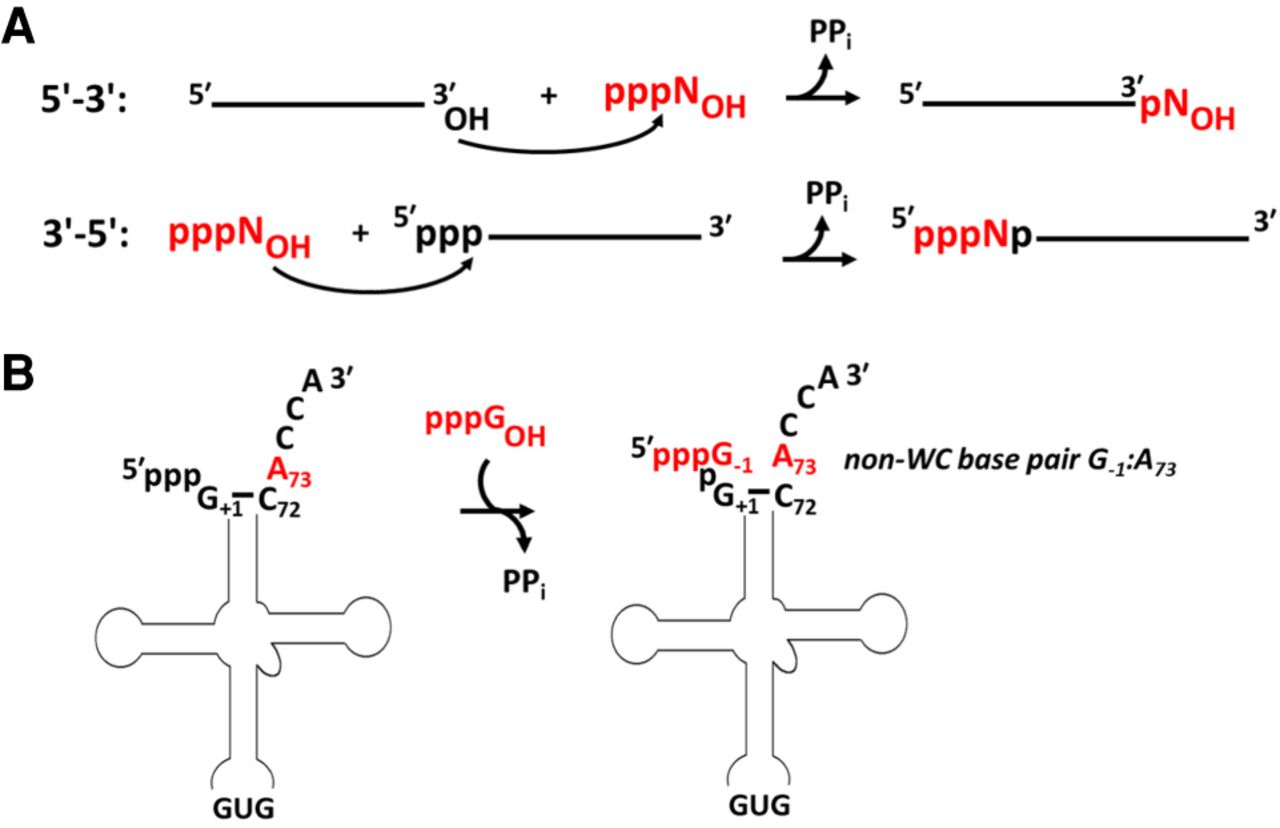
3′–5′ polymerase activities catalyzed by Thg1-family enzymes. (A) Comparison of the chemistry of nucleotidyl transfer during 5′–3′ versus 3′–5′ polymerase reactions. In each case, a hydroxyl nucleophile attacks a nucleotide 5′-triphosphate, releasing PPi as a leaving group and resulting in the formation of a phosphodiester bond. However, the orientation of the hydroxyl and triphosphate functional groups are reversed between the two reactions. Arrows indicate the location of the initial nucleophilic attack on each triphosphate. (B) Schematic of the use of 3′–5′ polymerase chemistry to add G−1 to wild-type tRNAHis containing the A73 discriminator nucleotide. The reaction shown is the in vitro reaction that occurs with 5′-triphosphorylated tRNAHis transcripts, which were used for kinetic characterization in this work.




