


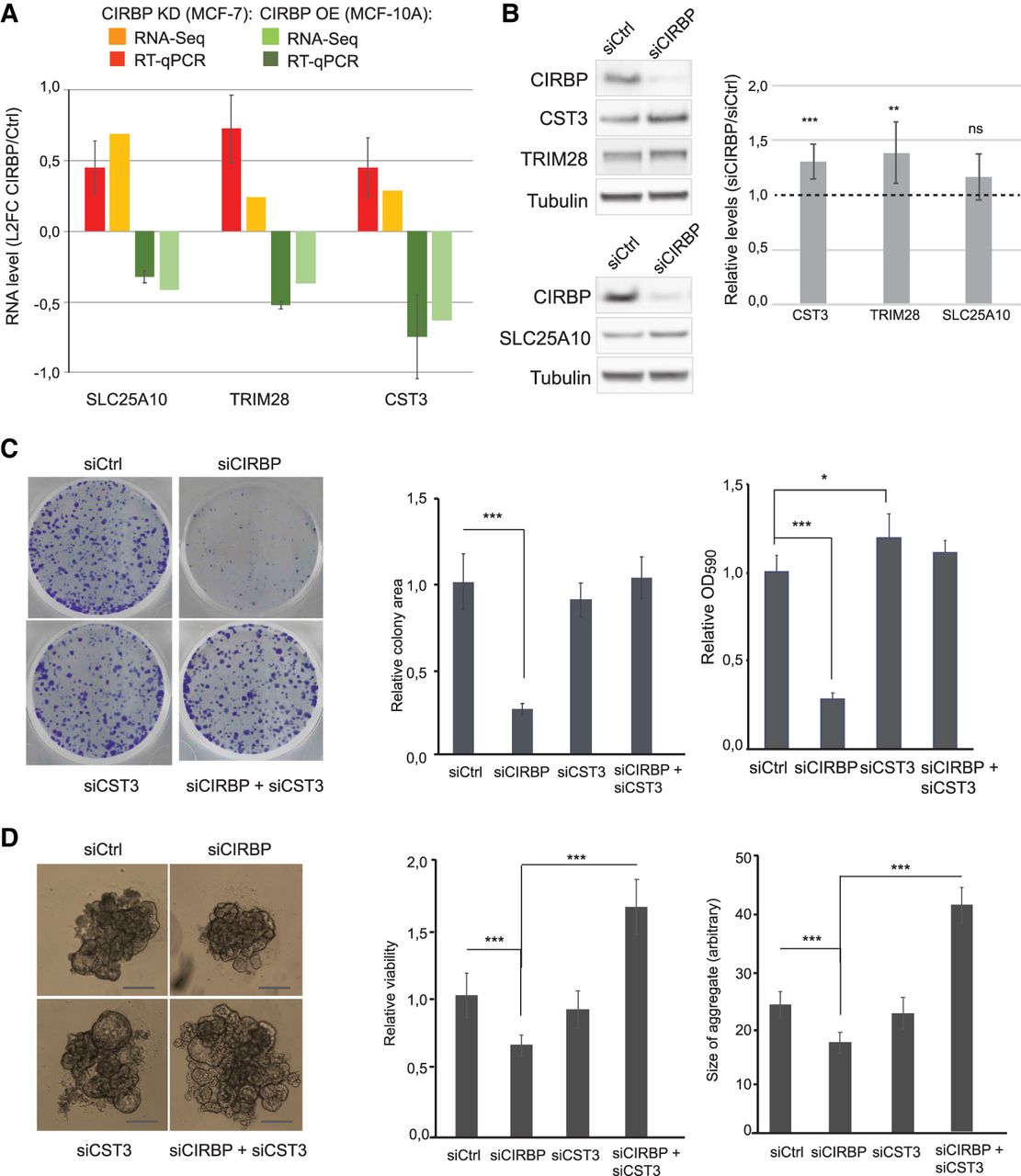
CST3 mediates CIRBP regulation of cancerous traits. (A) Validation of RNA-seq results by RT-qPCR of selected targets after manipulation of CIRBP levels in MCF-7 and MCF-10A cells. For comparison, the RNA-seq data are included. Error bars represent the standard deviation of at least two independent experiments. (B) Levels of targets in A by western blot after depletion of CIRB from MCF-7 cells. Tubulin was used as a loading control. Quantification of at least four experiments, corrected for tubulin and normalized to the siControl (dashed line) is shown on the right. (C) Clonogenic assay after depletion of CIRBP and/or CST3 from MCF-7 cells. A representative image is shown per condition on the left. Middle and right panels show the quantification of the area of colonies and global plate intensity, respectively. Error bars represent the standard deviation from triplicates carried in parallel. Two independent biological replicates were performed. (D) Anchorage independent growth of MCF-7 cells after depletion of CIRBP and/or CST3. Representative images are shown on the left. Relative viability and size of aggregates are shown in the middle and right, respectively. Error bars represent standard deviation (n = 6). Significance was determined using Student's t-test. (***) Pval < 0.001, (**) Pval < 0.01, (*)Pval < 0.05; (ns) nonsignificant.




