


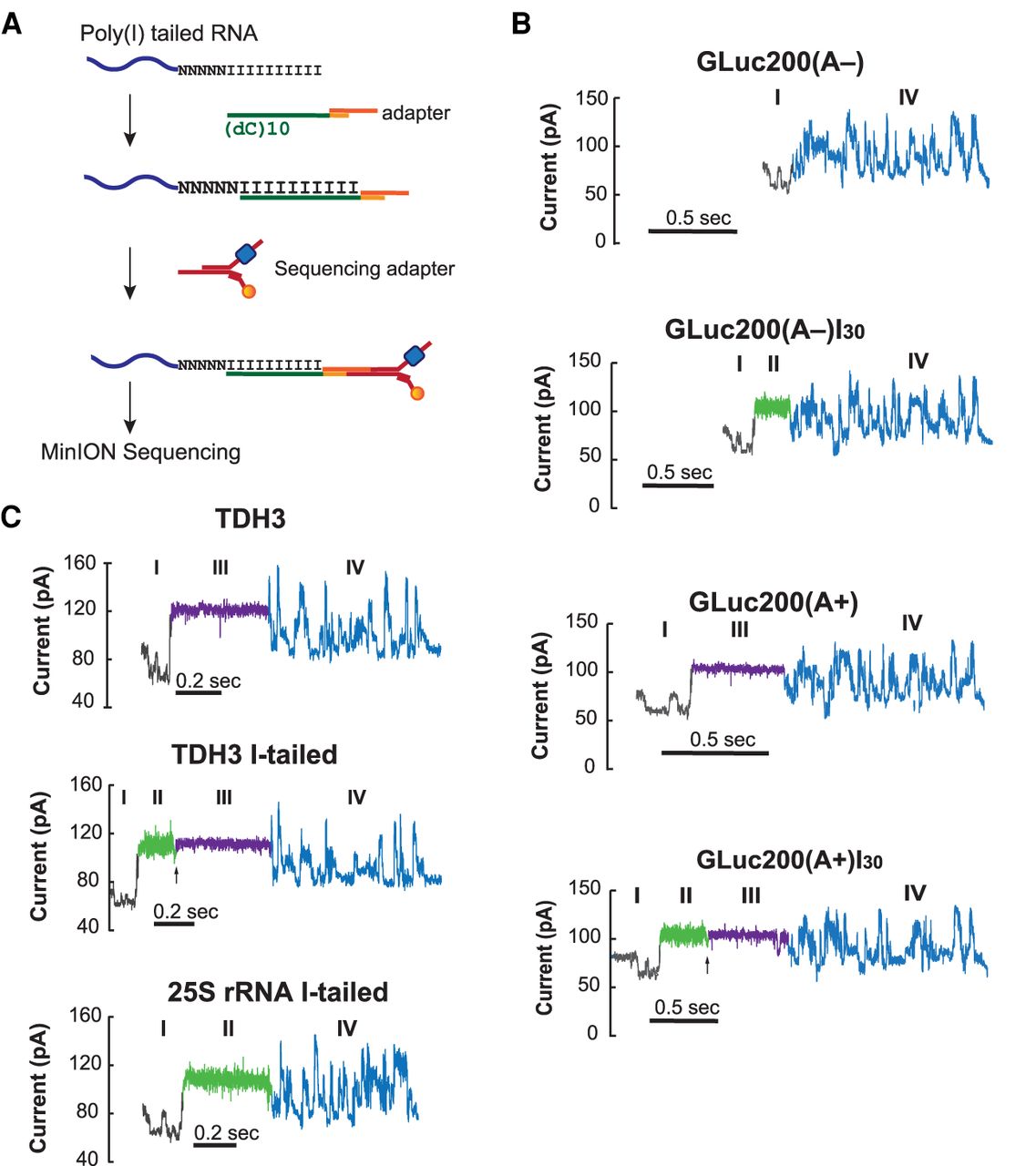
Nanopore ionic current signals for poly(I)-tailed RNA molecules. (A) Schematic for Nanopore adaptation of poly(I)-tailed RNA molecules. This step uses a poly(dC)10 oligomer (oligoC adapter) that anneals to the terminal 10 nt of the added inosine tail. (B) Ionic current traces produced by the GLuc200 model mRNA (IV, blue) with or without a poly(A) tail (III, purple) and with or without a ligated 30 nt segment of inosine (II, green). Adaptor sequence trace is shown in gray (I). RNA molecules enter the pore 3′ end first, so the trace records transit through the pore in the 3′ to 5′ direction. (C) Ionic current traces produced by translocation of native yeast TDH3 mRNA or 25S rRNA, with or without I-tailing by Cid1. Segments are colored as in B.




