


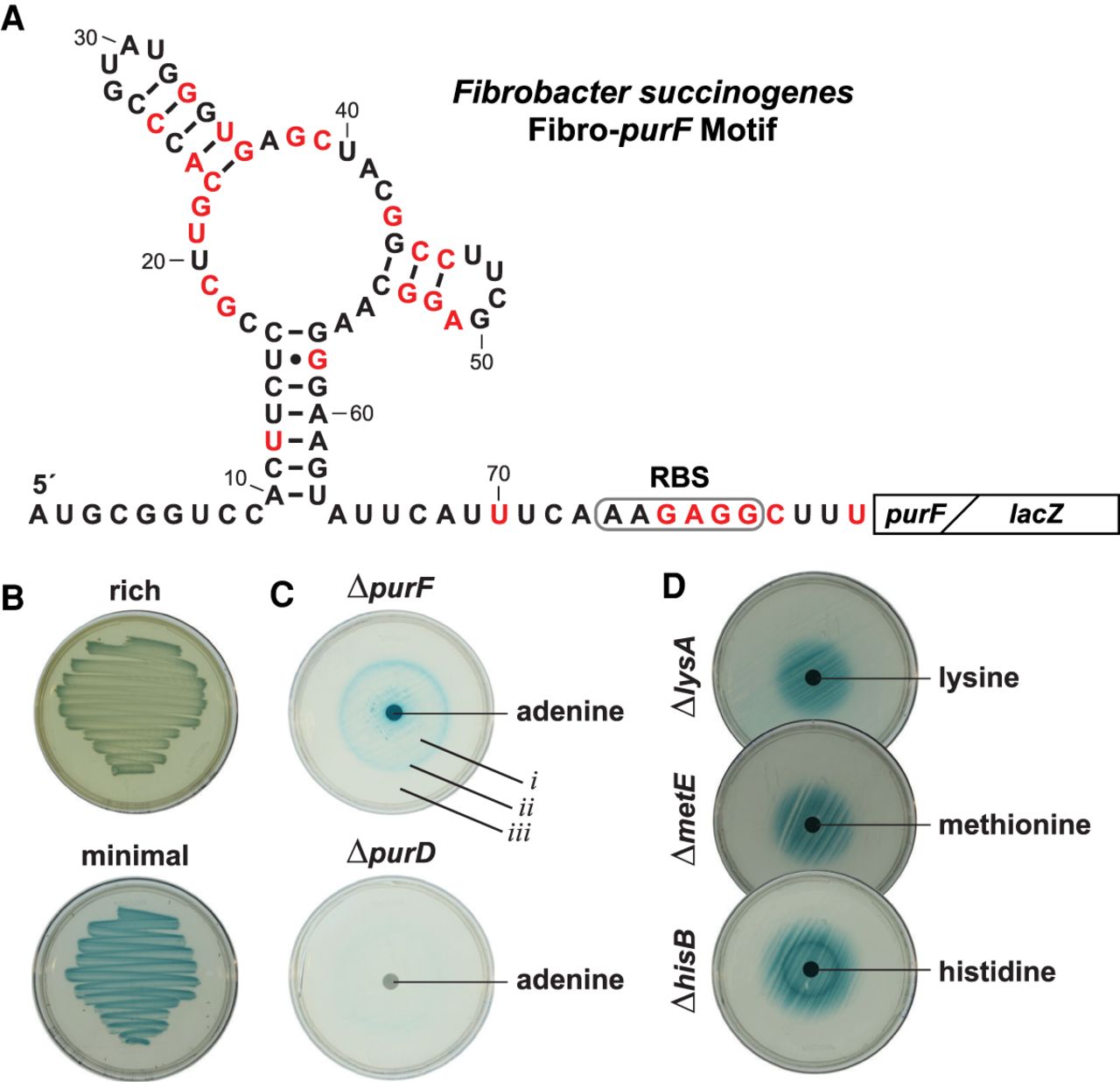
The Fibro-purF motif is a gene control element that responds to PRA. (A) Sequence and secondary structure of the wild-type Fibro-purF RNA aptamer from F. succinogenes. The lacZ gene fused in-frame to the fifth codon of the native purF ORF. Red nucleotides are conserved >97% as noted in the consensus sequence (Fig. 2A). (B) E. coli cells carrying the WT Fibro-purF reporter fusion construct. Cells were plated on agar containing rich or minimal medium supplemented with 50 µg mL−1 X-gal and 100 µg mL−1 carbenicillin. (C) M9 minimal medium agar plates containing 100 µg mL−1 X-gal and 100 µg mL−1 carbenicillin were streaked with E. coli strains carrying the WT Fibro-purF reporter fusion construct and genomic disruptions to either the purF or the purD gene. Plates include a filter disk supplemented with 5 μL of 100 mM adenine. Annotations: (i) Abundant purines (from adenine) permits abundant PRA (low gene expression); (ii) purine deficit causes complete utilization of PRA to produce purines (high gene expression); (iii) extreme purine starvation causes cell death. (D) Agar-diffusion assays using the WT Fibro-purF reporter fusion construct in strains of E. coli that are auxotrophic for various amino acids and grown on M9 minimal medium plates. Filter disks were supplemented with 5 µL of a 100 mM solution of the amino acid as indicated.




