


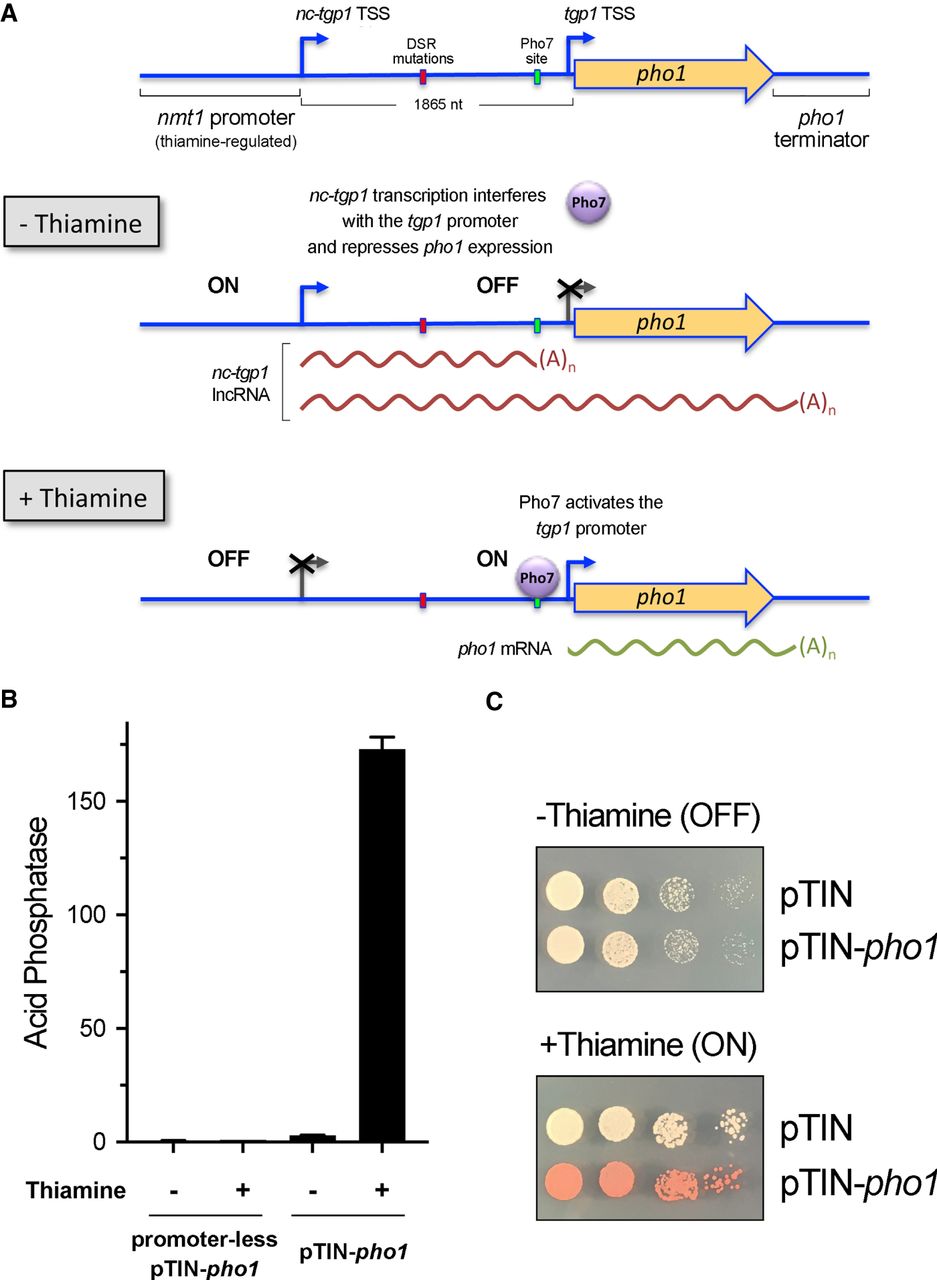
The pTIN system. (A) A schematic illustration of the lncRNA-regulated thiamine-inducible system using Pho1 acid phosphatase as a reporter (pTIN-pho1) is shown at the top. Transcription start sites are shown as bent arrows. The positions of the nc-tgp1 TSS, nc-tgp1 lncRNA DSR mutations (red box), tgp1 promoter Pho7 DNA binding site (green box), and tgp1 TSS are indicated. The distance between the nc-tgp1 TSS and the −1 nt relative to the tgp1 translation start site is indicated by the bracket. The pho1 ORF is denoted by a gold horizontal arrow in the direction of mRNA synthesis. The mechanism of the lncRNA-regulated thiamine-inducible system is depicted below, where the thiamine-starved condition (−Thiamine) is the repressed state and thiamine-replete condition (+Thiamine) is the induced state for pho1 expression. The two predominant nc-tgp1 lncRNA isoforms are indicated. (B) Single colonies of pho4Δ pho1Δ cells transformed with promoter-less pTIN-pho1 or pTIN-pho1 were pooled (≥20) and grown in Leu− PMG medium. Cells were diluted in Leu− PMG medium without or with 15 µM thiamine, and acid phosphatase activity was measured after incubation at 30°C for 21 h. The acid phosphatase activity is the average ± SEM from three independent cultures. (C) A representative culture of pho4Δ pho1Δ cells bearing the pTIN empty vector or pTIN-pho1 were grown in Leu− PMG medium without thiamine at 30°C. The cultures were adjusted to A600 of 0.1, and fivefold serial dilutions were spotted on Leu− PMG agar medium without or with 15 µM thiamine and incubated at 30°C for 3 d. The cells were overlaid with 1% agarose containing 0.015% α-naphthyl phosphate and 0.15% Fast Blue B Salt in 0.1 M sodium acetate (pH 4.2). The plates were photographed after incubation for 2 min at room temperature.




