


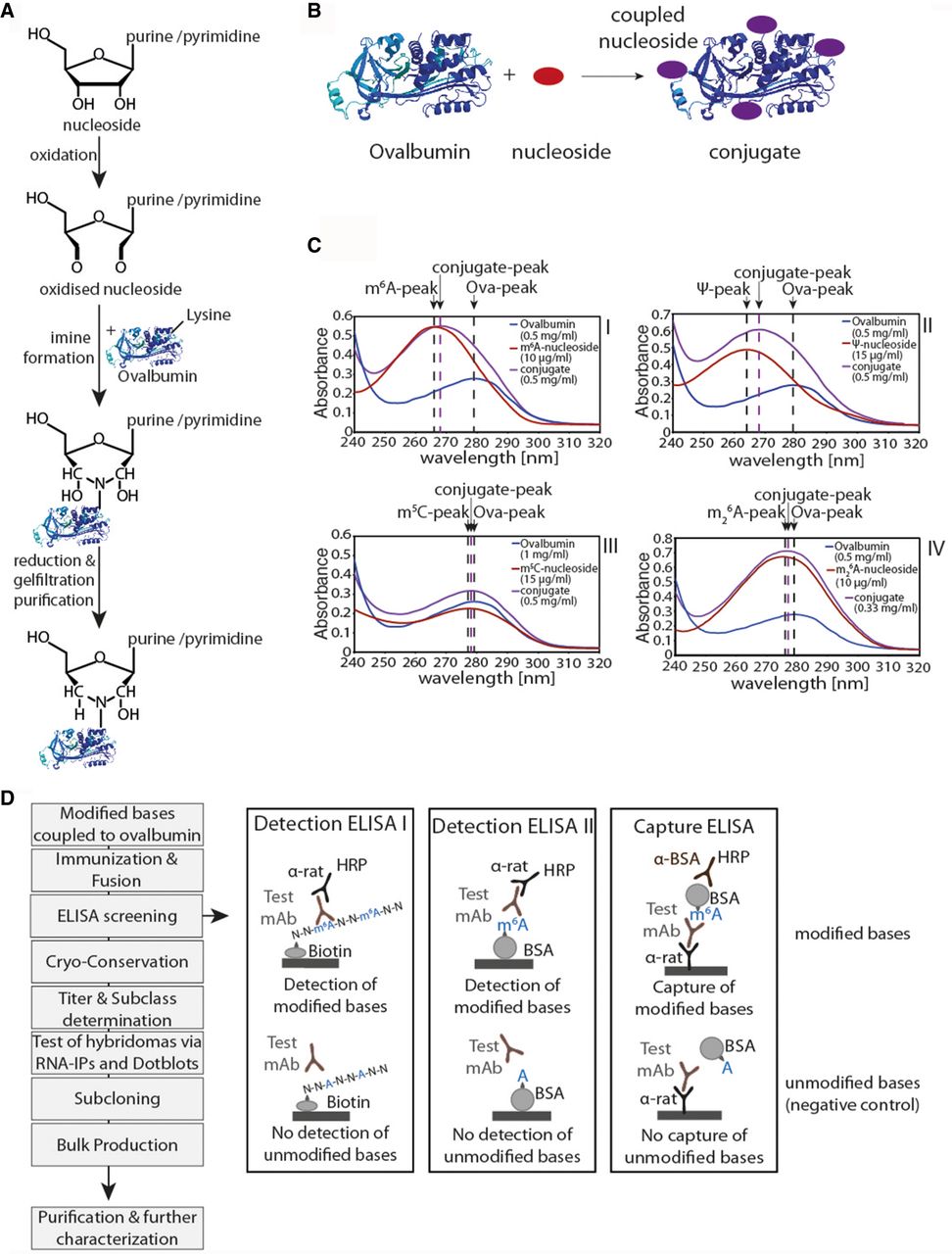
Synthesis of antigens for immunization: Coupling of nucleosides to ovalbumin. (A) Scheme for the conjugation reaction of the nucleosides to ovalbumin using the lysine NH2-group as reactive group. After oxidative coupling, the nucleoside no longer has RNA-specific properties, as the ribose ring is destroyed in the course of the reaction. (B) Schematic model of the coupling reaction of nucleoside (red) to ovalbumin (blue) to gain the conjugate (purple). (C) UV spectra of the coupled conjugates (purple) versus free ovalbumin (blue) and free nucleosides (red) are shown. The first spectrum shows m6A coupling followed by the spectra of m5C, pseudouridine (Ψ), and of m26A. (D) Outline of the generation of monoclonal antibodies against modified bases. Hybridoma cells were tested by detection and capture ELISAs using BSA-coupled nucleosides or biotinylated RNA–DNA-oligo hybrids.




