


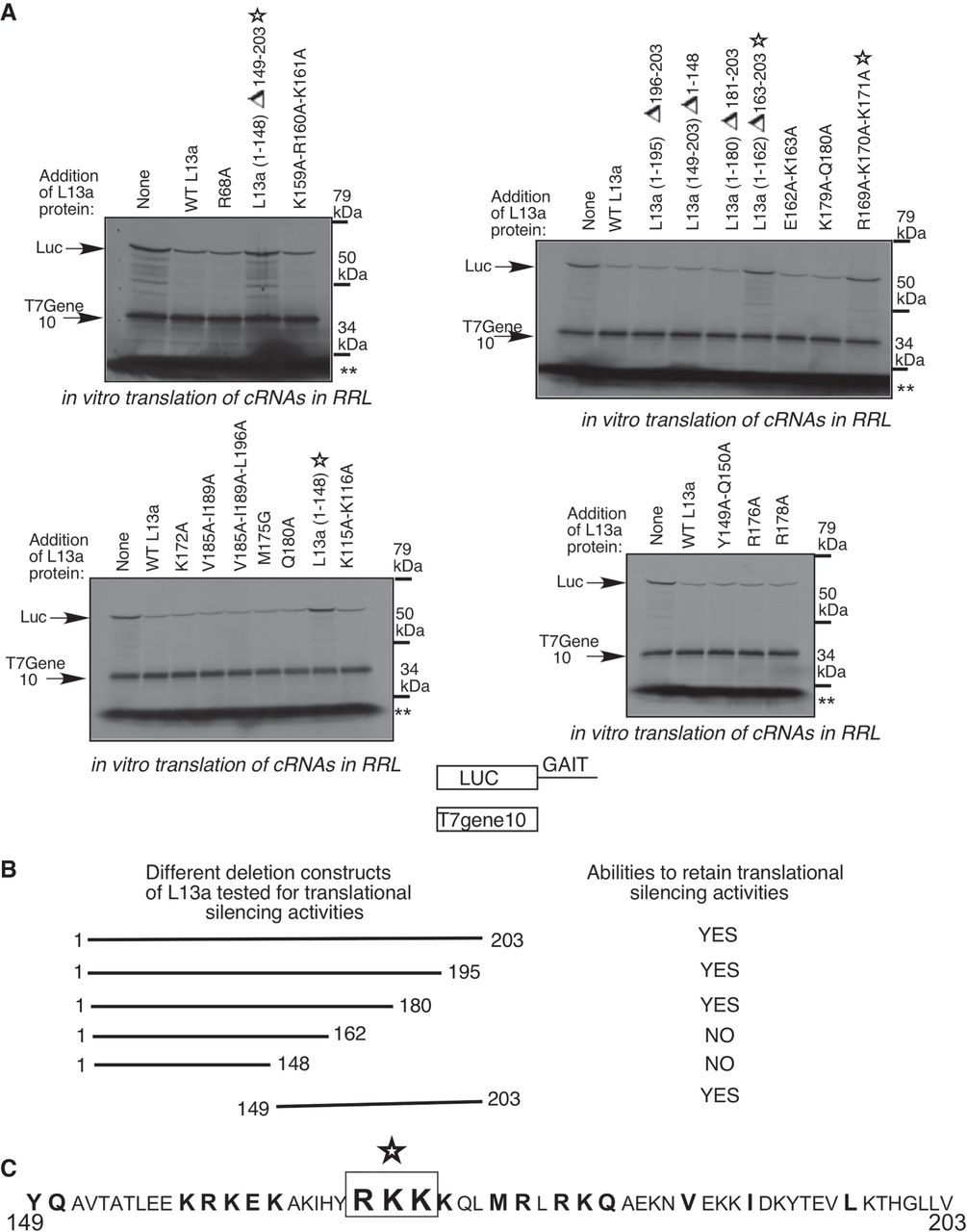
The eukaryote-specific carboxy-terminal extension of L13a harbors amino acid residues required for GAIT element-mediated translational silencing. (A) Effect of L13a variants on in vitro translation of a GAIT element-containing luciferase reporter mRNA and a control mRNA lacking a GAIT element (T7 gene 10). In vitro translation assays were performed as described in Materials and Methods using RRL and purified His-tagged L13a (WT or the indicated deletion or point mutants) produced in a baculovirus expression system. S35-radiolabeled proteins were visualized by 10% SDS-PAGE followed by autoradiography. L13a variants that did not induce GAIT element-dependent translational silencing are marked with a star. The double asterisk at the bottom of each gel shows the front of migration. (B) Schematic illustration of the L13a deletion constructs tested for translational silencing activity and a summary of the results. (C) Amino acid sequence of human L13a from Tyr149 to Val203 with residues tested by point mutations shown in bold font. The three amino acid region identified as essential for translational silencing is indicated by a box with a star.




