


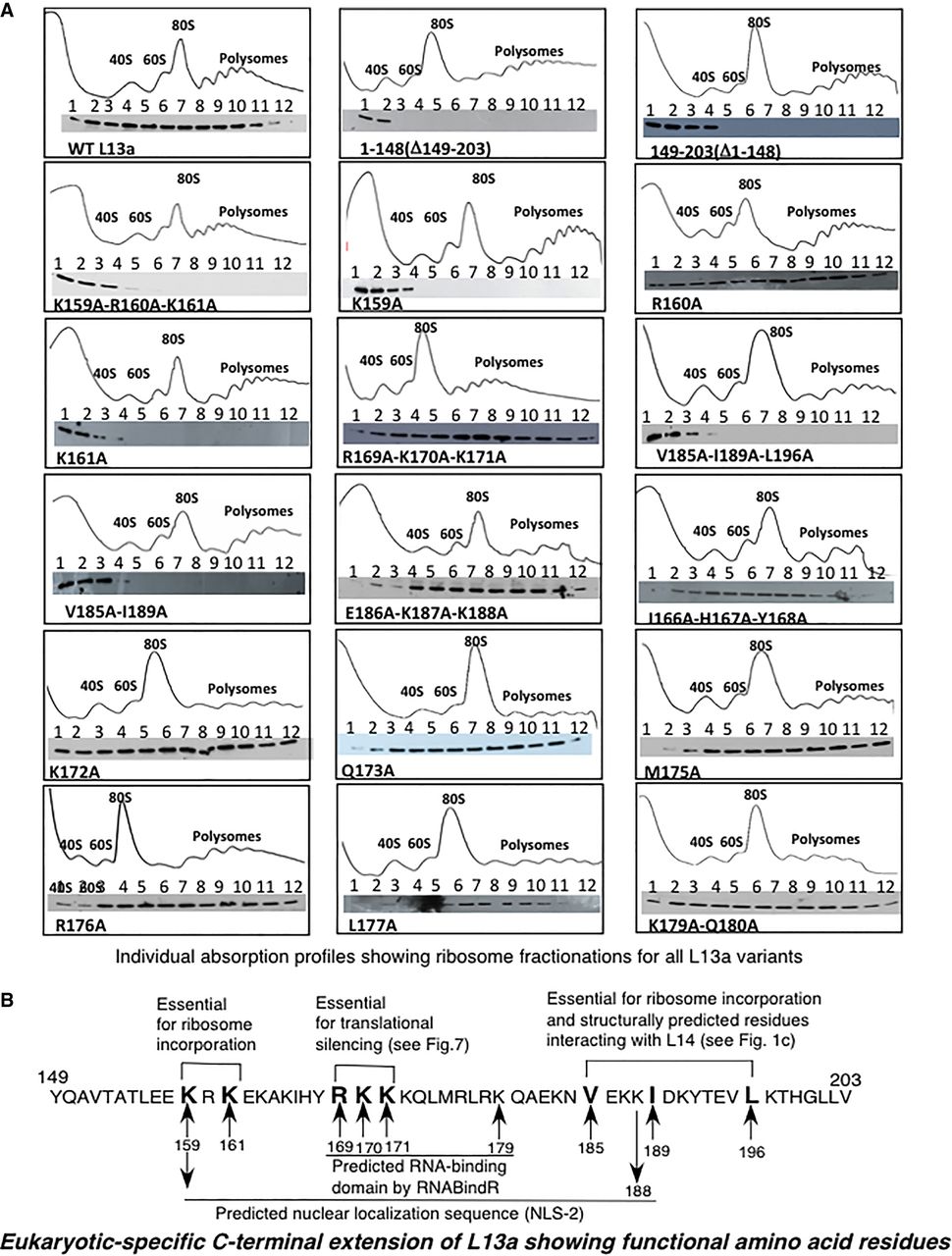
The eukaryotic-specific carboxy-terminal extension of L13a harbors amino acid residues required for its ribosomal incorporation. (A) Density gradient centrifugation cosedimentation analysis of L13a variants. Absorption profiles during ribosome fractionations of individual L13a variants are shown. HA-tagged L13a (wild-type [WT] or mutant variants as indicated at the bottom of each profile) was expressed in HEK 293T cells. Ribosomal fractions (#1–12) were resolved by sucrose density gradient centrifugation (10% to 50%) and analyzed by immunoblotting with anti-HA antibody. The sedimentation of 40S, 60S, and 80S ribosome subunits and polyribosomes is indicated at the top of the figure. (B) Schematic diagram of the human L13a amino acid sequence indicating residues shown to be critical for ribosomal incorporation based on the results shown in A along with other predicted and experimentally determined features.




