


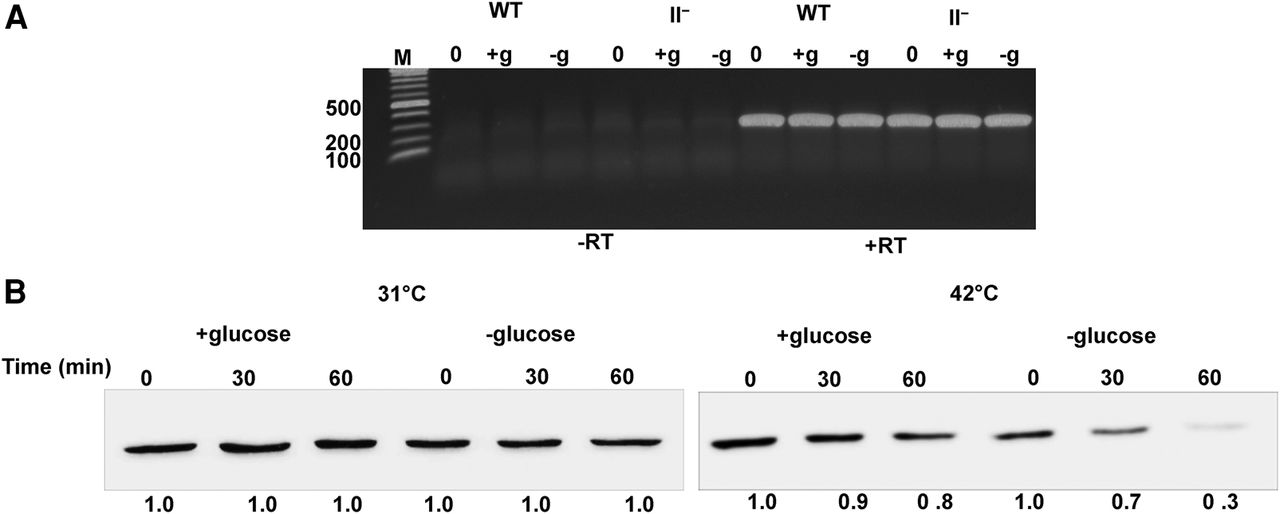
RNase II regulation of RNase PH occurs post-transcriptionally. (A) RNase PH transcript analysis by RT-PCR. WT and RNase II− cells were first grown in M9/glucose at 31°C to early exponential phase (zero time), and then either starved of glucose for 2 h (−g) or grown in the presence of glucose for 2 h (+g) at 42°C. Total RNA was isolated and first-strand cDNA synthesis followed by PCR amplification was carried out using rph gene-specific primers, as described in Materials and Methods. Triplicate RT (+RT) reactions were performed along with reactions in which the reverse transcriptase was omitted (−RT) to enable assessment of genomic DNA contamination in each sample. (B) Stability of RNase PH during starvation. WT cells were first grown in M9/glucose at 31°C to early exponential phase (zero time), treated with chloramphenicol, and either starved of glucose (−g) or incubated with glucose (+g) at 42°C. Cells were collected at 30 and 60 min, lysed, and then analyzed by immunoblotting using anti-Flag monoclonal antibody. Shown is a representative gel from an experiment carried out twice with essentially identical results. The amount of RNase PH at zero time of chloramphenicol addition was set at 1.0 under each condition.




