


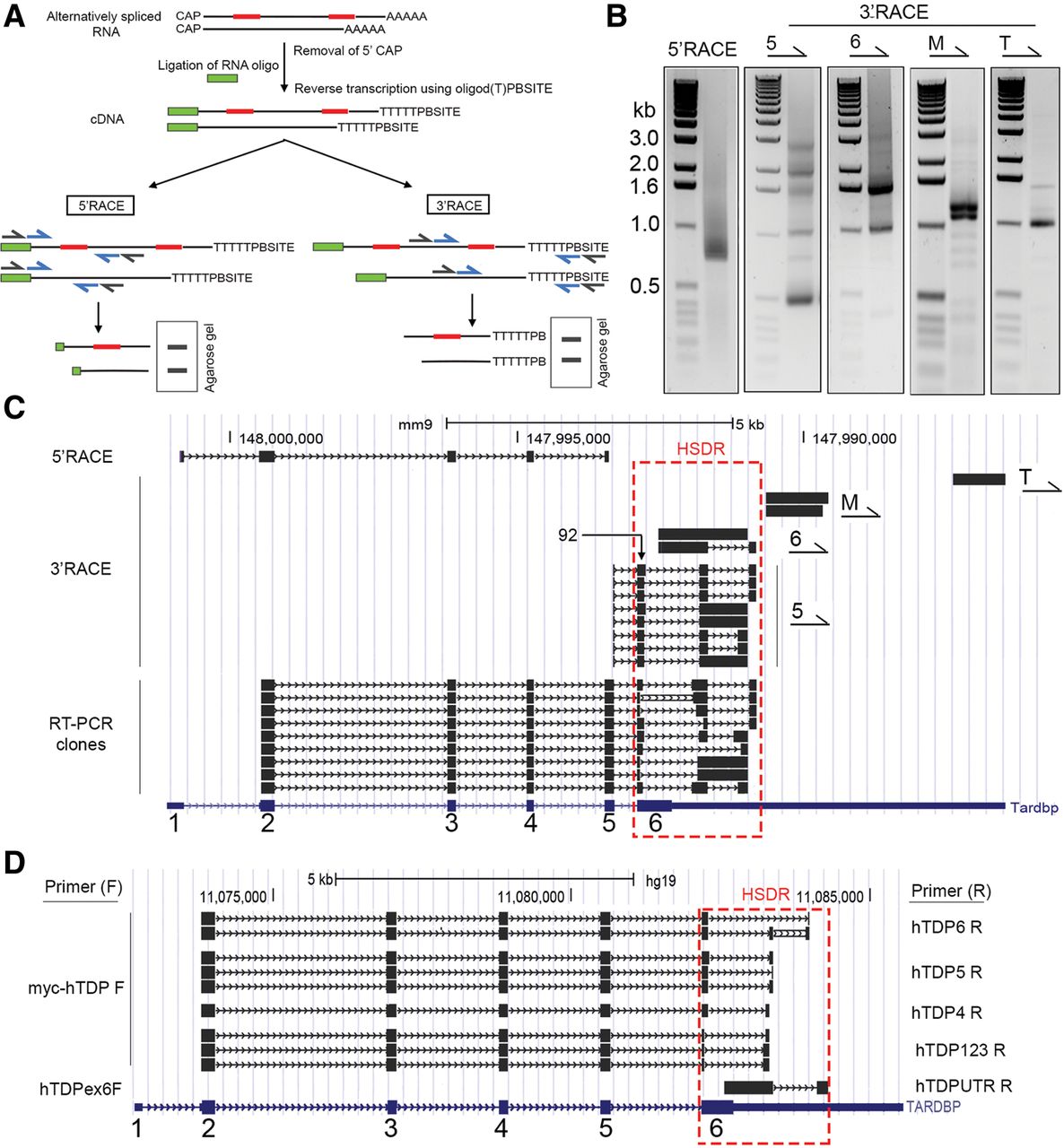
Complex alternative splicing and polyadenylation result in multiple Tardbp transcripts. (A) Simplified schematic of 3′ and 5′ RACE. Two alternatively spliced transcripts from the same hypothetical gene are shown, differing via the spliced inclusion of two exons (red). The mRNA CAP is first removed and replaced with a synthetic RNA oligo. Reverse transcription using an oligo d(T) primer with a unique 3′ Primer Binding Site (PBSITE) creates cDNA with 5′ and 3′ sequences for primer binding during PCR. Subsequently, two rounds of PCR are performed; an initial round with primers complementary to the artificial sites (black primers), and a second nested PCR using primers inside these initial sites (blue). Products are analyzed on a gel, excised, cloned, and sequenced. (B) 5′ and 3′ rapid amplification of cDNA ends from murine cortex produced multiple PCR products. Primers for 5′ RACE or 3′ RACE (5, 6, M, and T) are shown above each PCR and represent the primer used in reaction. (C) Sequences derived from 5′ RACE, 3′ RACE, and RT-PCR cloning, aligned on murine UCSC Genome Browser. Sequences derived from our studies are in black; blue sequence below represents preexisting Tardbp gene in mouse genome archive. Primers (5, 6, M, and T) used in the 3′ RACE reactions are denoted to the right of aligned sequences. Conventional exon numbering system for Tardbp is shown in blue at bottom. The High Splicing Density Region (HSDR) is designated with a red dash. “92” indicates the first cluster of splice sites, containing eight donor sites. (D) Alignment of sequences from human H4 neuroglioma RT-PCR on human UCSC Genome Browser. The forward and reverse primers used in reactions to generate amplicons are shown on left and right of alignment, respectively.




