


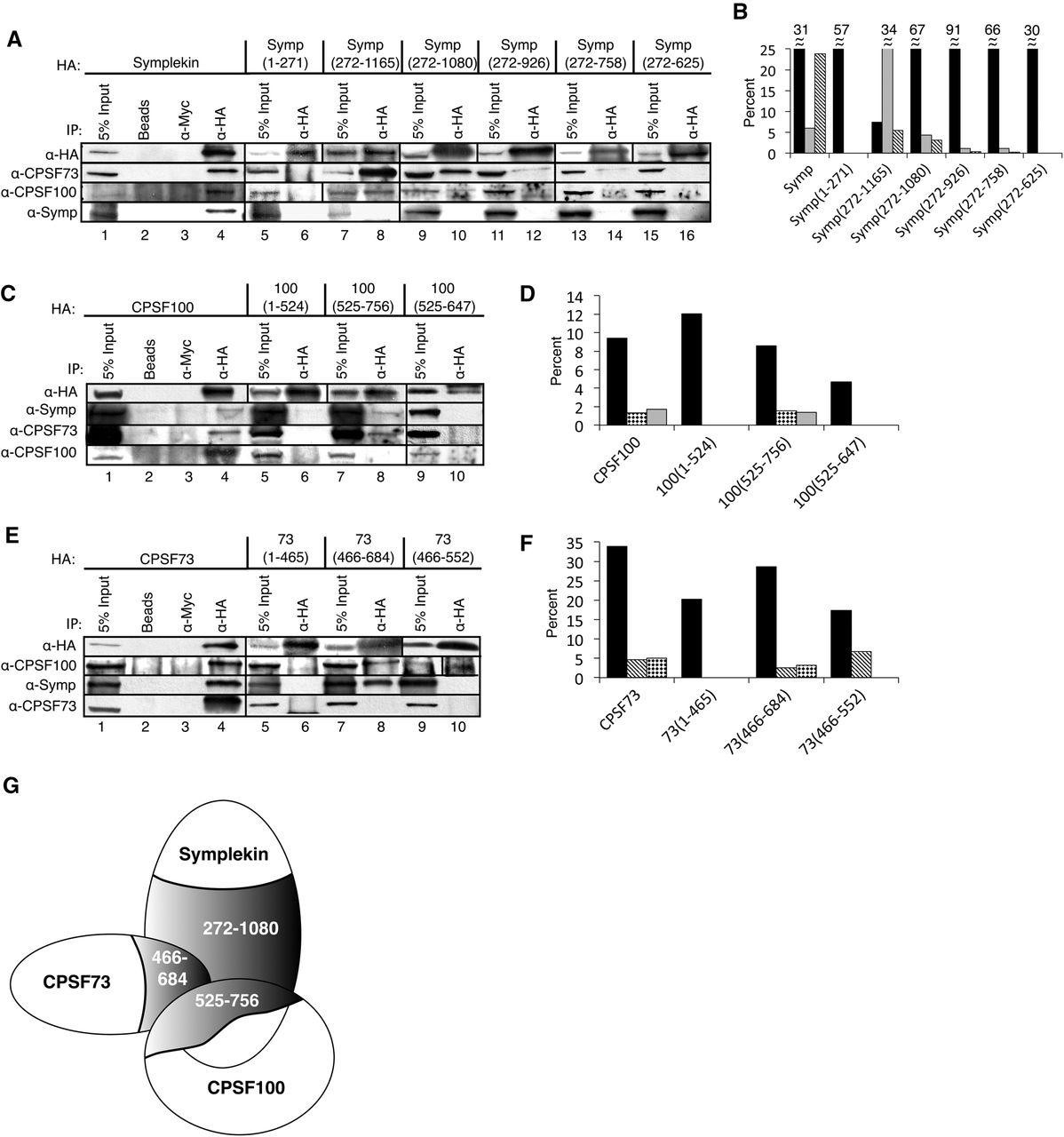
Symplekin amino acids 272–1080, CPSF100 amino acids 525–756, and CPSF73 amino acids 465–684 are sufficient for CCC formation. (A,C,E) HA-tagged Symplekin mutants (A), HA-tagged CPSF100 mutants (C), and HA-tagged CPSF73 mutants (E) were IPed, separated, and probed with HA- and CCC-specific antibodies. Numbers under the protein name correspond to the amino acid residues comprising each mutant. IP of full-length proteins and controls (lanes 1–4) are included for reference. (B,D,F) Percentage of IP or co-IPed proteins corresponding to WBs in A, C, and E are plotted. Black bars are percent HA IP, gray bars are percent CPSF73 IP, bars with diagonal lines are percent CPSF100 IP, and bars with black diamonds are percent Symplekin IP. In (B), the numbers above the bars correspond to percent IP for that sample. (G) A CCC-binding model is shown. The C-termini of Symplekin, CPSF73, and CPSF100 are sufficient for CCC formation.




