


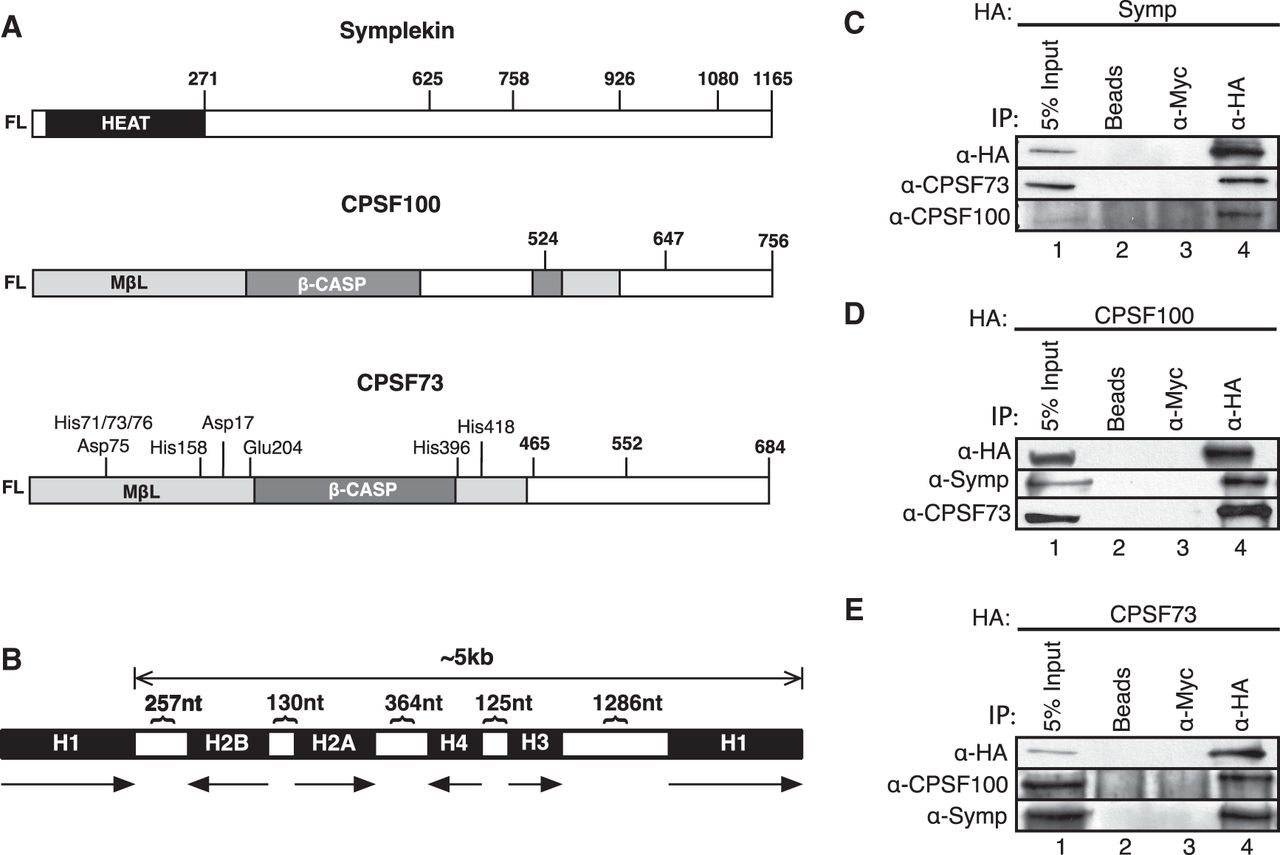
Stably expressed, HA-tagged full-length CCC components interact with endogenous binding partners to form mixed CCCs. (A) Schematic representations of Symplekin, CPSF100, and CPSF73 are shown. HEAT, metallo-β-lactomase (MβL), and β-CASP shaded boxes indicate the location of distinct structural domains. Numbers listed within and above boxes indicate amino acid positions. Those numbers with three letter amino acid abbreviations correspond to catalytic residues. (B) Schematic of one repeat (∼5 kb) within the Drosophila histone gene locus. The direction of transcription is shown directly below each histone gene (H1, H2A, H2B, H3, and H4). The number of nucleotides between each histone gene is shown above. (C–E) Full-length HA-tagged Symplekin (C), CPSF100 (D), and CPSF73 (E) were immunoprecipitated (IP) from whole-cell lysates with an anti-HA antibody. IPs were separated with SDS-PAGE, transferred to a membrane, and probed with anti-HA, anti-Symplekin, anti-CPSF73, and anti-CPSF100 antibodies. Lane 1 is 5% input, lanes 2,3 are controls where IPs were performed in the absence of antibody (beads) or with a nonspecific antibody (anti-Myc), and lane 4 shows the experimental IP. The top panel of each WB set is the IP of HA-tagged protein while the lower panels represent the co-IPs of CCC-binding partners.




