


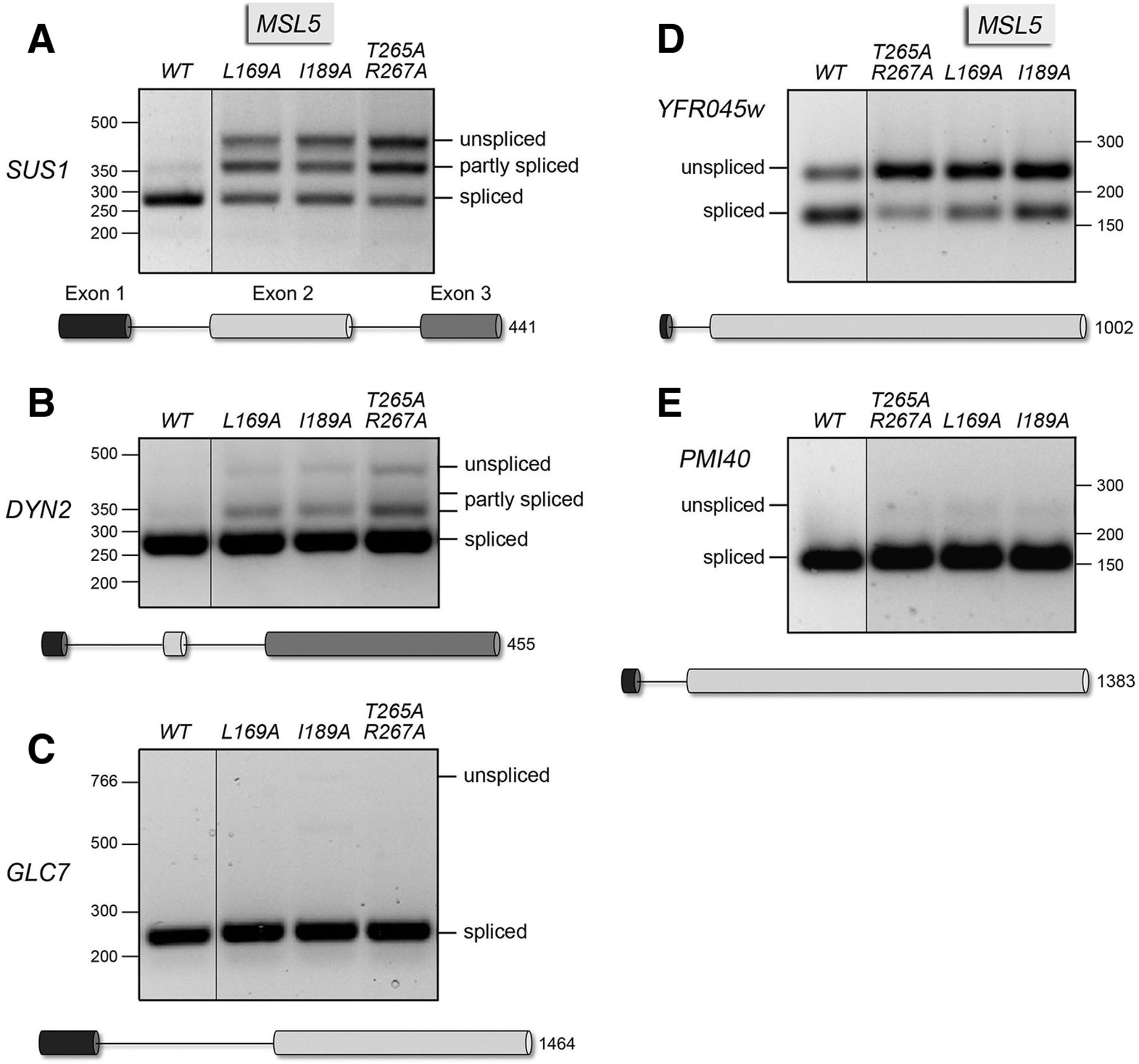
Mutations of Msl5 RNA-binding residues impede the splicing of specific pre-mRNAs. RNA isolated from MSL5 wild-type (WT), L169A, I189A, and T265A-R267A cells was reverse transcribed with an oligo(dT) primer. cDNAs were PCR-amplified with gene-specific sense and antisense primer pairs derived from the first and last exons of the SUS1 (A), DYN2 (B), GLC7 (C), YFR045w (D), and PMI40 (E) genes. The exon–intron organization of the pre-mRNA is shown, with exons depicted as horizontal cylinders. The PCR products were resolved by native agarose gel electrophoresis and visualized by staining with ethidium bromide. All lanes in the images are from the same gel and photographic exposure, from which intervening lanes were cropped and the WT lane was moved laterally to be next to L169A and the T265A-R267A lane was moved laterally to be next to I189A. The positions and sizes (base pairs) of linear duplex DNA markers are indicated on the left. The RT-PCR products of unspliced, partly spliced, and fully spliced transcripts are specified.




