


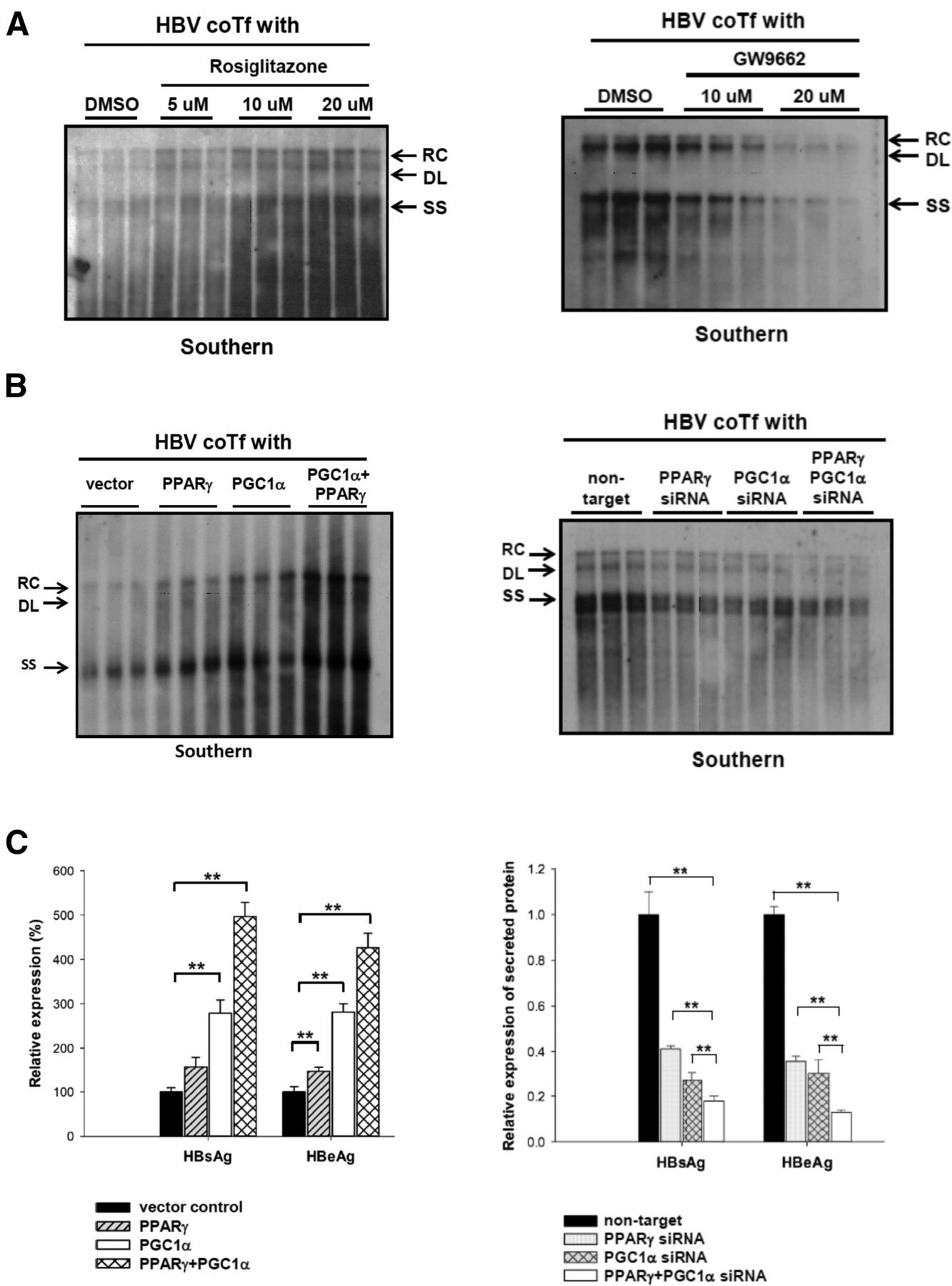
The combination of PGC1α and PPARγ can strongly stimulate HBV DNA replication and protein expression. (A) HepG2 cells were transiently transfected with HBV ayw dimer and 48 h later, followed by treatment of a PPARγ ligand, Rosiglitazone, at increasing concentrations (Materials and Methods). HBV DNA replication by Southern blot analysis was gradually increased in a dose-dependent manner (left panel). Conversely, when HBV-transfected cells were treated with increasing doses of a PPARγ antagonist, GW9662, it resulted in gradually decreasing replication of HBV DNA (right panel). The result here is representative of at least three independent experiments. (B) Cotransfection of HBV ayw dimer with the combination of both PGC1α and PPARγ expression vectors resulted in further increase in HBV DNA replication (B, left panel) and protein expression of HBsAg and HBeAg (C, left panel). Conversely, cotransfection of HBV ayw dimer with the combination of both PGC1α and PPARγ siRNAs resulted in the most potent inhibitory effect on HBV DNA replication (B, right panel) and expression of HBsAg and HBeAg (C, right panel). HBsAg and HBeAg were detected by ELISA assay. The result here is representative of at least three independent experiments.




